



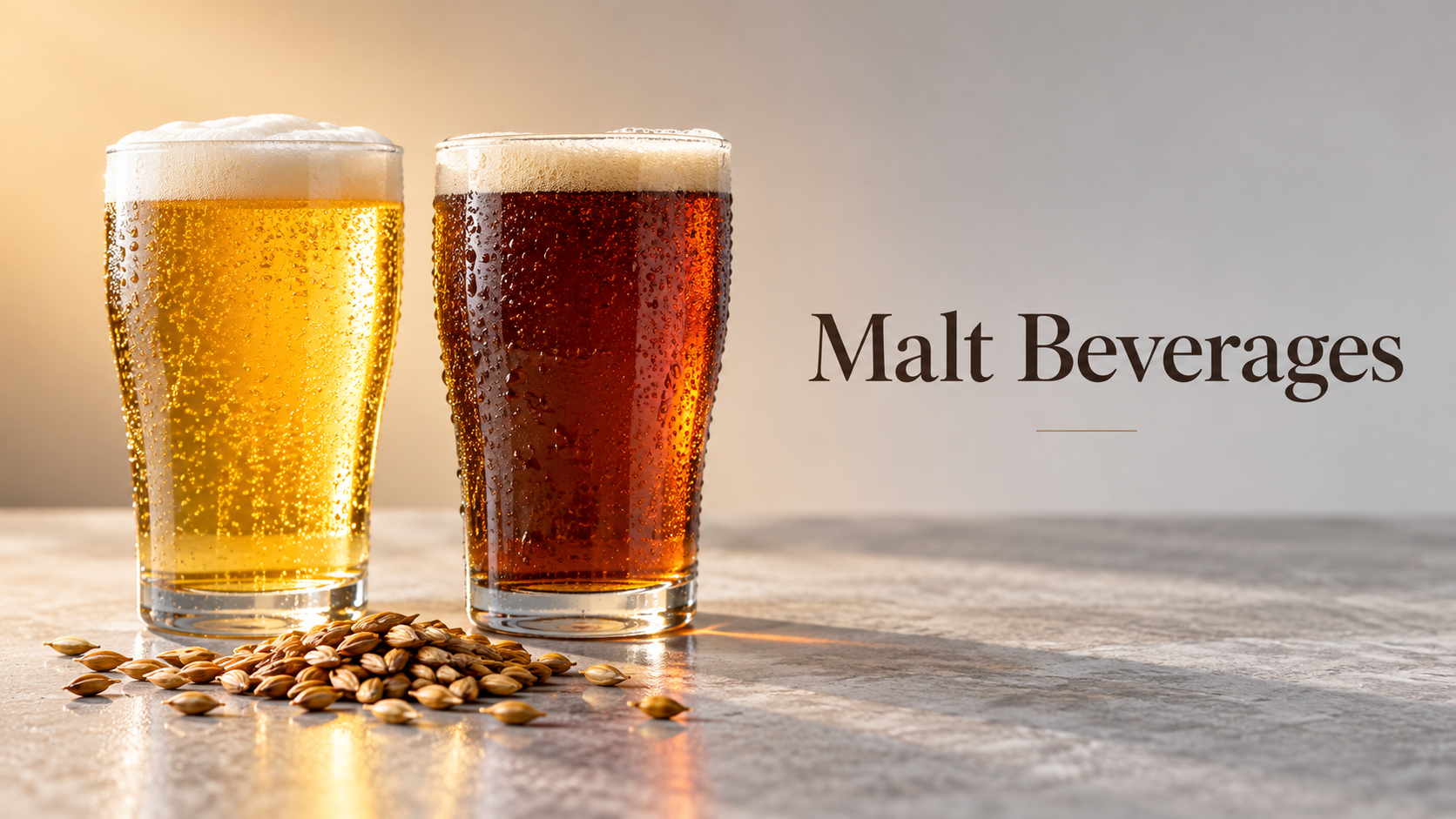
A bottle of lager, a sweet malt drink, and a fruit-flavored alcoholic beverage may look like very different products. Yet all three can belong to the broad malt beverage category. The name tells you something about their ingredients or production, but it does not tell you everything—especially whether they contain alcohol.
A malt beverage is generally a drink made using malted grains, most commonly barley. Some are fermented into alcoholic drinks, such as beer. Others are made without alcoholic fermentation or have their alcohol content reduced after brewing. To understand what is in the bottle, you need to look beyond “malt” and check the product description, ingredients, and alcohol by volume, or ABV.
What Makes a Drink a Malt Beverage?
The defining ingredient is malt: grain that has been allowed to begin germinating before being dried. Barley is the traditional choice for brewing, although wheat, rye, and other grains may also be malted and used in beverages.
Malting develops enzymes that help convert grain starches into sugars during production. It also contributes flavor, color, and body. Depending on how the malt is processed, it can bring notes of fresh bread, crackers, toast, caramel, or roasted coffee.
However, “malt beverage” is not a single, universally defined product category. In everyday language, it can describe both alcoholic and nonalcoholic malt-based drinks. In labeling and trade regulations, the term may have a narrower meaning. For example, under certain U.S. federal labeling rules, a malt beverage is a fermented product made with malted barley and hops, with other ingredients permitted.
That distinction matters when comparing products from different countries. A sweet, unfermented malt drink sold in one market and a flavored alcoholic malt beverage sold in another may share a broad ingredient connection without sharing the same regulatory classification.
From Grain to Glass: Where Alcohol Enters the Process
Malt does not inherently contain beverage alcohol. Alcohol develops when yeast ferments available sugars. Understanding that one step makes the category much easier to navigate.
- Malting: Grain is steeped in water, allowed to germinate, and dried. Different drying and roasting conditions produce different malt characteristics.
- Mashing: Crushed malt is mixed with warm water. Enzymes convert much of its starch into sugars, producing a sweet liquid called wort.
- Wort preparation: The liquid is separated from the spent grain. In beer production, it is typically boiled with hops, which contribute bitterness and aroma.
- Fermentation or an alternative route: For alcoholic beer, yeast converts fermentable sugars into alcohol and carbon dioxide. Nonalcoholic products may avoid this stage, limit it, or undergo alcohol removal later.
- Finishing: Depending on the product, the beverage may be conditioned, filtered, carbonated, stabilized, and packaged.
This explains why two drinks made from similar grains can taste completely different. A fermented lager may finish crisp and relatively dry, while an unfermented malt drink may retain more sweetness. Malt selection matters, but fermentation and finishing decisions shape the final drinking experience just as strongly.
The Main Types of Malt Beverage
Alcoholic beer: more than one flavor profile
Beer is the most familiar alcoholic malt beverage. Lager, wheat beer, pale ale, porter, and stout all draw part of their character from malt, although their recipes and brewing methods differ.
A classic lager often emphasizes a clean fermentation profile and balanced malt character. German-style wheat beer commonly combines wheat malt with barley malt, while its yeast may contribute banana-like and clove-like aromas. Darker beers use specialty malts to develop deeper color and roasted flavors.
Neither darkness nor a strong malt flavor reliably indicates alcohol strength. A pale beer can contain more alcohol than a dark one. The ABV declaration is the useful comparison, not the color in the glass.
Flavored malt beverages: the base is not always obvious
Flavored malt beverages use a fermented malt base, but the finished drink may taste more like lemonade, berries, or a mixed drink than traditional beer. Producers may process the base to reduce its original flavor before adding other ingredients.
This is where category names can become confusing. A fruit-flavored beer may retain a recognizable beer profile, while another malt-based drink may emphasize sweetness and fruit almost entirely. Hard seltzers can also use different alcohol bases: some are malt-based, while others use fermented sugar or spirits. Their appearance alone does not identify the base.
Nonalcoholic malt drinks: two different approaches
Nonalcoholic brewed beer is designed to offer a beer-like experience with little or no alcohol, depending on the product and applicable labeling rules. Brewers may restrict alcohol formation through controlled fermentation or remove alcohol afterward using methods such as vacuum distillation or membrane separation.
Unfermented malt drinks follow a different path. They use malt or malt extract for cereal flavor, color, and body without going through alcoholic fermentation. Some are sweet, dark, and carbonated; others resemble malt-based soft drinks. They should not automatically be expected to taste like beer.
Does “Nonalcoholic” Mean Completely Alcohol-Free?
Not necessarily. “Nonalcoholic,” “alcohol-free,” “low-alcohol,” and “0.0%” are not interchangeable descriptions across every market. Their permitted use depends on local rules and, sometimes, the specific beverage category.
For example, U.S. federal malt beverage labeling rules generally allow “non-alcoholic” for products containing less than 0.5% ABV, subject to required accompanying wording. Under those rules, “alcohol free” is reserved for products containing no alcohol. Other countries may use different thresholds or terminology.
A prominent “0.0%” statement provides useful information, but anyone requiring strict alcohol avoidance should still check the full label and, if necessary, request clarification from the manufacturer. Do not assume that every product in a store’s alcohol-free section meets the same specification.
If you are avoiding alcohol because of pregnancy, medication, recovery, religious requirements, or another personal concern, choose according to your specific needs rather than the category name alone. Relevant medical guidance or certification may be more useful than a general marketing description.
What Does a Malt Beverage Taste Like?
“Malty” usually describes grain-derived flavors such as bread crust, biscuit, toast, or caramel. It does not automatically mean sugary. A beverage can have a pronounced malt aroma and still finish dry if much of its fermentable sugar has been consumed by yeast.
Several production choices influence the result:
- Malt selection: Pale malts tend toward bread and cereal notes; more heavily kilned or roasted malts can add toast, chocolate, or coffee-like character.
- Fermentation: Yeast affects dryness, aroma, and the balance between malt sweetness and other flavors.
- Hops: Bitterness can balance sweetness, while hop varieties may contribute floral, herbal, citrus, or tropical aromas.
- Added ingredients: Fruit, spices, sweeteners, and flavorings may complement or dominate the malt base.
- Carbonation and body: A highly carbonated drink can feel brisk and refreshing; a fuller-bodied one may feel softer and richer.
If you enjoy crisp drinks, start by comparing lighter lagers or dry nonalcoholic beers. If you prefer a sweeter soft-drink experience, an unfermented malt drink may be closer to your expectations. Neither preference tells you the alcohol or sugar content—those still require a label check.
Reading the Label: Four Checks That Matter
1. Alcohol content and serving size
Look for ABV rather than relying on words such as “light,” “mild,” or “malt.” ABV expresses the proportion of alcohol by volume. The amount consumed also depends on the package size: a larger container at the same ABV contains more alcohol.
2. Ingredients and allergens
Barley and wheat contain gluten, so conventional malt beverages are generally unsuitable for people with celiac disease unless the product meets applicable gluten-free requirements. A gluten-reduced beer should not automatically be treated as equivalent to a certified gluten-free product. Check ingredient statements, allergen information, and relevant certification.
3. Sugar, carbohydrates, and calories
Malt-based does not mean low-sugar, and nonalcoholic does not mean calorie-free. Some sweet malt drinks contain added sugars, while brewed products may retain carbohydrates from the grain. Alcohol itself also contributes calories.
Likewise, sugar-free, low-carbohydrate, and low-calorie are different claims. A sugar-free beer can still contain alcohol and calories. Compare nutrition information using the same volume, rather than comparing a small bottle with a large can.
4. Claims that sound healthier than they are
Malt comes from grain, but that alone does not establish a beverage as nutritious or beneficial. Vitamins, minerals, or specialty ingredients do not cancel out alcohol or added sugar. Functional positioning should be assessed against the actual formulation and supported claims, not treated as proof of a health benefit.
Choosing the Right Category for the Occasion
The simplest approach is to decide what matters before comparing brands: alcohol level, flavor, sweetness, dietary suitability, or food pairing. A crisp lager may suit someone seeking a familiar beer; a wheat beer offers a different aroma and texture; a fruit-flavored option may appeal to someone who dislikes pronounced bitterness.
These distinctions also matter in product development and retail selection. Jinpai Beer’s range spans classic lager, German wheat beer, sugar-free low-calorie beer, fruit-flavored beer, and functional specialty beers. For distributors or businesses exploring OEM/ODM products, each concept needs a clear specification for its alcohol content, ingredients, nutritional profile, and destination-market labeling—not just a broad “malt beverage” description.
For the everyday shopper, the takeaway is straightforward: malt describes the ingredient foundation, not a guarantee of alcohol content, sweetness, or nutritional value. Identify the type of drink, check its ABV and ingredients, and choose the flavor and format that fit your preferences. That turns a broad, sometimes confusing category into a much easier decision.
Thank you very much for writing to us. Please leave your message and contact information, we will reply to you within 24 hours.