



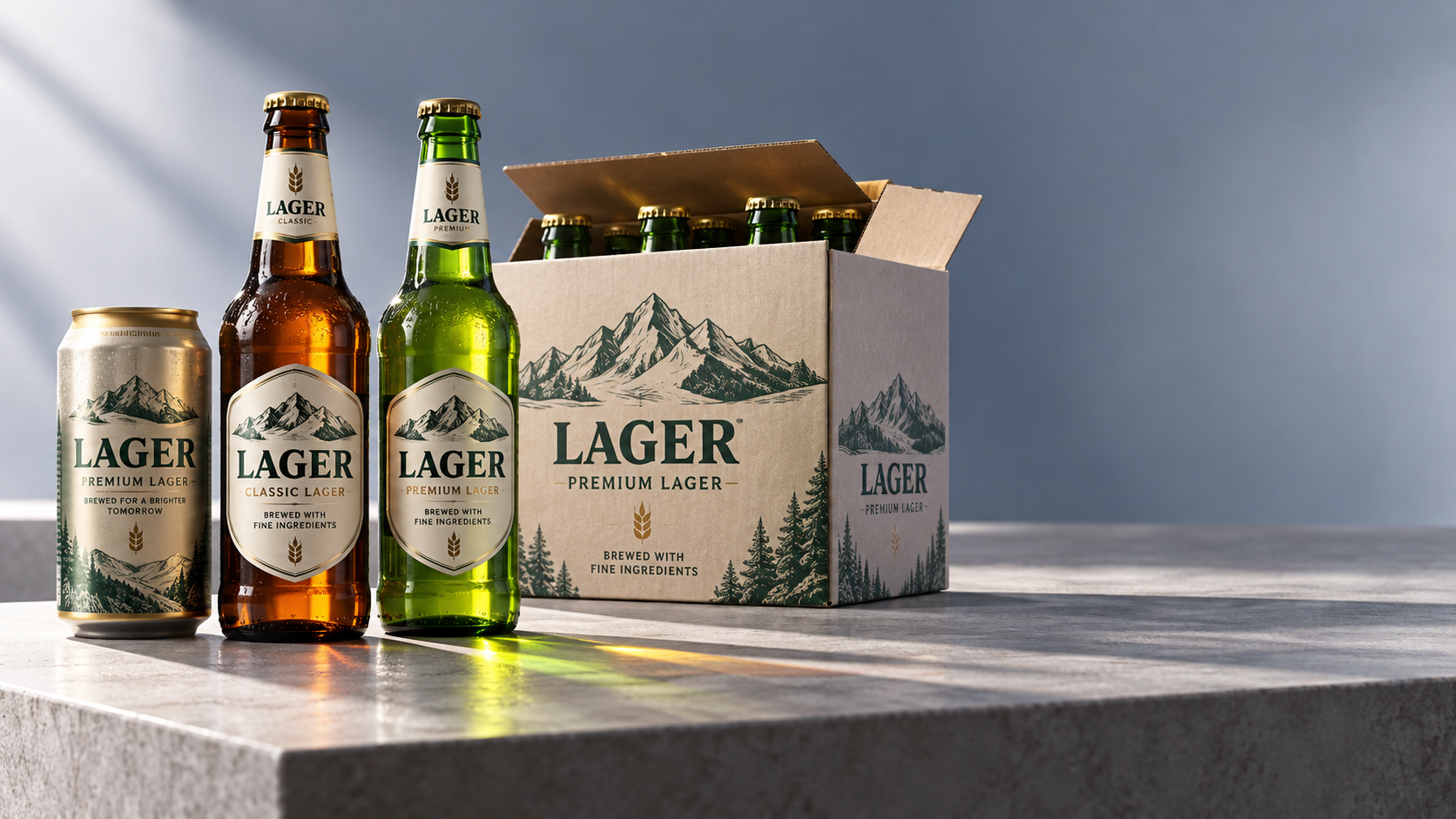
Lager beer can lose its fresh aroma, clean finish, and balanced bitterness before the date printed on the package. For distributors, the useful shelf life depends on the beer’s condition at filling, its packaging, and the heat, light, and oxygen exposure it accumulates before sale. A date code alone cannot establish whether a shipment will arrive with enough freshness remaining for the intended channel.
The practical judgment is straightforward: a supplier’s shelf-life claim is meaningful only alongside its storage conditions and validation method. Heat accelerates aging, light can cause a distinct off-flavor in susceptible beer, and oxygen drives changes that gradually flatten or distort flavor. These mechanisms overlap, but each requires different controls. Refrigeration cannot reverse oxidation, and a sealed bottle does not necessarily protect beer from light.
What shelf life actually promises
For conventional packaged lager, shelf life generally describes a period of acceptable quality under specified conditions. It does not mean the beer tastes identical throughout that period, or that every package becomes unsafe immediately afterward. Sensory quality, microbiological stability, and package integrity are separate considerations. Suspected contamination, leaking containers, or abnormal package pressure require assessment independently of the freshness date.
There is no single shelf-life duration that can be applied reliably to all lager beer. Pasteurization or validated filtration, initial oxygen levels, recipe, closure performance, and storage temperature all influence the result. An unpasteurized product intended for continuous refrigeration cannot automatically inherit the distribution conditions of another lager simply because both use cans.
Pasteurization also needs to be interpreted correctly. It can improve microbiological stability, but it does not prevent chemical aging or make the product insensitive to heat. Likewise, filtration may contribute to stability when appropriately designed and controlled; the word “filtered” alone does not establish a particular shelf life.
Before accepting a declared life, establish when the clock starts, whether the code indicates packaging or minimum durability, and which storage conditions support the claim. For imported stock, include transit, customs clearance, warehouse dwell time, delivery, and the customer’s likely selling period. A shipment may satisfy a receiving requirement while leaving too little useful life for a slow-moving retail outlet.
Heat consumes freshness before the date changes
Elevated temperature accelerates many reactions associated with beer aging. In a pale lager, the effects can be especially apparent because the flavor profile leaves relatively little room to hide deterioration. Fresh malt and hop notes may fade, bitterness can lose definition, and stale, papery, honey-like, or overly sweet impressions may emerge. The exact pattern depends on the beer and its exposure history.
Time and temperature must be considered together. A brief warm transfer and an extended stay in a hot warehouse are different exposures, even if both appear in records as a “temperature excursion.” Air temperature also differs from beer temperature: the liquid inside a pallet changes temperature more slowly than the surrounding air. A reading taken at the receiving door cannot reconstruct the shipment’s history.
This is why simple claims that a given temperature increase always halves shelf life should be treated cautiously. Aging reactions do not all respond identically, and different products can reach sensory rejection through different pathways. A brewery may use a temperature model for its own validated product, but distributors should not transfer that model to another beer without supporting evidence.
Repeated warming and cooling deserve a similarly precise interpretation. Warming does not automatically “skunk” beer; that term describes a light-related defect. For ordinary handling, the central concern is the additional aging accumulated while warm. Cooling the stock again can slow subsequent deterioration, but it cannot restore flavors already lost.
Operationally, the most useful temperature specification is one that can guide a decision. Obtain the brewery’s recommended storage range, its handling limits, and its procedure for assessing excursions. If continuous refrigeration is required, that requirement must cover transport, intermediate storage, and customer delivery. An undefined instruction to “keep cool” gives receiving teams little basis for accepting or holding a questionable load.
Place monitoring where it can reveal exposure rather than merely produce a compliant reading. Loading areas, warehouse perimeter positions, and delivery vehicles can create conditions that differ from the main storage room. For routes with uncertain thermal conditions, temperature records help identify where freshness is being consumed and support a more informed review of affected lots.
Light damage follows a different route
Light exposure can trigger reactions involving hop-derived compounds and light-sensitive components in beer, producing a powerful sulfurous odor commonly described as skunky or lightstruck. This can develop separately from the slower stale flavors associated with heat and oxidation. A recently packaged lager may therefore show light damage while still having substantial time remaining before its stated date.
Packaging changes the exposure pathway. Intact metal cans block light from reaching the beer. Brown glass provides stronger protection than clear or green glass, but should not be treated as complete protection under every lighting condition. Cartons and other opaque secondary packaging can provide an additional barrier while they remain intact.
Some beers use specially selected hop ingredients that reduce susceptibility to the conventional lightstruck reaction. That is a formulation-specific property. Bottle color or a general description of the beer cannot establish whether such protection is present, so any claim of light stability should be supported by the brewery’s product specification or testing.
Retail presentation is often where distribution protection ends. Bottles removed from cartons may sit beside windows or under display lighting for long periods. A glass-door refrigerator controls temperature but still allows light exposure. Changing a display’s lighting technology does not by itself establish that the beer is protected; the light spectrum, intensity, exposure time, and product susceptibility all matter.
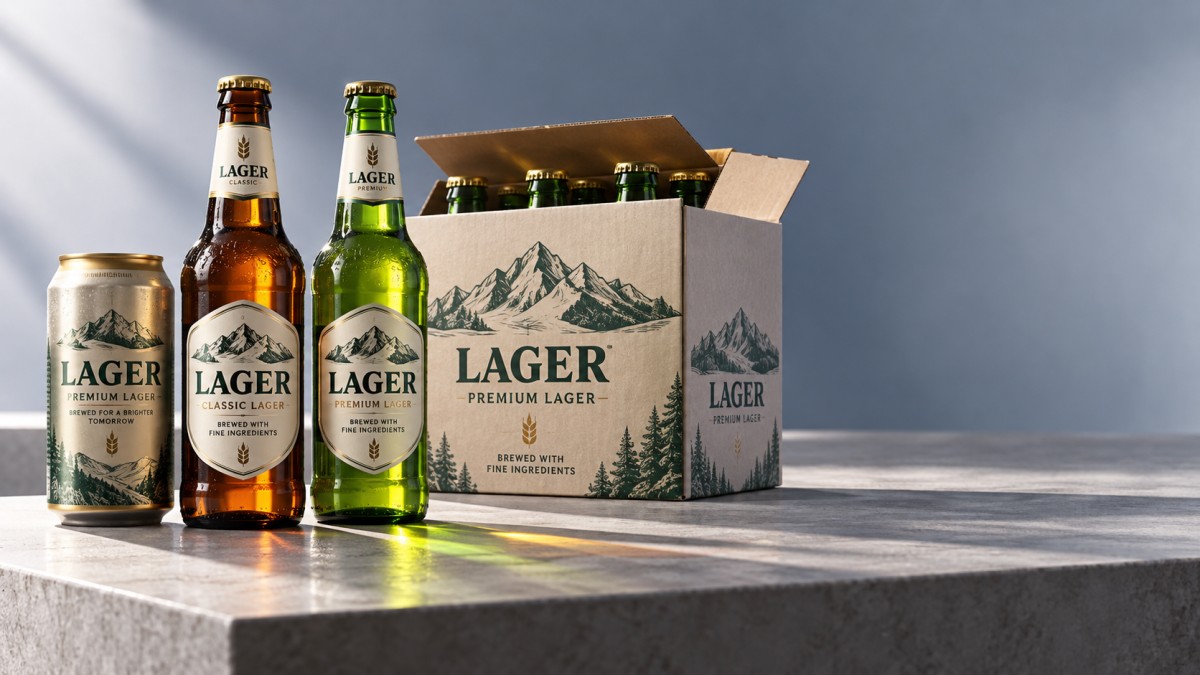
For distributors supplying bottled lager, merchandising instructions should address direct sunlight, illuminated displays, and the point at which protective packaging is removed. Brown bottles stored in closed cartons have a different exposure history from loose bottles on a bright shelf. That distinction can explain a quality complaint that warehouse temperature records alone cannot resolve.
Oxygen risk starts before the package reaches the warehouse
Oxygen can enter beer during production transfers and filling, remain in the package headspace, or enter later through an inadequate closure or seal. Its presence supports reactions that diminish freshness and can contribute to stale flavors. The resulting sensory changes are complex: a papery note can indicate aging, but no single flavor identifies every oxidation problem.
For packaging assessment, dissolved oxygen and total package oxygen answer different questions. Dissolved oxygen measures oxygen in the liquid. Total package oxygen accounts for oxygen in both the beer and the package headspace. A low dissolved-oxygen result by itself can miss oxygen left above the liquid during filling.
Results also need a measurement context. Sampling technique, instrument condition, timing after filling, and calculation method affect interpretation. Oxygen can be consumed in reactions after packaging, so a low reading from an older sample does not necessarily demonstrate that oxygen pickup was low at the filler.
Distributors rarely need to specify the brewery’s entire filling process. They do need evidence that it is controlled consistently. Useful questions concern how package oxygen is monitored, what internal acceptance limits apply, how abnormal results are handled, and whether the final packaging format has been included in shelf-life validation. A single favorable reading offers less assurance than a documented pattern of control.
Package integrity remains relevant after filling. Damaged can seams, compromised crowns, or other closure defects can undermine protection. Cans eliminate light exposure through the container wall, but they still depend on controlled filling and sound seams. Choosing a can therefore addresses one risk decisively without settling every freshness question.
Heat and oxygen can also compound one another. Warm storage accelerates reactions in beer already carrying an unfavorable oxygen load. Improving warehouse conditions remains useful, but it cannot fully compensate for poor packaging control. Conversely, careful filling does not justify prolonged warm distribution.
How to judge a shelf-life claim before committing stock
A useful supplier review connects the declared duration to the actual product, package, and route. Ask whether validation used the commercial recipe, production process, container, and closure being purchased. Evidence from one format may not transfer directly to another because light protection, headspace, filling conditions, and seal performance can differ.
The assessment should include sensory quality. Microbiological checks help address stability, while package inspections assess integrity; neither alone proves that the beer will retain an acceptable flavor. A shelf-life program should define what counts as sensory failure and examine samples over time under stated storage conditions.
Accelerated aging tests can help compare formulations, packaging options, or production changes. Their limits matter when translating results into a commercial date. Warm storage may change the balance of reactions, so an accelerated test is most persuasive when its relationship to real-time behavior has been established for the product. A short warm test alone is a weak basis for a precise freshness promise across different climates.
For an OEM or private-label lager, clarify who owns the shelf-life specification and who reviews deviations. A recipe change, new closure, different filling line, or revised stabilization process may warrant reassessment. Keeping the same label and date format does not establish that the previous validation still applies.
Translate the technical evidence into a few purchasing and receiving requirements:
- Defined dating: an understandable date code, identifiable lot, and clear starting point for the declared shelf life.
- Storage conditions: a documented temperature specification, light-protection requirements where relevant, and a process for reviewing excursions.
- Remaining life: an agreed minimum at receipt that leaves enough time for downstream distribution and realistic customer sell-through.
- Quality evidence: product-specific shelf-life support, appropriate packaging controls, and a traceable route for investigating complaints.
Use exposure history to decide where stock should go
First-expiring, first-out rotation is a sound starting point, but date order alone cannot account for different handling histories. Two lots with the same expiry date may have different quality if one remained cool and protected while the other spent extended time warm or exposed to light. Record significant deviations against the lot so that allocation decisions can reflect more than the printed date.
Where an excursion occurs, isolate the affected stock while its history is reviewed against the supplier’s criteria. Representative sensory assessment can help establish condition, ideally alongside appropriately stored reference samples. Package inspection and any necessary laboratory checks address different concerns and should be selected according to the suspected failure. Tasting cannot establish microbiological safety or reconstruct every past exposure.
For recurring complaints, compare affected and unaffected lots by packaging date, format, route, storage history, and customer display conditions. Skunky bottles from a bright display point toward a different investigation from broadly stale beer across an entire warm shipment. Keeping those distinctions clear helps direct corrective action toward the stage that can actually prevent recurrence.
The commercial decision is whether the remaining quality margin suits the next destination. Stock approaching its validated limit may be unsuitable for a long onward journey or a slow-selling account even when it remains acceptable at inspection. Matching purchasing volumes and delivery frequency to actual sell-through protects that margin before heat, light, or oxygen turns it into returns.
Thank you very much for writing to us. Please leave your message and contact information, we will reply to you within 24 hours.