



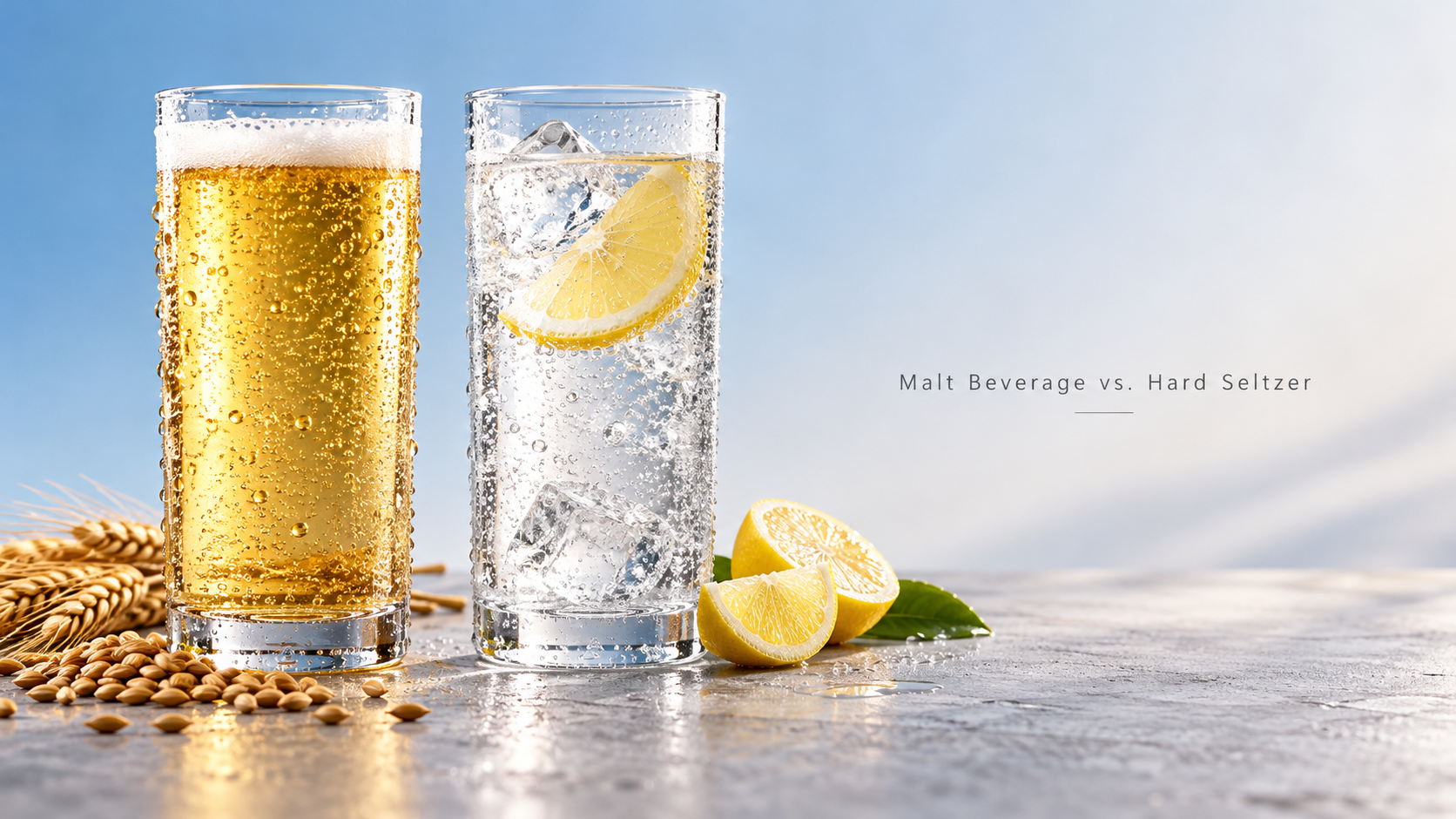
Standing in front of a drinks cooler, a fruit-flavored malt beverage and a hard seltzer can look almost interchangeable. Both may be fizzy, pale, and packaged with citrus or berry imagery. The main difference is usually the starting point: a malt beverage gets its alcohol from fermented malted grains, while hard seltzer may use fermented sugar, a malt-derived base, or distilled spirits. That difference can affect flavor and texture, but the categories overlap.
Choose a traditional malt-based drink when you want some grain character and body; choose a neutral-base hard seltzer when you prefer carbonation and fruit flavor with less beer-like character. Neither description guarantees sweetness, calories, alcohol strength, or gluten status. Those details require a closer look at the specific product, especially when an unexpected sweet finish or cereal note would spoil the drink you had in mind.
The categories overlap more than the packaging suggests
“Malt beverage” describes a broad family rather than one flavor profile. Traditional beers, including lager and wheat beer, use malted grains as an important brewing ingredient. Flavored malt beverages can also begin with a fermented grain base, then undergo processing and receive flavorings or sweeteners that move the finished drink away from recognizable beer character.
Hard seltzer is generally understood as a carbonated alcoholic drink with a relatively light body, often flavored with fruit. The name alone does not identify how its alcohol was produced. A sugar-fermented version, a malt-based version, and a spirit-based version can all offer a similar sparkling drinking experience, even though their production methods and legal classifications may differ.
This is why “malt beverage versus hard seltzer” is not always a strict either-or comparison. A hard seltzer can itself be malt-based. For a useful comparison, separate two questions: Where does the alcohol come from, and what does the finished drink taste like?
What each alcohol base contributes
- Malted grains: Brewing makes grain sugars available for fermentation. Depending on the recipe and subsequent processing, the drink may retain bread-like, cracker-like, toasted, or cereal notes.
- Fermented sugar: Sugar provides the fermentable material without the same grain-derived flavor components. Producers often aim for a neutral base, although fermentation quality and finishing still influence the result.
- Distilled spirits: A spirit is diluted and combined with carbonated water and other ingredients. A neutral spirit may contribute little recognizable flavor, while a more characterful spirit can remain noticeable.
Fermentation produces ethanol in both grain-based and sugar-based drinks. Distillation concentrates alcohol from a fermented liquid; it does not create a fundamentally different intoxicating substance. The base matters for ingredients and sensory character, not because one source of ethanol is inherently safer.
Compare the drinking experience, not just the category
These are tendencies, not rules. A dry, lightly flavored malt-based drink may taste closer to sparkling water than a sweetened spirit-based seltzer does. Conversely, a fruit beer may combine obvious fruit aroma with a clearly bready finish. Category names narrow the field; the product description and label tell you whether a particular can fits your preference.
Why two fruit-flavored drinks can taste so different
Grain character and body
In a conventional malt-based drink, ingredients and fermentation can leave flavor compounds and nonfermentable material that contribute fullness. Malt character does not automatically mean sweetness: a drink can smell of bread crust or cereal and still finish dry. Likewise, a light-colored drink can have noticeable body without tasting strongly of grain.
Some flavored malt bases are processed to reduce their color, aroma, and flavor before other ingredients are added. If you dislike beer, that distinction matters. Rejecting every malt-derived product may exclude drinks with very little beer-like character, while buying one simply because it looks clear may still lead to an unwanted cereal note.
Fruit aroma is not a sweetness measurement
A peach or mango aroma can suggest sweetness even when the drink contains little sugar. Added sugar can create actual sweetness and increase body; non-sugar sweeteners can add sweetness without producing the same nutritional profile. Acidity and bitterness then change how that sweetness is perceived.
For example, a tart citrus drink may seem drier than a softer berry-flavored drink with a similar sugar content. When a label says “natural flavors,” that wording alone does not establish whether the beverage contains fruit juice, how sweet it tastes, or whether it has a pronounced aftertaste.
Carbonation and finish
Carbonation contributes a sharp, prickly sensation that can make a drink feel crisp. With little body underneath, that sensation may dominate a hard seltzer. A fuller malt base can soften the impression, although carbonation varies by product.
Pay attention to what remains after swallowing. A grain note, lingering sweetness, citrus bitterness, or alcoholic warmth often matters more to repeat enjoyment than the first burst of fruit aroma. For a drink served alongside food, that finish also determines whether flavors feel complementary or distracting.
Use the label to answer the questions that matter
The front of the package is designed for quick recognition. More useful details may appear in the product description, ingredient information, nutrition panel, or manufacturer’s product information. Label requirements vary by market, so not every package will present the same details.
- Identify the base. Look for language such as “malt beverage,” “fermented cane sugar,” or a named distilled spirit. “Hard,” “sparkling,” and “seltzer” do not independently establish the alcohol source.
- Read alcohol by volume alongside container size. ABV describes concentration, not the total alcohol in the package. A larger container can provide more alcohol even when its percentage looks modest.
- Compare nutrition on an equal-volume basis. Calories, carbohydrates, and sugars are only directly comparable when serving sizes match. A package may contain more than one stated serving.
- Check dietary claims separately. Do not infer gluten-free status, low sugar, or low calories from a clear appearance or a light flavor.
Zero sugar does not mean zero calories. Alcohol itself supplies energy, and carbohydrates other than sugars may also contribute. A dry malt beverage can have less sugar than a sweetened seltzer, while a stronger seltzer can contain more alcohol-derived calories than expected. Use the disclosed values rather than assuming that one category is always the lighter option.
For gluten avoidance, a sugar-fermented or appropriately formulated spirit-based drink may be suitable, but the complete product and its labeling still matter. Barley-based malt drinks generally raise a different concern. “Gluten-reduced” should not be treated as interchangeable with “gluten-free”; anyone with celiac disease should choose products appropriate to their medical dietary requirements rather than relying on the category name.
Which works better for the occasion?
You want refreshment without a beer-like finish
Start with a hard seltzer that clearly identifies a neutral sugar-fermented or neutral-spirit base. Then look for sweetness information and flavor descriptions. “Dry,” when used accurately, is more useful to this preference than a picture of fresh fruit. A malt-based seltzer may also work, but a small purchase is sensible when the description does not clarify whether grain character remains.
You enjoy beer but want fruit alongside it
A fruit-flavored malt beverage that retains its brewing character may provide the better balance. Look for descriptions that identify the underlying style, such as lager or wheat beer, rather than fruit alone. The base style gives a stronger clue about body, yeast expression, and bitterness. A neutral fruit-flavored drink will not necessarily satisfy someone looking for beer with an added fruit dimension.
You are choosing a drink for food
Match intensity and finish before worrying about the alcohol source. A dry, citrus-led seltzer can offer a relatively unobtrusive contrast to salty or rich food. A malt-forward drink can echo toasted bread, grilled surfaces, or roasted flavors. Very sweet options may overwhelm delicate dishes, while bitterness and carbonation can become more prominent alongside spicy food.
Neither category is a hydration substitute. For outdoor meals or long social occasions, keep water available and consider serving size and total alcohol intake. A drink that tastes light can still deliver a substantial amount of alcohol.
A small tasting is more useful than a mixed case
When the label leaves uncertainty, compare a small quantity of each candidate at a similar chilled temperature, using clean glasses. Avoid judging one ice-cold and the other warm: temperature changes how strongly sweetness, aroma, and alcoholic warmth register. Taste before adding ice or garnishes, which can dilute the drink or conceal its original profile.
Focus on three observations: whether grain character is present, whether sweetness lingers, and whether the finish remains pleasant after several sips. There is no need for a formal scorecard. A drink with an appealing opening aroma may become tiring if it leaves more sweetness or bitterness than you want.
Use that result to refine the next purchase. If the malt sample feels too heavy, seek a drier, lighter-bodied product rather than assuming all grain-based drinks are unsuitable. If the seltzer feels thin or sharply fizzy, a more rounded malt-based option may be preferable. Once alcohol strength, dietary requirements, and nutrition are acceptable, the most useful distinction is the flavor and texture you actually want in the glass—not whether the package says malt beverage or hard seltzer.
Thank you very much for writing to us. Please leave your message and contact information, we will reply to you within 24 hours.