



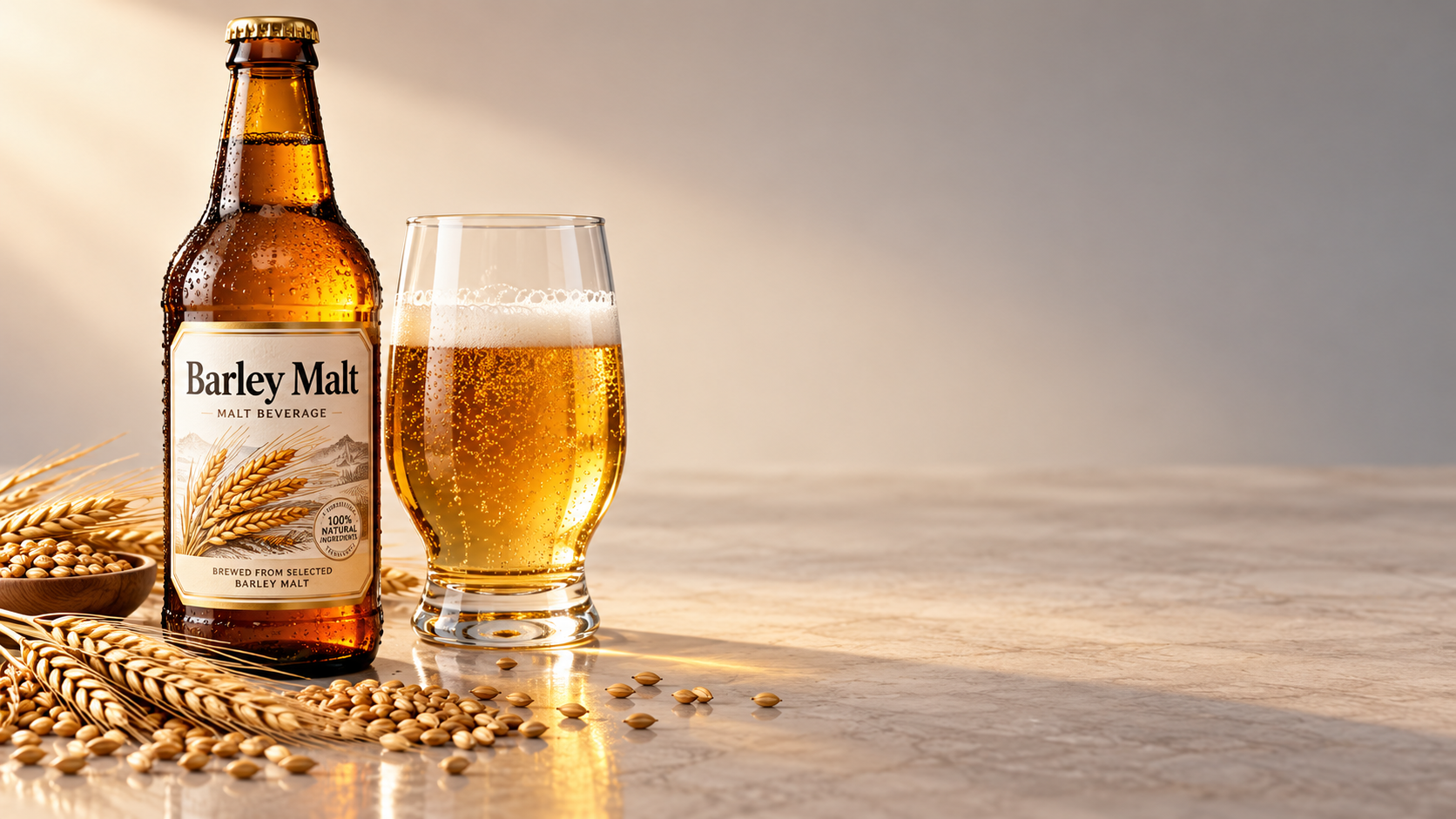
Is your favorite malt beverage gluten-free? If it contains barley malt, it generally contains gluten, even when the label highlights low calories or zero sugar.
For anyone with celiac disease or gluten sensitivity, ingredients and manufacturing controls matter more than flavor, color, or how light the drink tastes to you.
A gluten-free claim also means something different from “gluten-reduced” or “crafted to remove gluten.” Understanding that distinction can help you choose a more suitable drink.
This guide explains what barley-based labels reveal, which claims deserve closer attention, and how to check a beverage before buying it or ordering at a bar.
Is a Malt Beverage Gluten-Free? Start With the Grain
A conventional barley-based malt beverage is generally not gluten-free. Barley contains hordein, a gluten protein relevant to people who need to avoid gluten for medical reasons.
Malting means soaking grain, allowing it to germinate, and drying it under controlled conditions. This develops brewing characteristics; it does not reliably eliminate gluten proteins.
Wheat and rye also contain gluten. A wheat beer therefore requires the same basic caution as a barley lager, regardless of its appearance or flavor.
However, “malt” describes a processed grain rather than one specific plant. Sorghum, millet, and other naturally gluten-free grains can also be malted for beverage production.
The useful question is therefore: which grain was malted, and does the finished beverage have a credible gluten-free claim supported by appropriate controls and documentation?
When the grain source remains unclear, a manufacturer’s current product information is more useful than assumptions based on the beverage category or its brand name.
Why Light, Sugar-Free, and Fruit-Flavored Labels Do Not Settle the Question
Calories, sugar, and gluten describe different characteristics. A beverage can contain very little sugar while still containing proteins derived from barley or wheat during brewing.
“Light” usually refers to characteristics such as calories, alcohol content, or taste. It does not establish that the ingredients or finished beverage meet gluten-free requirements.
Likewise, a sugar-free or low-carbohydrate beer may still use barley malt. Fermentation changes sugars, but that does not make the remaining drink reliably gluten-free afterward.
Fruit flavoring also does not identify the base. A lemon, berry, or tropical drink might contain fermented barley malt, wine, distilled spirits, or another base.
Functional specialty beers deserve the same scrutiny. Added vitamins, electrolytes, botanicals, or other featured ingredients do not establish whether the underlying beverage contains gluten proteins.
Nor can you judge gluten content by clarity, sweetness, foam, or color. A pale, filtered lager may contain gluten despite looking lighter than other beers.
For purchasing decisions, read the base ingredients first. Treat front-label lifestyle claims as separate information that answers different questions about the drink you are considering.
Gluten-Free vs. Gluten-Reduced: Which Difference Matters Most?
A beer brewed with naturally gluten-free ingredients starts without barley, wheat, or rye. Producers must still manage other ingredients and potential cross-contact throughout production carefully.
A gluten-reduced beer usually starts with a gluten-containing grain, often barley. The producer then uses processing, such as enzymes, to break down certain protein structures.
Breaking proteins into smaller fragments is not the same as establishing their complete removal. Fermented and hydrolyzed products also present challenges for gluten measurement methods.
Some tests may not fully characterize all remaining gluten fragments. Consequently, a low reported result alone does not settle every safety question for someone with celiac disease.
For people with celiac disease, specialist guidance commonly favors beers made from gluten-free ingredients over barley beers labeled gluten-reduced or crafted to remove gluten instead.
Labeling rules differ between countries. A processed barley beer may qualify for a gluten-free claim in one market while facing different labeling requirements in another.
If you see both “barley” and “gluten-free,” investigate the local standard and production method. For celiac disease, discuss that product category with your treating clinician.
What Does the 20 ppm Gluten Threshold Actually Mean?
Many gluten-free labeling frameworks use a threshold below 20 parts per million, abbreviated ppm. That represents less than 20 milligrams of gluten per kilogram of food.
This is a concentration limit, not a promise that absolutely no gluten exists. It also does not mean every beverage below that figure qualifies automatically.
In the United States, applicable rules depend partly on which agency regulates the beverage. Ingredient restrictions and processing history can matter alongside a reported concentration.
For fermented products, records showing suitable ingredients and controls can be important because testing the finished liquid has limitations, especially when proteins have broken down.
Third-party certification can add confidence through defined requirements and oversight. However, programs differ in their thresholds, auditing practices, product coverage, and permitted ingredients or processes.
Check that any certification belongs to the exact product you are buying. A logo on a company website may apply to only selected products or markets.
A claim such as “tested” is less informative without context. Ask what standard the product meets and whether that standard addresses fermented beverages specifically and appropriately.
How to Read a Malt Beverage Label Before Buying
Start with the exact product name and the country where it is sold. Similar packaging can conceal different recipes, particularly across international markets or product updates.
Next, look for barley, wheat, rye, malt extract, malt syrup, and malt flavoring. If “malt” appears without its grain source, seek clarification from the manufacturer.
Read any allergen declaration, but do not rely on it alone. In the United States, barley is not one of the nine major food allergens.
That means the absence of a “contains wheat” statement does not establish that a beverage is gluten-free. Barley-based ingredients may still be present in it.
Some alcoholic beverages also lack a complete ingredient list on the package. In that situation, check the producer’s current product page or contact customer service.
Finally, look for a clear gluten-free claim and any independent certification. These provide more useful evidence than descriptions such as “clean,” “natural,” or “premium quality.”
- Confirm the grain or alcohol base.
- Check the exact gluten-related wording.
- Verify that certification covers this product.
- Resolve unclear ingredients before drinking.
What Should You Ask the Manufacturer?
Useful questions focus on the finished product and how it is made. Asking only whether the company “offers gluten-free options” can produce an incomplete answer.
Ask whether the beverage uses barley, wheat, rye, or ingredients derived from them. Also ask whether enzymes are used to reduce gluten after brewing begins.
For a product made from gluten-free grains, ask how shared equipment is managed. Dedicated equipment is helpful, while shared equipment requires effective, documented cross-contact controls.
Ask which gluten-free labeling standard the product follows in your market. If certification is claimed, request the certifying organization and confirmation of current product coverage.
A useful response identifies the specific beverage, its ingredients, and relevant controls. A vague assurance that “fermentation removes gluten” does not adequately answer your question.
For brands with broad portfolios, assess each product individually. A classic lager, German wheat beer, fruit beer, and specialty beer can have substantially different formulations.
Which Alternatives Are Worth Checking?
Beer brewed from sorghum, rice, millet, buckwheat, or other gluten-free ingredients can be an option. Look for confirmation covering the complete recipe and production process.
Rice or corn in a standard beer does not make it gluten-free. Many brewers combine these grains with barley malt, so the full formulation matters.
Cider is often made from apples and can offer another option. Check flavorings, additions, and labeling rather than assuming every cider is suitable for you.
Hard seltzer also needs individual checking. Some products use a fermented sugar base, while others are malt-based despite sharing similar packaging and flavors on shelves.
Properly distilled spirits do not carry gluten proteins through distillation, even when produced from gluten-containing grains. Added ingredients after distillation still deserve attention when choosing.
Alcohol-free beer is not automatically gluten-free either. Removing or limiting alcohol addresses a different component, so a barley-based alcohol-free beer still needs careful label checking.
How Can You Make a More Confident Choice at a Bar?
At a bar or restaurant, ask for the exact brand and product name. “We have a light beer” provides no reliable information about gluten content.
A sealed bottle or can makes it easier to inspect the current label. It can also reduce uncertainty about what has been poured for you.
For draught service, ask whether the line previously carried conventional beer and how equipment is cleaned. Shared lines and handling can introduce avoidable uncertainty about cross-contact.
If staff cannot verify the product or service setup, choose a clearly identified alternative. You do not need to resolve an uncertain formulation while ordering.
Keep a short list of products you have already checked, but review labels periodically. Recipes, suppliers, certifications, and market-specific formulations can change over time too.
The Takeaway: Follow the Grain, Then Verify the Claim
A barley-based malt beverage generally contains gluten. Light taste, low calories, fruit flavor, zero sugar, and low alcohol do not change that basic starting point.
Your strongest purchasing approach combines the grain source, a clear gluten-free claim, and credible production controls. Certification can provide additional reassurance when its scope is clear.
If you have celiac disease, be especially cautious with gluten-reduced barley beer. Favor clearly verified alternatives and use your clinician’s guidance when product information remains uncertain.
Before your next purchase, check one thing first: what is the beverage made from? That answer tells you which label details deserve your attention next.