



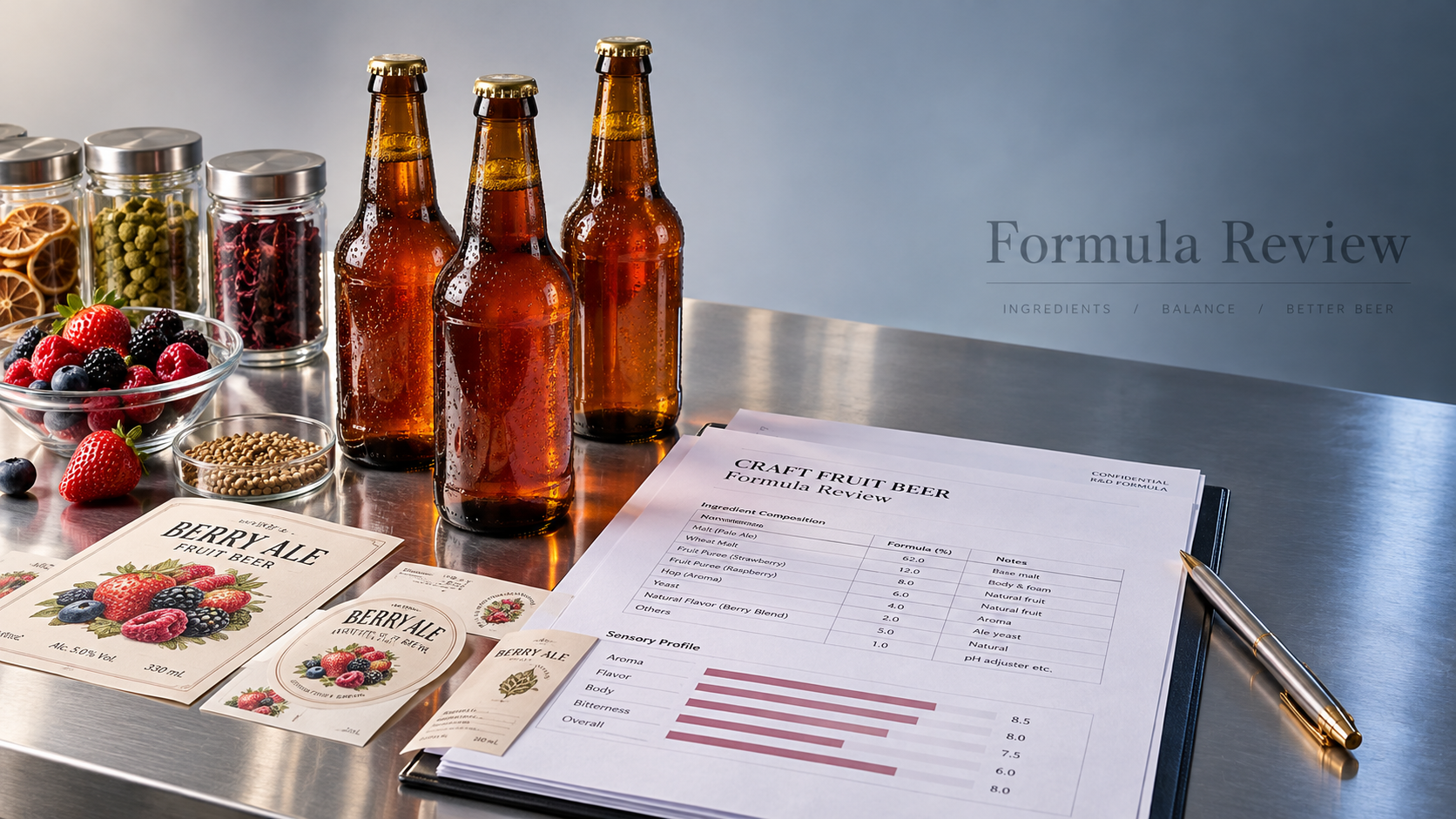
A fruit-flavored beer reaches its final quality review. The sensory profile is right, the packaging artwork is nearly finished, and the importer is asking for a launch date. Then someone asks: does this malt beverage need TTB formula approval before its label can be approved?
The answer depends on the ingredients, production methods, and applicable exemptions—not simply whether the product is called beer. Some fruit additions are exempt from formula approval, while a seemingly similar product made with a compounded flavor may require it. For quality control and safety teams, identifying that distinction early can prevent label rejection, packaging waste, and unnecessary reformulation.
This guide explains how to assess formula requirements, what an exemption actually covers, and which records should support a U.S. market-release decision.
Formula approval and label approval answer different questions
The Alcohol and Tobacco Tax and Trade Bureau, or TTB, reviews formulas to understand a product’s composition and manufacturing method. Where required, formula approval helps establish the product’s regulatory classification and the information needed to describe it accurately on a label.
A Certificate of Label Approval, commonly called a COLA, addresses the label. It does not replace formula approval, and an approved formula does not authorize every proposed label claim.
When a formula is required, obtain that approval before submitting the associated COLA application. For domestic production, the formula requirements in 27 CFR 25.55 also establish approval obligations before production of covered products. Imported products follow a different operational pathway, but required formula approval still needs to precede label approval.
Neither approval should be treated as a general food-safety certification. Ingredient legality, allergen controls, sanitation, stability, and other applicable obligations remain separate responsibilities.
Start by confirming that the product is a malt beverage
“Beer” and “malt beverage” are not interchangeable across all federal rules. Under the Federal Alcohol Administration Act framework, a malt beverage generally involves alcoholic fermentation of an infusion or decoction of malted barley with hops, with other permitted materials potentially included.
A fermented drink made without malted barley or without hops may still be treated as beer for federal excise-tax purposes, yet fall outside TTB’s FAA Act malt beverage labeling jurisdiction. Such products may instead be subject to FDA food-labeling requirements, while retaining other TTB obligations.
This matters for alternative-grain products and some specialty fermented beverages. A brand name, brewery production site, or beer-style package does not settle jurisdiction. Quality teams should verify the actual recipe and regulatory classification before assuming that a conventional malt beverage COLA pathway applies.
When is TTB formula approval generally required?
For domestic beer, 27 CFR 25.55 is a central starting point. It covers specified ingredients and processing methods, while allowing TTB to recognize exemptions. A useful review therefore asks two questions: does the recipe or process trigger a formula requirement, and does an applicable exemption remove that requirement?
The table is a screening tool, not a substitute for reviewing the complete formulation. A familiar beer style can contain a formula-triggering ingredient, while an unusual-sounding fruit beer may qualify for an exemption.
Compounded flavors deserve particular attention
“Natural flavor” on a supplier’s specification is not enough information to establish a formula exemption. A flavor preparation may contain alcohol, carriers, colors, preservatives, or multiple flavoring components. Its regulatory treatment can differ from that of the fruit or spice whose taste it reproduces.
For example, adding an eligible fruit directly is not necessarily equivalent to adding a commercial fruit-flavor preparation. Request the supplier information needed for TTB review, including the applicable Flavor Ingredient Data Sheet and supporting information. If composition is confidential, coordinate an acceptable disclosure route rather than allowing procurement confidentiality to leave the regulatory file incomplete.
Production methods can trigger review independently of ingredients
A short ingredient list does not guarantee that a formula is unnecessary. Processes such as removing a constituent, concentrating a product, or using certain treatments can create a separate formula question. The exact equipment, operating purpose, and effect on the beverage matter.
This is especially relevant when developing reduced-alcohol, concentrated, or otherwise modified beers. Do not assume that every filtration or alcohol-adjustment process receives the same treatment. Describe the operation precisely and compare it with the current regulation and TTB guidance.
How malt beverage formula exemptions work
TTB Ruling 2015-1 is an important reference for exemptions involving specified ingredients and processes. It expanded the circumstances in which certain beers could be produced without submitting a formula, including beers made with numerous listed fruits, spices, and food ingredients.
The practical benefit is substantial: some specialty recipes can move forward without a formula application. The common mistake is interpreting that relief as a blanket exemption for all fruit beers, all natural ingredients, or all variations of a listed material.
An exemption is specific to its stated scope. An ingredient name alone may not establish eligibility. Whole fruit, juice, extract, and a compounded flavor can represent different regulatory situations. Likewise, one exempt ingredient does not cancel a separate requirement created by another ingredient or a processing step.
A defensible exemption record should identify:
- The precise ingredient or process being assessed.
- The relevant ruling or guidance provision.
- The supplier specification supporting the ingredient’s identity and form.
- Any conditions or limitations attached to the exemption.
- The reviewer, review date, and recipe version covered by the decision.
Retain this assessment even when no submission is needed. Months later, a distributor’s question or a supplier change should not force the team to reconstruct why the product was considered exempt.
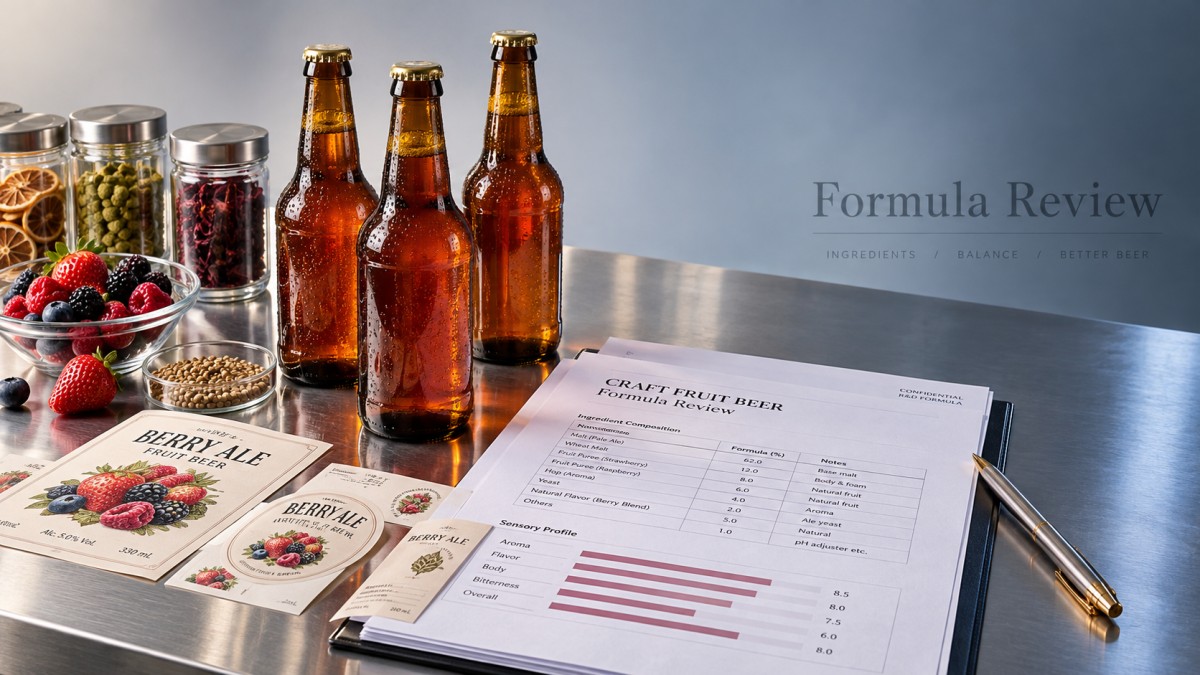
What the formula file needs to tell TTB—and your own team
A strong formula file should connect the commercial recipe to the actual manufacturing process. It should not depend on informal product names or a development spreadsheet that no longer reflects production.
Ingredient identity, quantity, and function
Record all ingredients in the units and format required by the application. Identify flavors, colors, sweeteners, processing aids, and specialty additions accurately. Include supplier and product references where needed, and resolve inconsistencies between purchasing names and regulatory descriptions.
A purchasing entry such as “berry blend” tells a reviewer very little. It may describe fruit puree, a sweetened preparation, or a flavor system. Each possibility can change the regulatory assessment.
A complete manufacturing narrative
Explain when additions occur, how fermentation proceeds, and which post-fermentation operations are used. Include relevant treatments, blending, concentration, or alcohol adjustment. The description should match the process followed at the manufacturing site, including an overseas OEM facility.
Finished-product characteristics and supporting calculations
Provide the required finished-product information, including alcohol content and relevant calculations. When alcohol-containing flavors are used, calculate their contribution rather than relying only on the beverage’s total ABV.
Under 27 CFR 7.5, malt beverages at or below 6 percent ABV may derive no more than 49 percent of their alcohol from flavors and other nonbeverage ingredients containing alcohol. Above 6 percent ABV, those ingredients may contribute no more than 1.5 percent of the finished beverage’s volume as alcohol. These limits affect classification and make accurate supplier data essential.
Formula approval does not settle every labeling question
Once the formula position is resolved, the label still needs an independent review. Specialty ingredients may affect the required designation or descriptive wording. A fanciful product name does not necessarily provide an adequate statement of the beverage’s identity or composition.
For sugar-free or low-calorie beer, claims need separate substantiation and review under the applicable labeling rules. Formula approval alone does not establish that a nutrition claim is permissible or that the finished product consistently meets it. Analytical testing should reflect the product actually packaged, not only a pilot batch.
“Functional” specialty beer warrants particular caution. Adding a botanical or nutrient does not automatically make its use lawful, and formula approval does not authorize disease-treatment claims, misleading health claims, or unsupported wellness messaging. Review ingredient safety and intended-use status separately, including applicable FDA requirements.
Government warnings, net contents, alcohol statements where required, importer information, and other mandatory particulars also need their own checks. An approved formulation is one part of the release file—not the entire file.
A practical release workflow for breweries, importers, and OEM partners
For a producer such as Jinpai Beer, supplying classic lagers, wheat beers, fruit-flavored beers, and specialty products through OEM/ODM arrangements, the important distinction is between a commercially approved recipe and a U.S.-regulatory-ready recipe. They are not always the same.
Before final artwork is commissioned, the manufacturer and U.S. importer should agree on who owns each regulatory task and who can obtain confidential supplier information. A distributor’s target launch date cannot compensate for an unresolved flavor specification.
- Lock the intended formulation. Identify the manufacturing site, U.S. product version, ingredients, and process.
- Confirm jurisdiction and formula status. Document either the required approval route or the exemption rationale.
- Complete required submissions. Resolve formula questions before submitting the related COLA application.
- Reconcile label and production records. Ensure the formula, product designation, claims, and artwork describe the same beverage.
- Apply release controls. Verify required approvals, finished-product specifications, and the label actually used.
Changes after approval need controlled assessment. A new flavor supplier, increased dosage, different fruit preparation, or revised process may require a new or superseding formula submission. Not every change does, but no change should be assumed acceptable simply because the marketed flavor name remains unchanged.
Keep the decision traceable
The most useful answer to “Does this malt beverage need formula approval?” is a documented conclusion tied to a specific recipe and process. “It is just beer” is not enough. Neither is “fruit beers are exempt.”
Use the current text of 27 CFR 25.55, the malt beverage rules in 27 CFR Part 7, and applicable TTB rulings to support the assessment. Where ingredient form or process classification remains uncertain, seek clarification before committing to packaging or shipment.
For quality and safety teams, that early review is more than paperwork. It connects what the brewery makes, what the importer submits, and what the consumer reads—before a preventable discrepancy becomes a market-release problem.
Thank you very much for writing to us. Please leave your message and contact information, we will reply to you within 24 hours.