



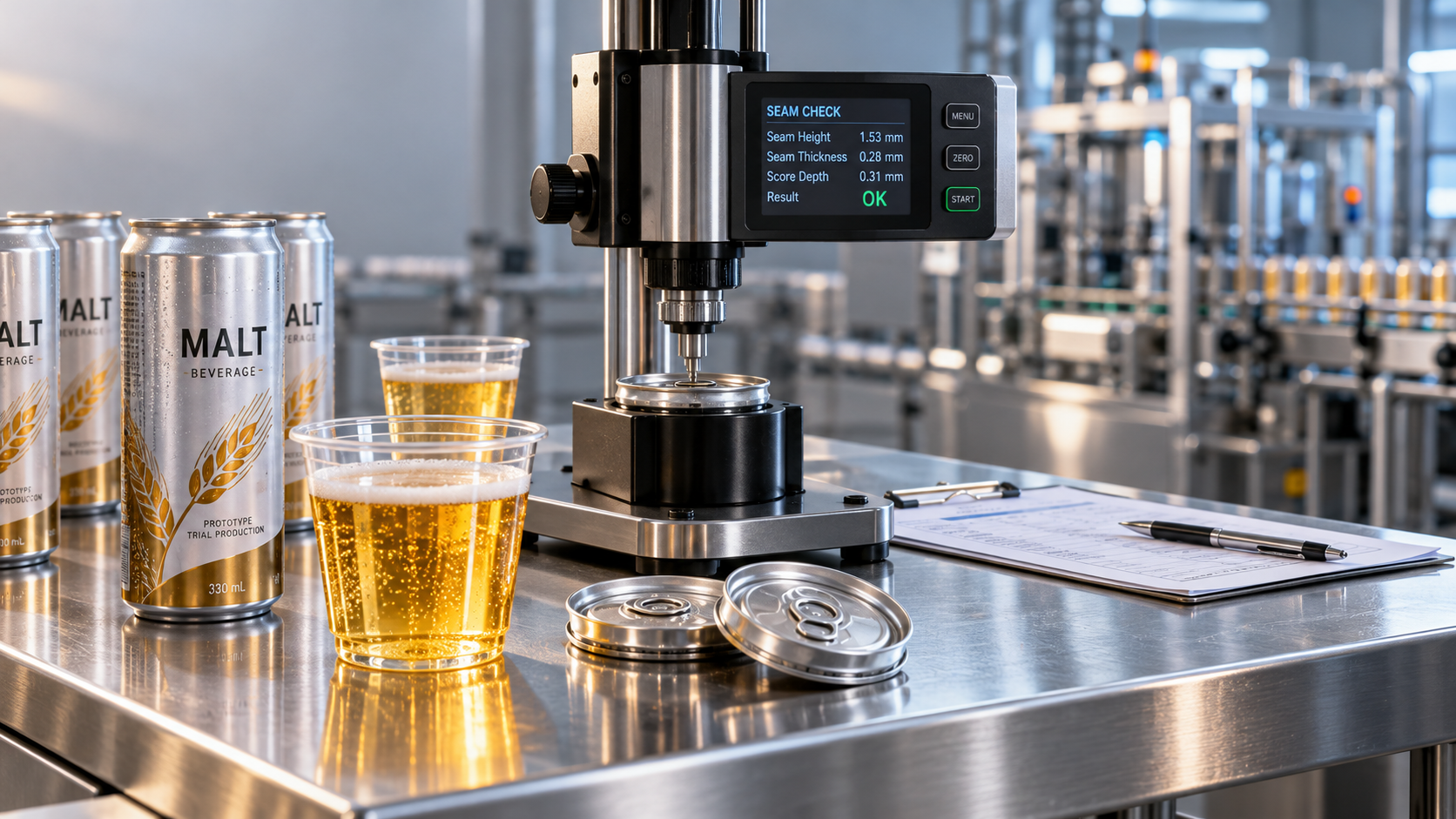
Choose a malt beverage co-packer on its ability to deliver an agreed product consistently, at an order size your business can absorb. A low quoted price has limited value if the production trial leaves packaging questions unresolved, the quality agreement lacks release criteria, or the minimum order creates more stock than your channels can sell within its usable life.
For procurement teams, a strong candidate should pass three connected tests: demonstrate the product on a relevant production process, provide evidence that finished batches meet written specifications, and offer commercial terms that work against realistic demand. These tests deserve attention before a launch date or annual purchasing commitment becomes fixed.
Make supplier quotations comparable before paying for trials
A meaningful comparison starts with a product brief that describes what must arrive at the warehouse. For a classic lager, this might cover the sensory profile, alcohol content, carbonation, appearance, packaging format, and intended shelf life. A fruit-flavored beer needs additional clarity around ingredients, sweetness, color, sediment expectations, and flavor stability. The more customized the formulation, the less useful a generic price per can becomes.
Distinguish requirements that are essential from preferences that can move. A particular can size may be dictated by a retail listing, while a different secondary pack could be acceptable. A target flavor profile may be fixed, while the ingredient route remains open. This gives a potential partner room to propose practical changes without quietly changing the product you intend to buy.
Ask each candidate to quote against the same specification and delivery basis. Establish whether the price includes ingredients, primary and secondary packaging, production losses, testing, storage, and freight. Identify development fees, artwork or tooling charges, and any packaging deposits separately. Otherwise, the apparently cheaper offer may simply include fewer responsibilities.
Also establish who controls the formulation. Under an OEM arrangement, the buyer may supply an existing recipe; an ODM project may begin with the manufacturer's formulation and development work. These labels alone do not settle ownership, exclusivity, ingredient substitution rights, or access to production specifications. Put those rights into the agreement, particularly if future transfer to another manufacturer matters.
Use trials to resolve production questions
A tasting sample can establish whether a flavor direction is promising. It cannot, by itself, demonstrate that the commercial process will reproduce that result. Before approving trial expenditure, agree on the questions the trial must answer and the evidence required to move forward.
A development batch can help refine a recipe, while a pilot batch can reveal process sensitivities. A trial on the intended commercial line provides stronger evidence about filling, packaging, and production handling. Each has a purpose, but the supplier should explain which commercial conditions the trial represents and which remain untested.
For fermented products, examine whether the proposed equipment and process can reproduce the intended fermentation and maturation profile. For beverages with added fruit ingredients or other additions, discuss when those materials enter the process and how that affects consistency, microbiological control, and stability. A manufacturer experienced in straightforward lager production may need additional capability to handle a more complex formulation.
Packaging deserves its own acceptance decision. The trial should use the intended container, closure, and pack configuration wherever practical. Changes in container size, filling conditions, or stabilization treatment can affect carbonation, oxygen exposure, flavor, and package performance. If substitute packaging is used during development, record what must still be demonstrated before commercial release.
Agree trial acceptance criteria in advance. A useful trial record should address:
- The recipe version, ingredient specifications, and permitted adjustments.
- The equipment, process conditions, and packaging used.
- Measured product attributes and sensory results against agreed limits.
- Saleable output, losses, and any production interruptions affecting cost or repeatability.
- Outstanding stability work and the conditions for approving commercial production.
Keep a jointly approved reference sample, with defined storage conditions and an understanding of how aging affects comparison. Written sensory descriptions should accompany it. A sample alone becomes a weaker reference as it changes over time, especially when later batches are compared at different ages.
Trial terms also need commercial clarity. Specify who pays for ingredients and packaging, what happens to unused materials, whether trial fees are credited against production, and who funds a repeat if agreed criteria are missed. A trial that fails a predefined requirement should trigger an investigation and a documented decision about the next step.
Ask how a batch earns approval for shipment
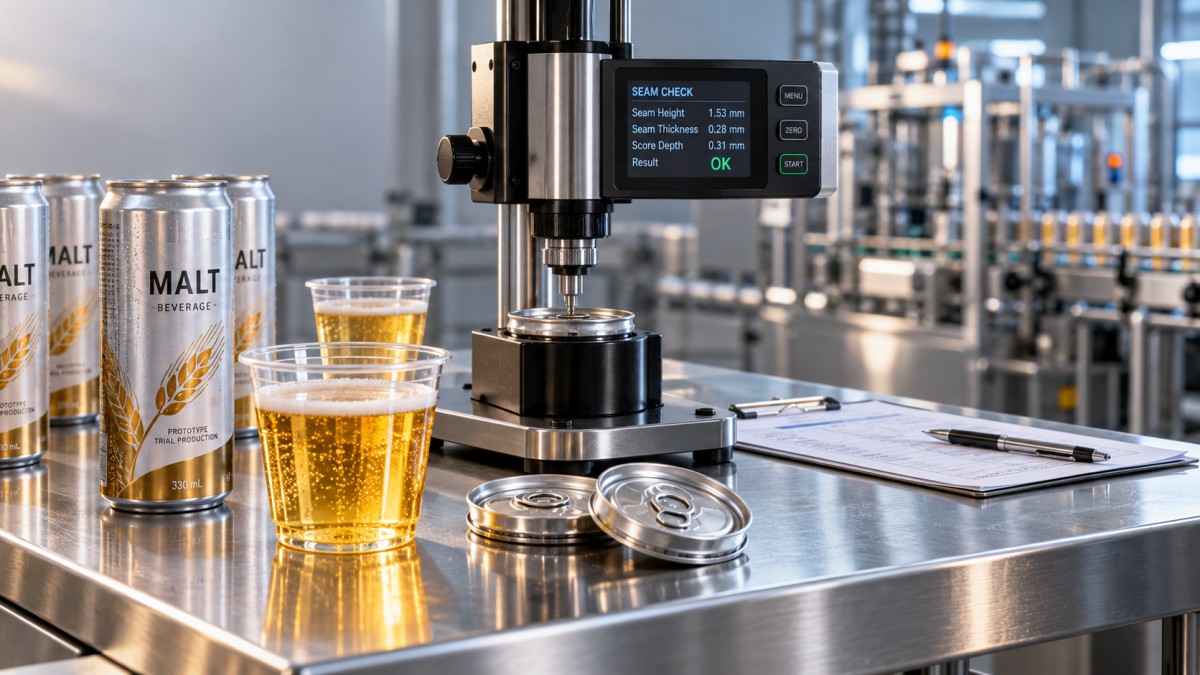
Quality assurance becomes useful to procurement when it explains how the supplier prevents, detects, and resolves failures. A certificate or a list of laboratory instruments provides only part of that evidence. Ask to review a representative batch record and certificate of analysis, with confidential information removed, alongside the proposed testing and release plan for your product.
The finished-product specification should give measurable limits where measurement is appropriate. Depending on the formulation, relevant attributes may include alcohol content, pH, carbonation, color, clarity or intended haze, fill quantity, and sensory characteristics. Define the test methods or agreed method references as well. Numbers from different methods may not support a reliable comparison.
Microbiological checks should reflect the product, process, and storage conditions. A fermented beer, a sweetened fruit-containing beverage, and a reduced-alcohol formulation can present different control needs. Ask the manufacturer to explain the basis of its controls, sampling points, and response to an adverse result. Avoid assuming that a testing plan suitable for one recipe automatically covers another.
For packaged beer, oxygen control and closure integrity warrant specific discussion because they can affect product quality during distribution. Ask where relevant measurements are taken, how results are recorded, and what happens when a limit is exceeded. For cans, this includes how seams are checked; other package formats need appropriate closure checks. The buyer should be able to see how an unacceptable result prevents shipment.
Release responsibility must be explicit. Establish which results must be available before dispatch, who approves release, and how any tests completed later affect stock already shipped. Agree how deviations are reported and whether the buyer must authorize a proposed concession. Production pressure should not leave these decisions to an informal conversation on loading day.
Shelf life needs evidence tied to the actual product and package. Ask how the proposed period was established, which storage conditions were evaluated, and whether the evidence covers your formulation. Accelerated studies can support development decisions, but their relationship to real storage needs justification. A shelf-life statement for a different recipe is a starting point for discussion, rather than sufficient evidence for a customized product.
Distribution conditions belong in that discussion. A product moving through temperature-controlled channels faces different conditions from one held in warm warehouses or shipped over long routes. Set the required remaining shelf life at delivery and check that production scheduling, testing, transit, and distributor handling leave enough time for sale. Product age at receipt can matter as much as the nominal shelf life printed on the package.
Finally, review traceability and change control. The supplier should be able to connect finished lots with ingredient and packaging records and explain its withdrawal or recall process. Require advance notification of changes that could affect the approved product, including ingredient substitutions, process changes, and production-site transfers. Assign responsibility for destination-market labeling and any alcohol, nutrition, or other product claims.
Read the MOQ as an inventory commitment
A quoted minimum order quantity can conceal several separate minimums. The brewery may require a minimum brewing volume, the filling line may require a minimum packaging run, and the packaging supplier may require a larger purchase of printed cans or cartons. Ask which minimum applies per recipe, per package size, per artwork version, and per order.
This distinction becomes especially important when launching several flavors. A combined order may meet the manufacturer's total volume requirement while individual products still fall below their own batch or packaging minimums. Confirm whether variants can share materials or production arrangements, and whether any resulting savings appear in the quotation.
Separate finished-goods commitments from material commitments. A manufacturer might release finished product in smaller shipments while requiring the buyer to purchase all custom packaging upfront. That can ease warehouse pressure without reducing cash exposure. Clarify ownership, storage charges, damage responsibility, and what happens to remaining materials after a recipe change, artwork revision, or contract termination.
Assess the MOQ against conservative sell-through by SKU and channel. Use expected sales after launch promotions, account for the time needed to secure listings, and allow for returns or slower accounts. Work backward from the last acceptable selling date to determine how much inventory the business can reasonably take. A forecast based only on the launch month can overstate sustainable demand.
Compare suppliers using the cost of saleable stock over that period. Include production, development, packaging commitments, testing, freight, storage, financing, and plausible write-offs. Show fixed launch costs separately so that both first-order economics and repeat-order economics remain visible. A higher unit price with a smaller workable order can produce a lower total cash requirement and less obsolete stock.
Volume pricing deserves the same discipline. Request price breaks alongside the additional inventory and cash each requires. Check whether forecast volumes are binding, whether unused materials must be purchased, and whether quoted prices depend on a particular production schedule. A discount becomes less attractive when it requires stock to sit through much of its selling window.
Turn the first order into a controlled commitment
Before issuing the purchase order, bring the trial outcome, quality specification, and commercial terms into one consistent agreement. Confirm the approved recipe and packaging, release requirements, order tolerance, delivery window, and treatment of rejected goods. State who bears investigation, replacement, disposal, or recall costs under the agreed circumstances. Check when deposits and balances become payable relative to production and release.
Ask for a realistic replenishment lead time that includes material purchasing and production scheduling, then compare it with your reorder plan. A manageable first MOQ offers limited protection if repeat production requires more notice than the business can provide. Where demand remains uncertain, negotiate smaller initial commitments, shared packaging, or staged production where the process and material arrangements allow.
The final choice should follow the evidence. If the preferred supplier can reproduce the product but requires an unmanageable packaging commitment, adjust the pack or launch scope before signing. If the economics work but quality release remains vague, resolve that gap before placing the order. Proceed when the production evidence, batch controls, and inventory commitment support the same launch plan.
Thank you very much for writing to us. Please leave your message and contact information, we will reply to you within 24 hours.