



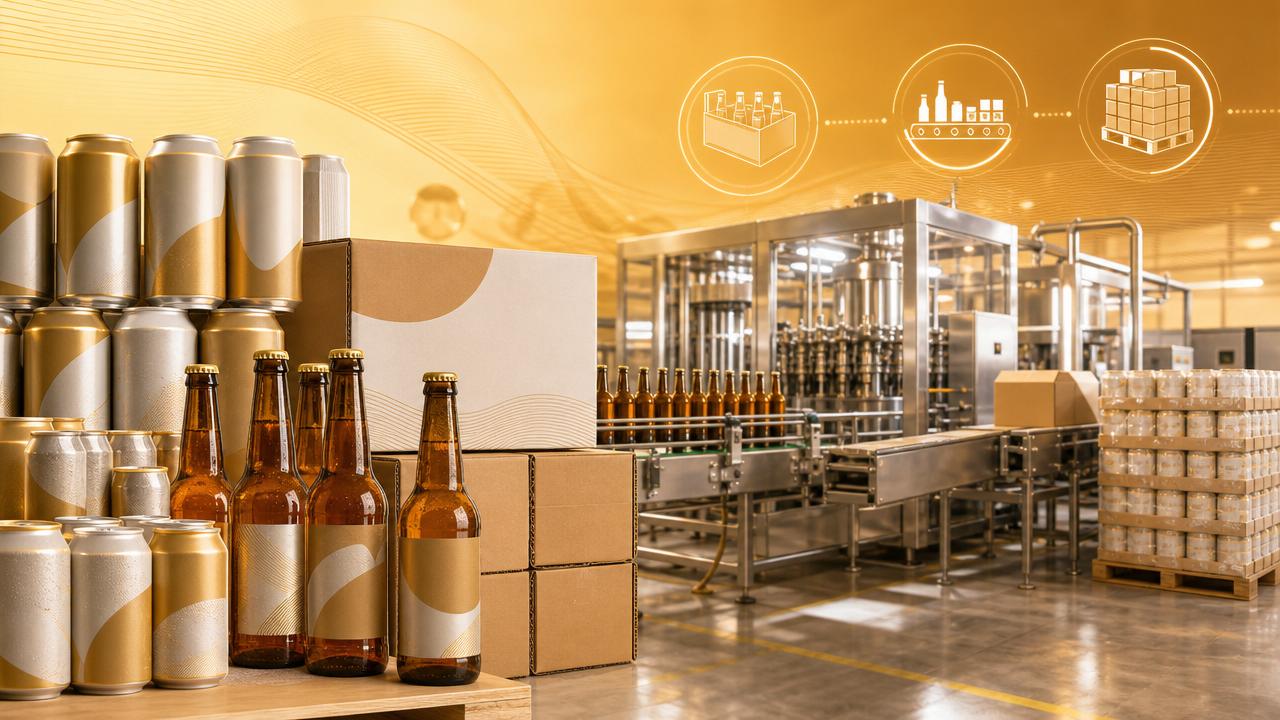
Choosing the right private label beer manufacturer can directly impact your purchasing cost, launch schedule, and product competitiveness. For procurement teams, understanding the differences in MOQ, lead time, and production flexibility is essential when evaluating suppliers. This article explains the key factors that influence cooperation efficiency and helps buyers identify the best manufacturing partner for private label beer projects.
In the beer and beverage sector, a supplier is not just a production source. For buyers serving supermarkets, bars, restaurant chains, online retail, or regional distribution, the manufacturer affects inventory pressure, SKU planning, packaging speed, and the ability to respond to seasonal demand. A capable private label beer manufacturer should combine stable brewing quality with practical OEM/ODM support, realistic production scheduling, and product development flexibility across multiple beer styles.
For procurement professionals comparing suppliers, the three most sensitive variables are usually minimum order quantity, lead time, and flexibility. These factors influence cash flow, warehouse turnover, launch timing, and risk exposure. They also determine whether a new beer line can move from concept to shelf in 4–8 weeks or stretch into a much longer cycle with hidden coordination costs.
Why MOQ Matters More Than Unit Price
MOQ is often the first commercial threshold in any private label beer manufacturer discussion. Many buyers focus on per-can or per-bottle pricing, but MOQ affects much more than price. It determines how many SKUs you can test at one time, how much packaging material must be committed up front, and how much stock will sit in storage before sell-through begins.
MOQ and procurement risk in beer projects
In private label beer purchasing, MOQ may be driven by beer type, packaging format, and labeling method. A standard lager in a common 330 ml can may support a lower MOQ than a specialty fruit beer with custom printed cans, unique ingredients, or mixed packaging requirements. For small and medium buyers, the difference between 3,000 units and 30,000 units can directly decide whether a project is commercially viable.
A lower MOQ does not always mean a better supplier. Buyers should assess whether the manufacturer can keep quality stable in smaller production runs. Brewing consistency, carbonation control, filling loss, and packaging accuracy are more important than a low opening number on a quotation sheet.
Typical MOQ drivers
- Beer style complexity, such as classic lager versus functional specialty beer
- Packaging type, including cans, glass bottles, or draft solutions
- Labeling method, such as sticker label versus full custom printed packaging
- Ingredient sourcing volume for fruit flavor, low-calorie, or sugar-free formulas
- Carton design and outer packaging batch requirements
The table below shows how MOQ expectations can vary by private label beer project type. These are common market ranges for procurement comparison and supplier screening rather than fixed rules.
For buyers, the key lesson is that MOQ should be judged together with sales velocity and SKU strategy. If your channel can absorb 10,000 units in 30–45 days, a medium MOQ may be acceptable. If your launch is limited to one city, one online campaign, or one bar network, smaller runs can reduce dead stock and cash lock-up.
How to evaluate MOQ beyond the quote
When screening a private label beer manufacturer, ask whether MOQ applies to each flavor, each packaging specification, or the total order. This detail matters. Some factories allow mixed flavor runs under one packaging setup, while others require separate minimums for every SKU. The practical difference can reduce initial investment by 20%–40% for buyers launching 3 to 5 variants.
It is also useful to ask whether trial orders, pilot batches, or stock packaging options are available. Manufacturers with OEM/ODM experience are often better at structuring entry-level projects for new distributors and private label buyers who need proof of market acceptance before scaling.
Lead Time: The Hidden Cost Behind Delayed Launches
Lead time is not just a factory production window. In beverage procurement, it usually includes formula confirmation, packaging design approval, raw material preparation, brewing, fermentation, filtration, filling, inspection, and shipment release. A supplier that quotes 20 days without clarifying these stages may create planning gaps later.
Typical lead time stages for private label beer
For many beer projects, sample confirmation can take 7–14 days, depending on whether the recipe is standard or customized. Packaging design and artwork approval may require another 5–10 days. Production itself often ranges from 15–30 days after all materials are confirmed, especially when fermentation time differs by style.
A classic lager may move faster than a specialty beer requiring additional flavor adjustments or specific raw material coordination. If export labeling, multi-language packaging, or channel-specific cartons are involved, another 3–7 days of review and revision can easily be added.
The following table breaks down a practical lead time view that procurement teams can use during supplier comparison.
A realistic total lead time for a new private label beer launch is often 4–8 weeks from confirmed brief to shipment-ready goods. Buyers planning promotions around summer sales, holiday gifting, or sports events should work backward from shelf date rather than relying on the factory’s shortest possible estimate.
Questions that reveal lead time reliability
- Does the supplier separate sample time, packaging preparation, and mass production time?
- Can they offer weekly progress updates during the 3 main stages?
- Are core materials stocked regularly or purchased only after order confirmation?
- What happens if artwork is revised after production planning starts?
- Can repeat orders be shortened by using approved formula and standard packaging materials?
For repeat orders, a strong private label beer manufacturer may reduce turnaround by 20%–30% if formula, label structure, and packaging components remain unchanged. This is important for buyers running replenishment cycles every 30, 45, or 60 days.
Production Flexibility and Why It Drives Long-Term Value
Flexibility is often underestimated at the first quotation stage, but it becomes critical once a product moves into real market conditions. Promotions change, customer preferences shift, and channel partners request packaging updates. A flexible private label beer manufacturer can support these changes without turning every revision into a full project restart.
What flexibility means in beer manufacturing
Flexibility includes recipe adaptation, packaging variation, mixed SKU production, and communication speed. For example, a distributor may start with a standard lager, then add German wheat and fruit-flavored beer within one quarter. Another buyer may begin with 330 ml cans and later request glass bottles for restaurant channels. Not every supplier can support this efficiently.
In the craft beer segment, flexibility also includes development support for sugar-free low-calorie beer and functional specialty beers. These products often need more formulation discussion, sensory alignment, and ingredient coordination than conventional lager projects.
Signs of a flexible supplier
- Ability to handle multiple beer categories under one cooperation model
- Support for OEM and ODM instead of standard contract filling only
- Willingness to offer phased launch plans from pilot batch to scale-up order
- Packaging options for online retail, bars, supermarkets, and restaurants
- Faster revision response for artwork, carton text, or flavor extensions
The table below compares rigid and flexible supplier models from a procurement perspective.
For long-term procurement, flexibility lowers operational friction. It can reduce changeover delays, limit wasted packaging inventory, and support faster response to channel demand. This is especially valuable when a buyer serves both online and offline markets with different pack formats and seasonal promotions.
How Procurement Teams Should Compare Suppliers
A strong sourcing decision should go beyond price comparison. Procurement teams should use a structured scorecard covering at least 4 dimensions: commercial threshold, production timeline, technical fit, and service responsiveness. This helps identify whether the manufacturer can support not just the first order, but repeat orders across 6–12 months.
A practical 6-point supplier review checklist
- MOQ by SKU, package type, and total order level
- Lead time split by sampling, packaging, and mass production stage
- Beer category capability, including lager, wheat, fruit, and low-calorie options
- OEM/ODM support for recipe development and private packaging
- Communication speed, revision process, and issue response within 24–48 hours
- Scalability for repeat orders and mixed channel supply
Common mistakes buyers should avoid
One common mistake is accepting a low unit price while ignoring packaging complexity. Another is comparing two suppliers without normalizing project conditions, such as can size, alcohol content, number of flavors, or carton structure. Procurement teams should request like-for-like quotations to avoid misleading price gaps.
A third mistake is overlooking launch sequence. If the project includes 4 flavors, it may be more efficient to launch 2 core SKUs first, validate sell-through in 30 days, and then expand. A capable private label beer manufacturer should be able to advise on phased execution rather than pushing one large commitment from day one.
Why category breadth improves sourcing efficiency
When a manufacturer can supply classic lager, German wheat, sugar-free low-calorie beer, fruit-flavored beer, and functional specialty beers, buyers gain more room for portfolio planning. This matters for distributors and retailers who want to test mainstream volume products alongside higher-margin differentiated SKUs without managing multiple factories.
Jinpai Beer operates across R&D, production, and distribution of craft beer, with OEM/ODM services, wholesale supply, and customized solutions for global online and offline channels. For procurement teams, that type of integrated structure can simplify communication and improve alignment between brand concept, product development, and commercial delivery.
Best-Fit Scenarios for Different Buyers
Not every buyer needs the same supplier model. The right private label beer manufacturer depends on your route to market, reorder rhythm, and brand development plan. Procurement decisions become more accurate when matched to real channel scenarios.
Distributors and importers
Distributors usually need balanced MOQ, reliable lead time, and room to expand successful SKUs. A supplier that can support 1 initial core line and 2 follow-on variants within one season is often more useful than one offering only a low opening price. Inventory turnover and repeatability matter more than single-batch cost alone.
Retail chains and supermarkets
Retail buyers often prioritize packaging stability, labeling accuracy, and delivery predictability. They may require strict launch calendars tied to promotions, usually within 6–10 weeks. In this scenario, the manufacturer’s ability to lock packaging approvals early and keep replenishment timing stable is a major purchasing advantage.
Bars, restaurants, and hospitality groups
Hospitality buyers may favor differentiated taste profiles and smaller, more flexible launch plans. Fruit beer, wheat beer, and functional specialty beers can work well for seasonal menus or venue-specific concepts. Here, product creativity and moderate MOQ often matter more than high-volume economies of scale.
Final Considerations Before You Place an Order
Before confirming a supplier, buyers should align 5 core items in writing: target beer style, packaging specification, MOQ basis, lead time breakdown, and revision process. These details reduce disputes and improve internal planning across purchasing, sales, and logistics teams.
A dependable private label beer manufacturer should be able to explain not only what can be produced, but also how the project will move through each stage, where lead time risks may appear, and what options exist for phased cooperation. This level of clarity helps procurement teams control cost, timing, and channel readiness more effectively.
If you are sourcing a partner for classic lager, German wheat, sugar-free low-calorie beer, fruit-flavored beer, or functional specialty beer, it is worth choosing a manufacturer with broad category capability, OEM/ODM experience, and global supply coordination. Contact Jinpai Beer to discuss your private label beer project, get a tailored proposal, and explore a practical solution for your target market.
Thank you very much for writing to us. Please leave your message and contact information, we will reply to you within 24 hours.