



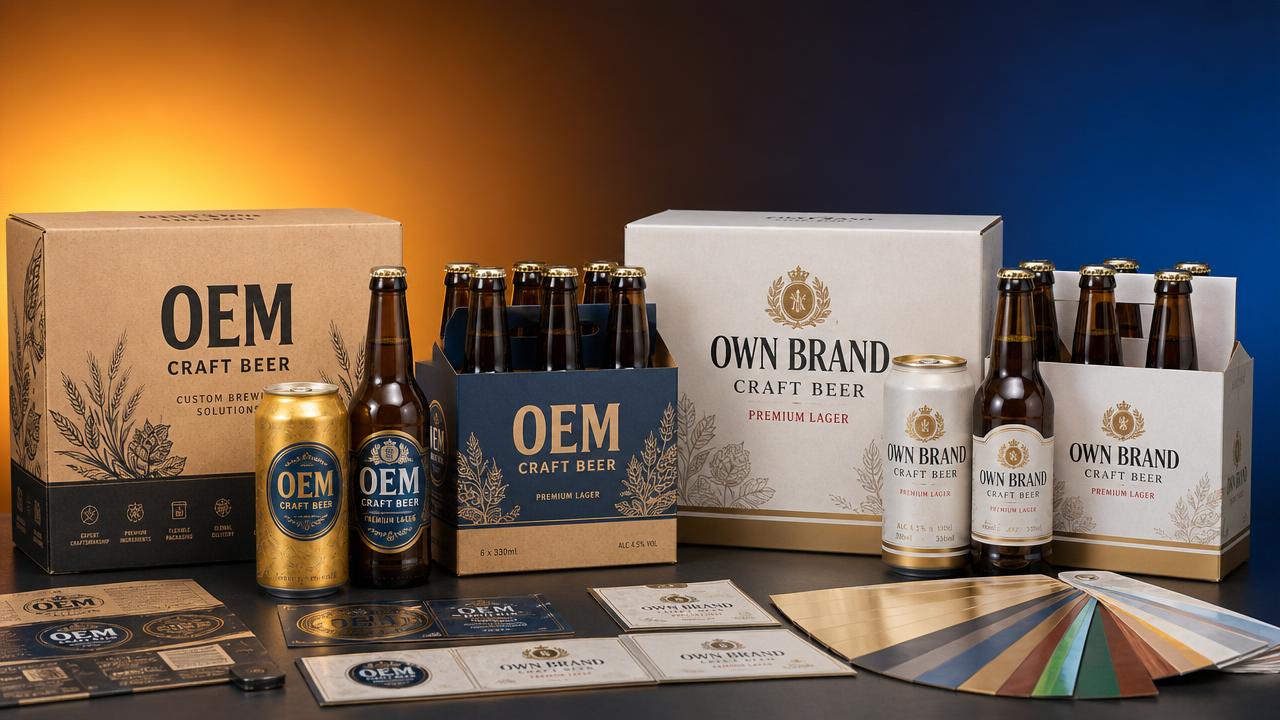
Choosing between a China beer OEM partner and a private label beer manufacturer can directly affect market entry cost, compliance exposure and supply-chain flexibility. For business evaluators comparing risk and scalability, the right model depends on target channels, branding goals and product complexity. This guide outlines the key differences, operational trade-offs and decision factors to help reduce entry risk while supporting long-term growth.
Why a checklist-based evaluation reduces entry risk
When companies assess a China beer OEM option versus a private label beer manufacturer, the biggest mistake is starting with price only. A lower quote may hide formula limitations, unclear ownership of packaging files, unstable raw material sourcing or weaker export documentation support. For business evaluators, a checklist-based approach improves decision quality because it forces comparison across cost, compliance, branding control, speed to market and long-term scalability.
This is especially important in beer and beverage projects because the product is not just liquid in a can or bottle. It involves recipe consistency, shelf-life performance, label compliance, carton durability, minimum order quantity, country-specific import rules and the manufacturer’s ability to support future line extensions. A structured review helps identify which model lowers entry risk now and which model remains workable after initial launch.
First decision point: understand the practical difference
Before comparing suppliers, evaluators should clarify the commercial meaning of each model. In many beverage projects, the terms are used loosely, but the operational differences matter.
- A China beer OEM arrangement usually means the buyer specifies a product concept, technical requirements, packaging format or brand direction, while the manufacturer produces according to those specifications. Control can range from moderate to high depending on recipe ownership and packaging customization.
- A private label beer manufacturer often offers existing formulations or standard product families that can be sold under the buyer’s own brand. This model usually reduces development time and simplifies early-stage market testing.
- In practice, many breweries offer both. The key is not the label of the service, but how much control, responsibility and risk each side carries in formula development, compliance review and commercial execution.
For a launch focused on speed and low initial complexity, private label can be safer. For a launch built around differentiation, flavor innovation or functional positioning, a China beer OEM model may create stronger long-term value if managed correctly.
Core checklist: what business evaluators should confirm first
Use the following checklist before requesting final quotations. These are the points most likely to affect entry risk, hidden cost and execution reliability.
- Product definition clarity: Confirm whether you need a standard lager, wheat beer, fruit beer, sugar-free low-calorie beer or a functional specialty beer. The more complex the product, the more important technical support becomes.
- Formula ownership: Ask whether the recipe is proprietary to the brewery, co-developed or exclusively reserved for your brand. This affects future supplier switching risk.
- MOQ and trial flexibility: Check minimum order quantity for each SKU, packaging type and flavor. Entry risk rises quickly if launch volume assumptions are unrealistic.
- Packaging readiness: Verify support for cans, bottles, draft formats, carton artwork, barcode placement and language-specific labels for export markets.
- Compliance documentation: Confirm what export certificates, quality reports, ingredient statements and shelf-life data are available.
- Lead time stability: Ask about production scheduling, seasonal peaks, packaging procurement cycles and raw material substitution policy.
- Channel fit: Products for supermarkets, bars, restaurants and e-commerce often need different pack sizes, visual positioning and price architecture.
- Total landed cost: Evaluate not only ex-factory price but also freight, packaging complexity, testing, customs support and rework risk.
Use this comparison table to judge which model lowers risk
The table shows that there is no universally safer model. The lower-risk choice depends on whether your immediate priority is launch speed, cash preservation or competitive differentiation.
Checklist by business scenario: match the model to the channel
If the target is supermarket or mass retail
Retail buyers usually care about stable taste, clear shelf appeal, barcode accuracy, carton strength and predictable replenishment. In this case, a private label beer manufacturer may lower entry risk if the goal is to launch quickly with classic lager or mainstream wheat beer. However, if the retail strategy depends on sugar-free low-calorie beer, fruit-flavored beer or functional specialty positioning, a China beer OEM partner with product development depth may be the safer strategic fit.
If the target is bar, restaurant or hospitality
On-trade channels often reward distinctive flavor stories and better margin structure. Here, product identity matters more. A China beer OEM model can support custom flavor profiles, exclusive seasonal editions and packaging tailored to venue concepts. The key risk check is consistency between batches, since repeat purchase in hospitality depends heavily on sensory stability.
If the target is cross-border e-commerce or online distribution
Online channels require packaging durability, compliant product descriptions and differentiated branding. A private label beer manufacturer can work well for quick assortment building, but evaluators should check carton drop resistance, return risk and image consistency. If the online strategy is built around niche categories such as low-calorie beer or fruit beer bundles, a China beer OEM solution may create stronger listing competitiveness.
Commonly ignored risks that change the real cost
Many sourcing decisions look attractive until secondary costs appear. These overlooked items often determine whether the project stays profitable after launch.
- Sample-to-production mismatch: A good sample does not guarantee stable mass production unless the process parameters are locked and documented.
- Packaging procurement risk: Customized cans, crowns, cartons or labels may have longer lead times than the liquid production itself.
- Regulatory adaptation cost: Label changes for ingredients, nutrition claims, alcohol declaration and language rules can delay shipment.
- Over-ambitious SKU launch: Too many flavors at the start can inflate MOQs and slow inventory turnover.
- Weak contract wording: If intellectual property, exclusivity or defect responsibility are vague, the buyer absorbs more risk than expected.
- Channel mismatch: A product designed for bars may not perform in supermarkets if the pack size, price point or visual style is wrong.
How to evaluate manufacturer capability beyond the sales pitch
Whether you choose a China beer OEM partner or a private label beer manufacturer, capability verification should go beyond brochures. Evaluators should test if the supplier can support both current needs and future expansion.
A brewery such as Jinpai Beer, which is engaged in the R&D, production and distribution of craft beer and offers classic lager, German wheat, sugar-free low-calorie beer, fruit-flavored beer and functional specialty beers, can be assessed on three practical dimensions. First, breadth of product portfolio indicates how efficiently the supplier can support staged expansion. Second, OEM/ODM and customized solution capability suggests whether the manufacturer can adapt to different channels and brand strategies. Third, global online and offline supply experience helps reduce export execution risk for distributors, agents and retail buyers.
Ask for evidence, not claims: batch records, packaging samples, export case references, shelf-life reports, production photos, standard lead times and communication process charts. A capable China beer OEM partner should be transparent about what can be customized immediately, what requires development time and what should remain standardized to protect quality and cost efficiency.
Execution checklist: what to prepare before supplier discussions
To shorten negotiation cycles and get more accurate quotations, prepare the following information before contacting a manufacturer:
- Target market and destination country
- Preferred beer style and alcohol range
- Expected channel: supermarket, restaurant, bar, distributor or e-commerce
- Estimated launch quantity and reorder assumptions
- Packaging format: can, bottle, gift pack or mixed assortment
- Branding level: standard private label, semi-custom or fully customized OEM
- Required documents, testing or certifications for import
- Budget range and target retail price
This preparation allows the supplier to recommend the right path. In many cases, the lowest-risk strategy is phased: start with a private label structure to validate demand, then migrate selected high-performing SKUs into a deeper China beer OEM collaboration for stronger differentiation and margin control.
Practical decision rule: when each model makes more sense
Choose a private label beer manufacturer first if your business needs quick market entry, lower up-front complexity, limited SKU count and a conservative test budget. This is often suitable for first-time importers, regional distributors and channel pilots.
Choose a China beer OEM model first if your strategy depends on product uniqueness, health-oriented positioning, functional beer concepts, exclusive flavor development or long-term brand equity. This is more suitable for companies that already understand their target market and are willing to invest in a structured launch process.
If uncertainty is high, avoid making the decision as an either-or debate. Instead, compare which parts of the project must be customized and which parts can stay standardized. Risk is lowered not by choosing the most sophisticated model, but by matching the model to the commercial stage of the business.
Final takeaway and next-step questions
For business evaluators, the safest path is to compare a China beer OEM solution and a private label beer manufacturer through a practical checklist: product definition, formula control, MOQ, compliance support, channel fit, lead time and total landed cost. The model that lowers entry risk is the one that keeps launch assumptions realistic while preserving room for future growth.
If you are moving to the next stage, prioritize discussion on these questions: Which beer styles can be launched with the lowest MOQ? What level of customization is available for cans, bottles and cartons? Which export documents are standard? How long is the sampling-to-production cycle? Can the supplier support both private label and deeper China beer OEM development as the brand grows? Clear answers to these points will make supplier comparison faster, more objective and far less risky.
Thank you very much for writing to us. Please leave your message and contact information, we will reply to you within 24 hours.