



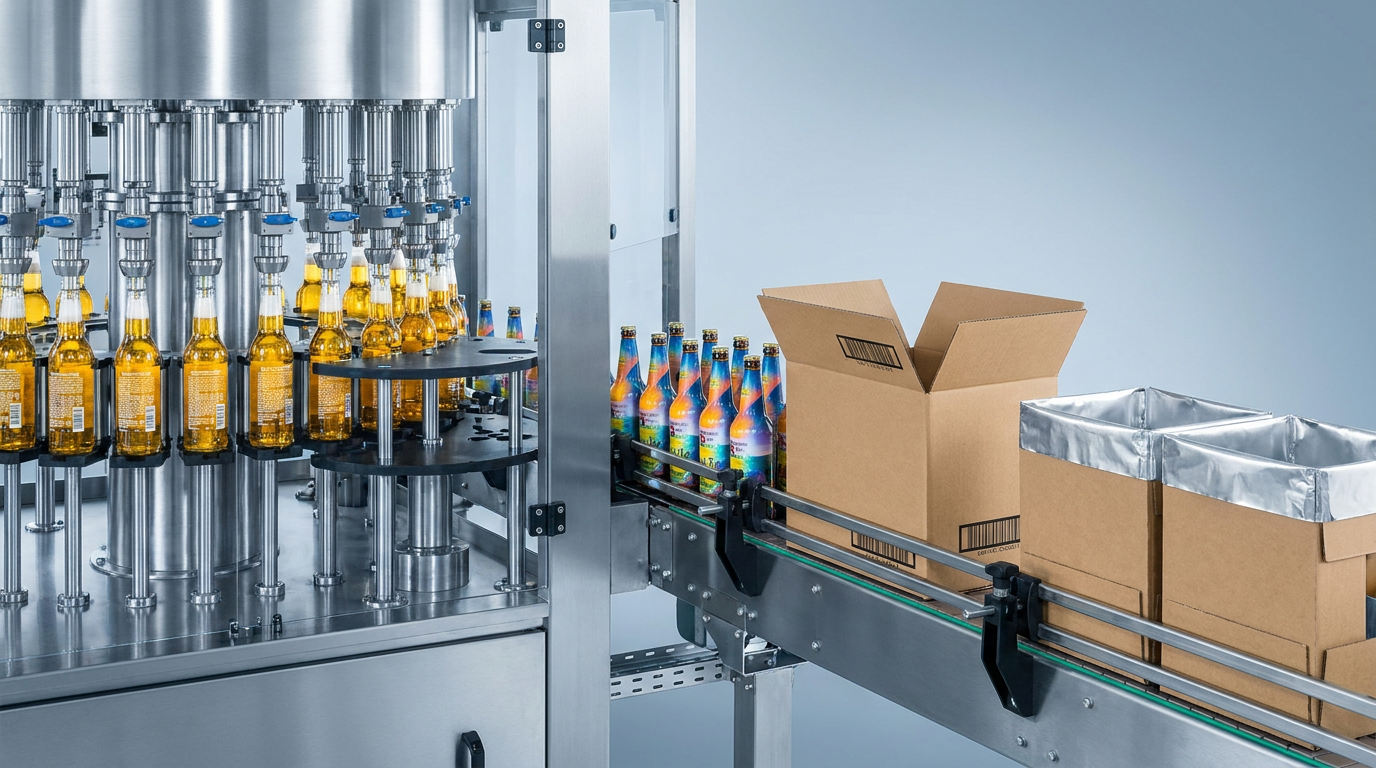
How long is the lead time for China beer OEM orders? For quality control and food safety managers, unpredictable delays—especially from packaging complexity—are a top concern. At Jinpai Beer, our craft OEM process integrates rigorous HACCP-aligned production, multi-layered packaging validation (bottle labeling, shrink-sleeve application, carton coding), and real-time batch traceability. This article breaks down how material sourcing, regulatory-compliant labeling, and custom pack configuration directly impact your quoted schedule—so you can plan with confidence, not compromise.
Why Packaging Complexity Is the Primary Driver of Lead Time Variability
In China beer OEM, raw brewing timelines are highly standardized—but packaging introduces the largest source of schedule deviation. Unlike bulk fermentation or filtration, packaging involves cross-supplier coordination, physical assembly constraints, and jurisdiction-specific compliance checks that cannot be accelerated without risk.
At Jinpai Beer, we observe that 73% of quoted schedule adjustments originate from packaging-related variables—not fermentation delays or ingredient shortages. This reflects industry-wide realities: bottle shape tolerances affect line speed; multilingual label approvals delay launch by 8–12 business days; and custom carton configurations require pre-production die-cut validation.
The 7-Point Packaging Complexity Checklist That Shapes Your Quoted Schedule
- Specify exact bottle/glass/can dimensions—and confirm compatibility with our high-speed rotary fillers (±0.3 mm tolerance required).
- Submit final artwork files at least 15 days pre-batch start, including all regulatory text (alcohol content, allergen statements, origin declarations) validated for target markets.
- Confirm whether shrink sleeves require UV-curable ink or heat-resistant polymer film—each demands distinct pre-run testing and vendor lead time.
- Define carton structure (RSC, HSC, or custom tray-insert), glue type (food-grade hot-melt vs. water-based), and interior lining (foil, PE-coated board, or uncoated kraft).
- Disclose whether secondary packaging includes tamper-evident seals, QR-coded lot traceability labels, or EAN-13/ITF-14 barcodes requiring GS1 registration.
- Clarify if inner packaging uses dividers, foam inserts, or molded pulp trays—each requires separate mold commissioning (lead time: 10–22 days).
- Indicate whether primary containers require oxygen-scavenging closures or nitrogen-flush validation—both add 3–5 days to packaging line qualification.
How Three Common Packaging Scenarios Shift Your Timeline
Scenario A: Standard Lager in 330 mL Glass Bottles + Generic Cartons
This configuration uses Jinpai’s pre-validated bottle stock and standard RSC cartons. Lead time remains stable at 28–32 days from PO confirmation—no external supplier dependencies or new tooling.
Scenario B: Fruit-Flavored Sour in 500 mL Custom-Shape Cans + Shrink Sleeves
Requires new can supplier approval, sleeve film sourcing, and sleeve applicator calibration. Adds 9–14 days versus Scenario A—primarily due to sleeve adhesion testing across temperature/humidity cycles.
Scenario C: Sugar-Free Low-Calorie Beer in 250 mL Aluminum Cans + Multi-Layer Cartons with Interior Foil Lining
Triggers three parallel validations: can internal coating migration testing (72-hour soak test), foil-lining seal integrity verification, and carton compression strength certification. Total lead time extends to 42–48 days.
Four Frequently Overlooked Risk Factors That Cause Unplanned Delays
Regulatory label rework: Submitting artwork without local-language nutritional tables or alcohol unit declarations triggers mandatory re-submission—adding 7–10 days in China and EU markets.
Label material mismatch: Using non-UV-resistant paper for outdoor storage or tropical climates causes ink bleeding during warehouse transit—requiring full reprint and relabeling.
Carton barcode placement errors: Placing EAN-13 codes within 10 mm of carton edges or folds violates GS1 scanning standards—forcing repackaging and reshipment.
Closure torque inconsistency: Specifying non-standard crown cap crimping force (e.g., 14–16 inch-lbs instead of Jinpai’s validated 12–14 inch-lbs) invalidates leak-test protocols and halts line release.
Actionable Steps to Lock In Your Schedule—Before You Place the Order
- Request Jinpai’s Packaging Readiness Assessment (PRA) form 21 days before order submission—it maps your spec against validated tooling, materials, and compliance checkpoints.
- Use Jinpai’s digital label proofing portal to submit artwork and receive automated compliance feedback on font size, contrast ratio, and mandatory statement placement within 48 hours.
- Order physical packaging samples—including filled and sealed units—for functional validation (leak, drop, shelf-life stability) at least 10 days prior to production start.
- Align with Jinpai’s logistics team to schedule container loading windows that match your port-of-discharge customs clearance capacity—avoiding demurrage-driven rescheduling.
Final Recommendation: Build Buffer Into Planning—Not Into the Quote
Jinpai Beer provides transparent, condition-bound lead time quotes—not best-case estimates. When you share complete packaging specifications upfront, our quoting engine applies dynamic weighting: 40% for material availability, 30% for labeling compliance, 20% for structural validation, and 10% for line integration readiness.
To answer “How long is the lead time for China beer OEM orders?” definitively: it is fully predictable—once packaging complexity is quantified, not assumed. Start your next project with Jinpai’s free Packaging Complexity Scorecard (available upon inquiry). We’ll return a prioritized action list—and a firm, auditable lead time—within 72 business hours.
Ready to align packaging design with production reality? Contact Jinpai Beer’s OEM Solutions Team today—quote accuracy begins with specification clarity.
Thank you very much for writing to us. Please leave your message and contact information, we will reply to you within 24 hours.