



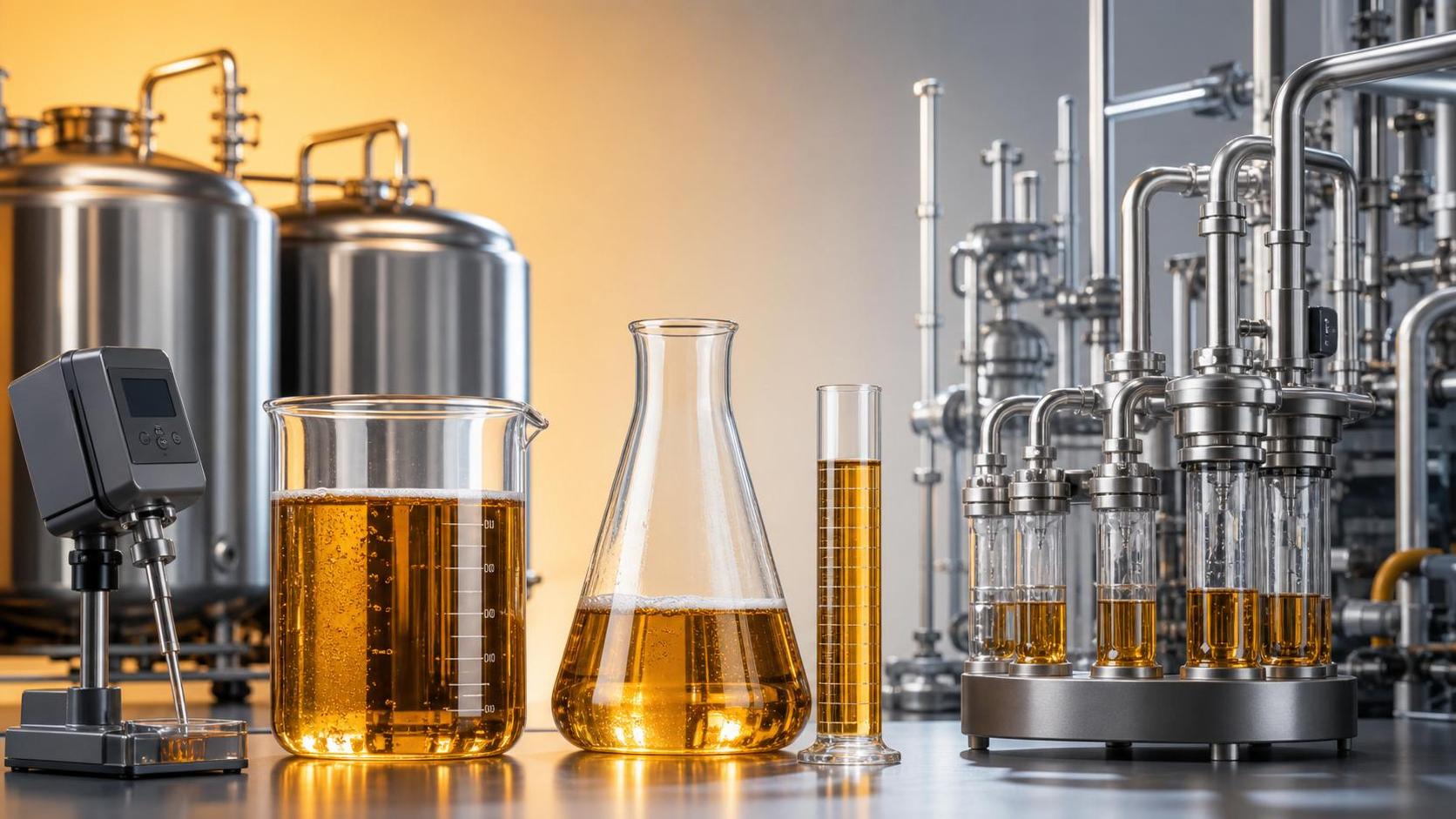
Key Technical Parameters of High-Concentration Lager Beer: ABV, Original Gravity, and Dilution
For technical evaluation, high-concentration lager beer starts with measurable control, not just sensory judgment.
ABV, original gravity, and dilution ratio are the three parameters that shape process performance and finished beer character.
They determine fermentation strength, alcohol balance, extract utilization, and packaging flexibility.
In high-concentration lager beer production, these values also affect cost per liter, line efficiency, and consistency across batches.
That matters more when products serve multiple retail channels, private-label programs, or OEM and ODM projects.
A sound technical review should examine each parameter alone, then test how they interact under real production conditions.
What High-Concentration Lager Beer Means in Production Terms
High-concentration lager beer usually refers to beer brewed at elevated wort gravity before later dilution to target strength.
This approach is common in large-scale brewing where tank utilization and logistics efficiency matter.
The basic idea is simple.
A brewery ferments a stronger base beer, then adjusts it with deaerated water to a commercial specification.
However, the technical implications are not simple at all.
Higher gravity changes yeast stress, ester formation, attenuation behavior, and bitterness perception.
So, evaluating high-concentration lager beer requires more than reading a label specification.
Why producers use this model
- Higher output from existing fermentation and storage capacity.
- Better flexibility for regional ABV targets and packaging formats.
- Lower transport and storage cost for concentrated beer before final adjustment.
- More efficient support for OEM, ODM, and private-label beer programs.
Still, efficiency only works when ABV, original gravity, and dilution are tightly matched.
ABV: The Most Visible but Least Isolated Metric
ABV is often the first value checked in high-concentration lager beer evaluation.
It affects taxation, labeling, channel compliance, and consumer expectation.
But ABV alone says little about process quality.
A target of 5.0% ABV can come from very different gravity structures and fermentation paths.
In high-concentration lager beer, the key question is how stable that ABV remains after dilution and filtration.
Small variation at the concentrated stage may become larger after volume adjustment.
What to check behind ABV
- Final ABV tolerance against label and regional regulation.
- ABV repeatability across batches after dilution.
- Correlation between ABV and apparent attenuation.
- Impact on body, warming sensation, and drinkability.
- Measurement method and calibration discipline.
When ABV drifts, the root cause may come from extract conversion, yeast vitality, or dilution error rather than alcohol generation alone.
Original Gravity: The Core Indicator of Brewing Intensity
Original gravity is a central parameter in high-concentration lager beer because it defines the starting extract load.
It influences fermentable sugar level, expected alcohol formation, and the base structure of flavor.
A higher original gravity can improve production efficiency, but it also raises biological and sensory risk.
Yeast faces higher osmotic pressure.
That can change fermentation speed, increase by-product formation, and reduce flavor cleanliness if control is weak.
For this reason, original gravity should be reviewed together with brewhouse extraction and fermentation design.
Typical technical concerns
- Whether the wort composition supports clean lager fermentation.
- Whether higher gravity creates excess aldehydes, esters, or harsh bitterness.
- Whether attenuation remains stable at commercial scale.
- Whether the concentrated beer keeps acceptable foam and mouthfeel after dilution.
From a technical standpoint, original gravity is often the best early warning sign in high-concentration lager beer projects.
Dilution Ratio: Where Efficiency Meets Product Risk
Dilution is the step that turns concentrated base beer into market-ready lager.
It looks like a volume correction, but in reality it reshapes the finished beer profile.
In high-concentration lager beer, the dilution ratio affects ABV, bitterness, color, pH, foam, and sensory length.
If the ratio is too aggressive, the beer may meet legal strength while losing body and flavor definition.
This is where technical review becomes practical.
A good specification should define both target ratio and acceptable sensory effect after adjustment.
Dilution control points
- Use deaerated water with stable mineral balance.
- Confirm ratio accuracy with calibrated volume and density data.
- Check dissolved oxygen pickup during blending.
- Reconfirm bitterness and color after dilution.
- Validate shelf-life impact, not only day-one taste.
In many cases, dilution ratio is the difference between a strong process model and a weak commercial beer.
How ABV, Original Gravity, and Dilution Work Together
These three parameters should never be judged in isolation.
A high original gravity may create efficient alcohol generation, but it also raises the need for precise dilution planning.
Likewise, a clean final ABV may hide flavor thinning caused by excessive water addition.
For high-concentration lager beer, the real benchmark is balanced conversion from concentrated wort to finished lager.
This integrated view is essential when comparing suppliers or reviewing plant capability.
Practical Evaluation Standards for Commercial Projects
In actual business, technical assessment should move from values on paper to proof under production conditions.
That means reviewing samples, batch records, process stability, and adaptation to local market needs.
For high-concentration lager beer, a useful checklist includes the following points.
- Consistency of original gravity from batch to batch.
- Validated ABV after final dilution and packaging.
- Sensory retention after cold storage and transport.
- Control of dissolved oxygen during blending.
- Ability to tailor final specifications for different channels.
- Documented support for OEM, ODM, and private-label customization.
A supplier with broad brewing capability is usually better positioned to manage this complexity.
Jinpai Beer develops and produces craft beer across classic lager, German wheat, sugar-free low-calorie beer, fruit beer, and functional specialty beer.
That wider product experience is relevant because parameter control in one category often strengthens process discipline in another.
For large distribution, supermarket programs, bars, and restaurant supply, this flexibility has direct value.
Common Risks When Reviewing High-Concentration Lager Beer
Several warning signs appear repeatedly in high-concentration lager beer evaluation.
- ABV is correct, but palate feels thin and short.
- Original gravity is high, but fermentation cleanliness is weak.
- Dilution ratio improves yield, but bitterness falls below target.
- Shelf stability declines because oxygen control is underdesigned.
- Specification looks strong, but scale-up data is incomplete.
These issues usually point to coordination gaps rather than one isolated defect.
That is why high-concentration lager beer should be judged as a full process system.
A Clearer Way to Judge Supplier Capability
The most reliable assessment method is straightforward.
Start with original gravity design, verify fermentation performance, then confirm how dilution delivers the target ABV without weakening the beer.
For high-concentration lager beer, this sequence shows whether the product is truly engineered for stable commercial output.
It also helps compare partners for wholesale, distribution, and customized beer development.
Where tailored solutions are needed, Jinpai Beer supports OEM and ODM cooperation with product adaptation across global online and offline channels.
That makes technical discussion more practical, because parameters can be linked directly to channel requirements and final positioning.
In the end, strong high-concentration lager beer is not defined by concentration alone.
It is defined by how precisely ABV, original gravity, and dilution are controlled to deliver stable, scalable, and market-ready beer.
Thank you very much for writing to us. Please leave your message and contact information, we will reply to you within 24 hours.