



How to Evaluate Lager Beer Quality Before Buying for Bars, Retail, or Events
Choosing the right Lager beer for bars, retail shelves, or large events requires more than comparing prices. Buyers need to assess flavor stability, packaging quality, shelf life, and supplier reliability to ensure consistent customer satisfaction and strong sales performance. This guide explains how procurement professionals can evaluate Lager beer quality before purchasing, helping them make smarter sourcing decisions for different sales channels and consumption occasions.
If you buy beer for resale or high-volume service, the usual mistake is treating Lager beer like a commodity. On paper, two offers may look close: similar alcohol content, similar packaging, similar price per case. In practice, one product moves fast and gets repeat orders, while the other sits in cold storage or triggers complaints about flat taste, damaged cans, or inconsistent batches.
A good buyer checks quality in layers. Not just flavor, and not just price. You are really checking whether this beer can survive transport, stay stable on shelf, match your channel, and protect margin after all the hidden costs show up.
Start with where the beer will be sold
Before tasting anything, define the sales environment. A Lager beer that works well in a busy bar may not work for supermarket retail. Event supply has its own pressure points too: fast service, variable storage, and less control over pouring conditions.
- For bars and restaurants, focus on drinkability, draft or package performance, and how the beer holds up once chilled and served repeatedly.
- For retail, packaging appearance, shelf life, barcode clarity, date coding, and carton durability matter much more than many first-time buyers expect.
- For events, you need stability, easy handling, reliable volume availability, and low risk of breakage or customer rejection.
That sounds obvious, but this step prevents bad sourcing decisions. A crisp, light Lager beer with broad appeal is often safer for stadiums, festivals, and mixed-crowd catering than a more distinctive product that performs better in specialist bars.
Do not buy from the spec sheet alone
ABV, extract, bitterness, and package size are useful, but they do not tell you whether the beer is actually good. A procurement team should always request samples from the real production batch if possible, not only a showroom sample or a specially prepared tasting batch.
When you taste Lager beer for buying purposes, the question is not “Do I personally like it?” The question is whether the product is clean, stable, and appropriate for the target customer.
Pay attention to:
- Clean aroma without stale, papery, sulfur-heavy, metallic, or cooked notes.
- Balanced bitterness. Harsh bitterness is often a problem in warm-market distribution because defects become more obvious over time.
- Carbonation level that feels lively but not aggressive.
- Finish and repeat-drink value. For many commercial channels, this matters more than complexity.
- Batch consistency across multiple cans or bottles from the same lot.
If the supplier can only provide one sample and resists batch-level sampling, treat that as a warning sign.
Check freshness the practical way
Lager beer is less forgiving than some buyers assume. Even when microbiological safety is not the issue, flavor decline can become a commercial problem long before the formal shelf life ends. For that reason, production date and remaining shelf life should be part of the buying discussion, not an afterthought.
Ask the supplier:
- What is the declared shelf life for this SKU?
- What minimum remaining shelf life is guaranteed at shipment?
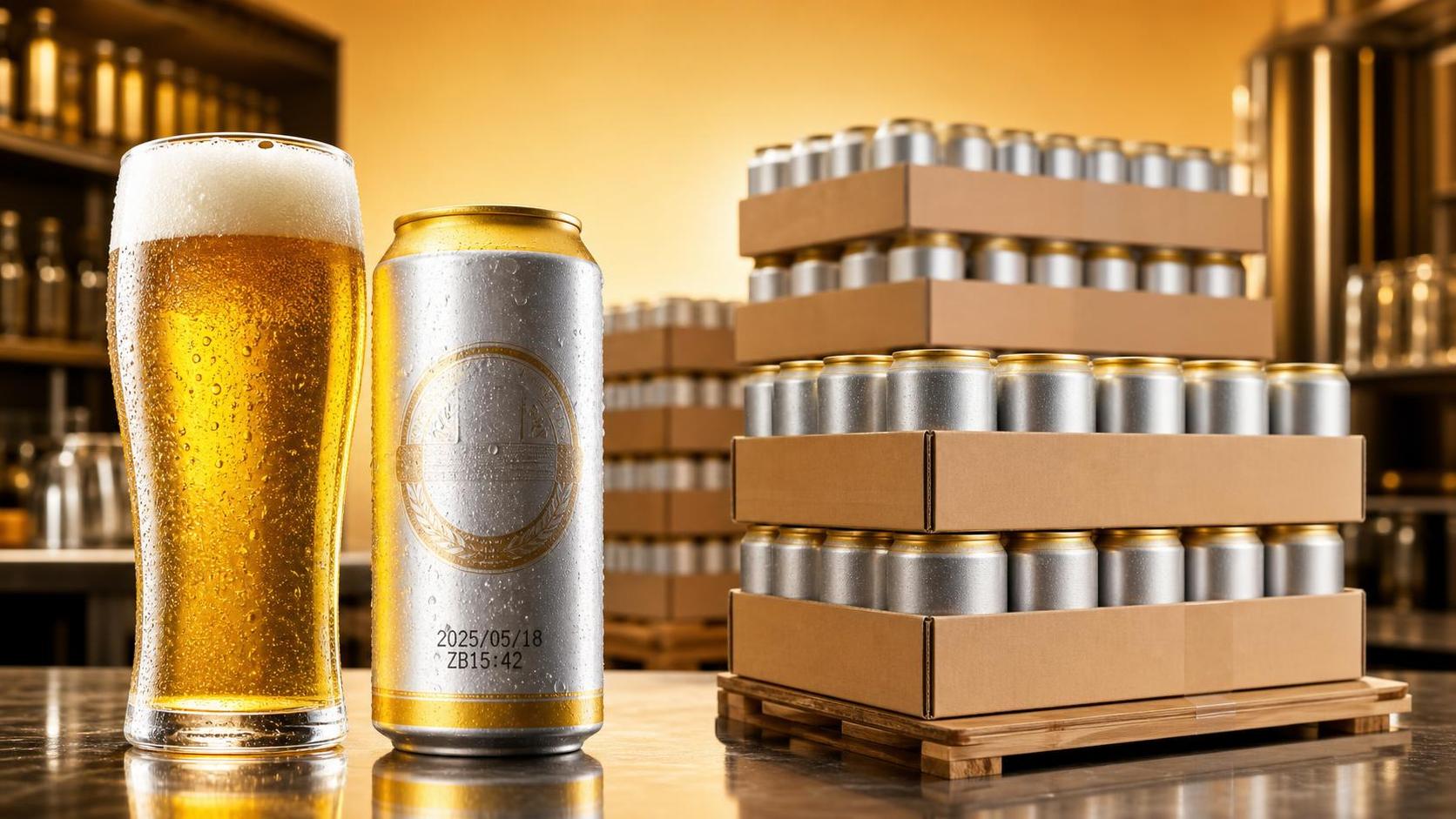
- How is date coding printed, and is it still readable after condensation, abrasion, or long transit?
- What storage conditions are recommended during transport and warehousing?
For retail, poor date code readability can turn into disputes with distributors and stores. For events, old stock becomes a direct waste issue. For export orders, longer transit times make this even more important.
And if you are comparing offers from different countries, make sure you are comparing like for like. Shelf life standards, cold chain habits, and distributor expectations vary by market, so this part should be checked against local practice and import requirements【待核实】.
Packaging quality affects real cost more than unit price does
Buyers often focus on liquid cost and miss packaging risk. That is expensive. A cheap can that dents easily, a weak carton that collapses on a pallet, or labels that scuff in refrigerated display all create losses that do not appear in the initial quote.
Inspect the physical sample closely:
- Can seams or bottle closures should look even and secure.
- Cartons should stay rigid when stacked and chilled.
- Trays, shrink wrap, and pallet configuration should match your handling method.
- Primary packaging should protect against light and transport impact as appropriate for the format.
- Labels should include legally required information for the destination market. Exact requirements depend on country and channel【待核实】.
For supermarket and convenience channels, visual consistency matters. If the print quality looks cheap or inconsistent across cases, shoppers notice. For bars, external packaging may matter less to the consumer, but it still matters to your warehouse and delivery team.
Ask how the beer handles logistics, not just how it tastes at the brewery
One sample tasted cold in a meeting room tells you very little about how the beer performs after sea freight, customs delay, warm unloading, and distributor storage. Lager beer quality is tightly linked to handling conditions.
This is where experienced suppliers stand out. They can usually explain shipping conditions, pallet patterns, recommended storage temperatures, and what they do to protect flavor stability in transit. If the answer is vague, procurement risk goes up.
Match the flavor profile to the channel, not to personal preference
A buyer who likes bold craft styles can easily overestimate what mainstream customers want from Lager beer. In many channels, the winning product is not the one that tastes the most distinctive at first sip. It is the one that drinks clean, stays consistent, and creates low resistance for repeat purchase.
For bars with mixed foot traffic, go for a profile that is crisp, balanced, and easy to pair with food. For retail multipacks, think about broad household appeal. For music festivals or sports events, smooth finish and easy drinkability usually matter more than nuance.
This is also where product range matters. Some suppliers, such as manufacturers that produce classic lager alongside wheat beer, sugar-free low-calorie beer, fruit beer, and specialty functional lines, can support channel segmentation better than a single-SKU producer. That is useful if your plan is to build a core Lager beer listing first and expand later through OEM, ODM, or customized packaging formats.
Supplier reliability is part of product quality
Beer buyers sometimes separate “liquid quality” from “supplier quality.” In real procurement, those two are tied together. A supplier with weak batch control, slow document handling, or unstable production scheduling will create quality issues even if the sample tasted fine.
Look for concrete evidence of operational reliability:
- Can they provide consistent batch documentation?
- Do they handle OEM or ODM requirements clearly, including artwork confirmation and packaging approval?
- Can they support your forecast volume during peak season?
- Are lead times realistic, or do they sound optimistic without backing?
- Do they understand destination market labeling, channel packing, and trade documentation?
If you are buying for export, ask what documents are routinely available. Exact requirements vary, but commercial invoices, packing lists, product specifications, and origin-related paperwork are common parts of international trade. Anything market-specific should be confirmed against local import rules【待核实】.
Look at total landed cost, not quoted price
This is where many purchasing decisions go wrong. The cheapest Lager beer ex-works or FOB is not automatically the most profitable product after freight, breakage, slower turnover, and promotional pressure.
A more useful comparison includes:
- Cost per sellable unit after expected damage or defects
- Shelf-life loss during transit and warehousing
- Display readiness and repacking labor
- Risk of markdowns if turnover is slower than planned
- Sampling, launch support, and packaging customization cost
For events, include service efficiency. A slightly higher-cost format that pours faster or reduces cleanup may still be the better buy.
A short pre-order checklist that actually works
Before placing the order, run through this quickly:
- Taste at least more than one unit from the offered batch.
- Confirm production date format and minimum remaining shelf life at shipment.
- Inspect packaging strength, label readability, and carton integrity.
- Check whether the flavor profile fits your exact channel.
- Verify volume capacity, lead time, and claims procedure.
- Calculate landed cost, not just purchase price.
- Confirm compliance details for the destination market before release.
If a supplier performs well on those points, you are no longer just buying a Lager beer. You are buying a product that is more likely to arrive in good condition, sell through on time, and avoid margin leaks that usually show up after the invoice is paid.
For procurement teams sourcing across bars, supermarkets, and event channels, that is the standard worth using. The beer still needs to taste right, of course. But the better buying decision usually comes from the quieter checks: freshness discipline, packaging strength, channel fit, and a supplier that can do the job repeatedly, not just once.
Thank you very much for writing to us. Please leave your message and contact information, we will reply to you within 24 hours.