



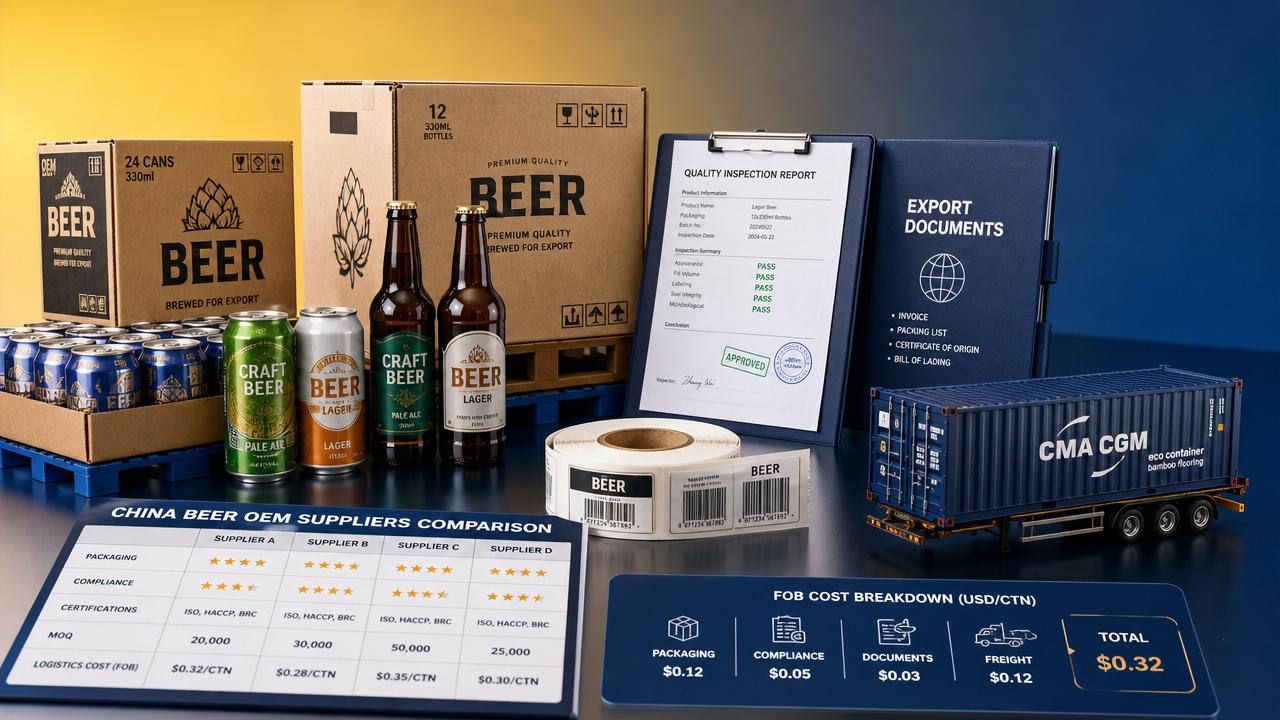
Choosing a China beer OEM partner is not just about unit price—it is about total cost, risk control and long-term margins. For financial decision-makers, hidden expenses in formulation, packaging, compliance, logistics and minimum order terms can quickly erode profitability. This guide shows how to compare suppliers with a sharper cost lens, helping you make a more accurate and investment-friendly sourcing decision.
Why do hidden costs matter so much when comparing a China beer OEM supplier?
For a finance approver, the biggest mistake in China beer OEM sourcing is treating the quoted unit price as the real landed cost. A low ex-factory beer price can look attractive in a spreadsheet, yet become far less competitive after formula adjustment fees, packaging loss, label redesign, lab testing, shipping fluctuations and delayed production are added. In beverage sourcing, these “secondary costs” often determine whether a product line reaches its target margin or turns into a working-capital burden.
A China beer OEM project also carries cost variables that are not equally visible across suppliers. One supplier may include standard carton design support, routine microbiological testing and export documentation in the quotation, while another may charge each item separately. If the procurement team compares suppliers without normalizing these terms, the decision can favor the wrong manufacturer. The result is not only a budget overrun, but also weaker cash flow visibility and more difficult post-approval management.
That is why hidden costs matter: they affect gross margin, inventory risk, launch timing, compliance exposure and the total return on the sourcing decision. In a category such as craft beer, lager, wheat beer, sugar-free beer or fruit-flavored beer, where recipes and packaging choices vary greatly, these hidden items can be material enough to reverse the ranking of suppliers.
What costs should financial decision-makers include beyond the quoted beer price?
When reviewing a China beer OEM offer, finance teams should build a total cost framework rather than approve based on piece price alone. The right view includes direct, indirect and risk-adjusted costs.
First, examine product development costs. Custom formulation for functional beers, sugar-free low-calorie beer, fruit beer or market-specific taste profiles may involve pilot batching, ingredient trials and shelf-life validation. These expenses may appear as one-time fees, but they can also be hidden in higher minimum order requirements or elevated raw material assumptions.
Second, look carefully at packaging costs. In beer OEM projects, packaging is frequently more volatile than liquid cost. Can size, bottle type, crown caps, printed cans, labels, cartons, trays and pallet standards all affect the final cost structure. Custom packaging usually introduces plate fees, artwork revisions, excess packaging inventory and higher damage risk in transit. A supplier that quotes a lower beer price but requires costly custom packaging may not be the most efficient option.
Third, include compliance and documentation. Export beer may require ingredient disclosure, barcode support, destination-market label checks, certificate preparation, product testing and customs paperwork. Some China beer OEM suppliers bundle this support into service, while others leave it to the buyer or external agents. These administrative costs can be small individually but significant at launch stage.
Fourth, factor in logistics and inventory carrying cost. Ocean freight, consolidation, port handling, inland delivery, insurance and seasonal shipping peaks all affect landed price. In addition, if the supplier imposes a large MOQ, the financial cost of holding slow-moving beer inventory should be included. Beer is a freshness-sensitive product, so inventory age can become both a cost issue and a brand risk.
Finally, consider defect and delay risk. Rework, delayed dispatch, packaging mismatch, unstable flavor consistency or insufficient export experience can generate replacement cost, missed promotion windows and retailer penalties. These costs are often ignored in early supplier comparison even though they can be more damaging than a modest increase in unit price.
How can you compare China beer OEM suppliers on a true total-cost basis?
The practical answer is to standardize the comparison. Ask every China beer OEM candidate to quote against the same product brief, same incoterm, same packaging specification, same annual volume assumption and same quality requirement. Without this step, one supplier may quote on plain cans and another on printed cans, one may include export carton reinforcement and another may exclude it, making the comparison unreliable.
A strong supplier comparison sheet should include more than price. It should contain MOQ by SKU, lead time, deposit terms, formula ownership, sample policy, packaging sourcing approach, defect policy, testing scope, document support and production flexibility. This helps the finance team assess not only what the buyer pays, but also when the buyer pays, how much cash is tied up and how much operational risk remains after approval.
It is also useful to separate one-time costs from recurring costs. Mold or plate fees, initial design adaptation and trial production belong in launch investment. Ingredients, packaging materials, filling, freight and compliance belong in recurring cost. Finance approvers can then evaluate whether a higher initial setup cost is acceptable if it lowers the long-term per-unit cost over multiple orders.
Which hidden costs are most often overlooked in packaging, compliance and logistics?
Packaging is the most common blind spot. Buyers focusing on liquid cost may underestimate the cost difference between standard and custom solutions. Printed cans require larger commitments and planning discipline. Bottled beer may involve heavier freight, higher breakage risk and specific export carton strength. If your target channels include supermarkets, bars and retail chains, retail-ready packaging requirements can further raise the true cost. These details are especially important in China beer OEM projects serving multiple markets.
Compliance is another underestimated area. Different countries can have different requirements for alcohol statements, ingredient format, nutrition information, allergen notes and language presentation. If the buyer assumes the supplier will manage all label risks, but the supplier only provides factory-side production data, the remaining compliance work falls back on the brand owner. That may require legal review, label agencies or repeated print corrections.
Logistics introduces both obvious and hidden costs. Freight rates change, but so do loading efficiency, pallet configuration and damage rate. A cheaper supplier located farther from the port or less experienced in export loading may create a higher landed cost than a slightly higher-priced but logistically stronger partner. Beer also has shelf-life considerations, so longer lead times reduce selling window and increase markdown risk.
How should finance teams assess MOQ, payment terms and inventory risk?
MOQ is not just a production term; it is a financial exposure. In China beer OEM manufacturing, the minimum order can be driven by brewing batch size, packaging material thresholds or printed can requirements. If the supplier requires large runs across several SKUs, the buyer may need to commit cash well before sell-through is proven. This increases inventory carrying cost and raises the risk of aged stock, especially for seasonal or newly launched flavors.
Payment terms are equally important. A supplier asking for a high deposit on both liquid and packaging materials shifts more working-capital pressure to the buyer. From a finance perspective, a lower unit price may not compensate for heavier prepayment obligations. Evaluate the full cash conversion cycle: deposit timing, balance payment point, production lead time, shipping transit and expected market sell-through.
It is wise to model at least three scenarios: conservative sales, expected sales and delayed sales. This reveals whether the China beer OEM arrangement remains acceptable if demand is slower than forecast. Finance approvers should also ask whether mixed-SKU production, phased packaging procurement or repeat-order flexibility is possible. Flexibility often has greater value than a small headline discount.
What warning signs suggest a low quotation may become an expensive supplier relationship?
One warning sign is incomplete quoting. If a China beer OEM supplier provides a very short quotation with limited detail on packaging, testing, documents or loss allowance, the buyer should assume some costs are still missing. Another warning sign is vague quality language. If there is no clear agreement on taste profile, alcohol level tolerance, carbonation, microbiological standards or packaging defect thresholds, later disputes may be expensive and difficult to resolve.
A third warning sign is aggressive MOQ with limited flexibility. This may indicate the supplier is efficient only at scale, which can be a problem for brands validating a new market. A fourth warning sign is slow technical communication. If sampling, formula discussion or export document replies are delayed before the order is placed, service after payment may not improve.
Finally, be cautious if the supplier cannot clearly explain raw material sourcing, production scheduling or shelf-life management. In beer production, consistency matters. Any lack of clarity can translate into returns, retailer complaints or discounting pressure later on.
What questions should you ask before approving a China beer OEM partner?
Before final approval, finance and procurement should align on a focused question set. Ask for a fully itemized quotation with validity period. Confirm whether samples, recipe refinement, packaging adaptation, testing and documentation are included or separately billed. Request clear MOQ by SKU, by packaging type and by artwork version. Verify lead times for both first order and repeat order.
You should also ask who owns the formula, what happens to unused packaging inventory and how quality claims are handled. Clarify payment terms, approved tolerances and replacement policy. If the supplier supports OEM/ODM, confirm how much customization is realistic without creating excessive complexity or cost leakage.
For beverage importers, distributors and private-label operators, the best China beer OEM supplier is rarely the one with the cheapest visible quote. It is the one whose pricing, service scope, production capability and commercial terms create the most predictable profit outcome over time. Companies such as Jinpai Beer, with experience in craft beer R&D, production, OEM/ODM support and broad product categories from classic lager to functional specialty beer, may offer value not only through product variety but also through better coordination across development, packaging and supply continuity.
What is the practical takeaway for financial approvers?
The practical takeaway is simple: compare China beer OEM suppliers using total landed cost, total cash exposure and total execution risk. Normalize the quotation basis, separate one-time from recurring costs, stress-test MOQ and payment terms, and review packaging, compliance and logistics as seriously as liquid price. This approach helps financial decision-makers protect margin, reduce hidden surprises and support a sourcing decision that remains sound after the purchase order is issued.
If you need to confirm a specific China beer OEM plan, it is best to discuss product style, target market, packaging format, expected order volume, compliance destination, lead time requirement, payment structure and whether OEM or ODM customization is needed. Those questions will quickly reveal which supplier is truly cost-effective, operationally reliable and suitable for long-term cooperation.
Thank you very much for writing to us. Please leave your message and contact information, we will reply to you within 24 hours.