



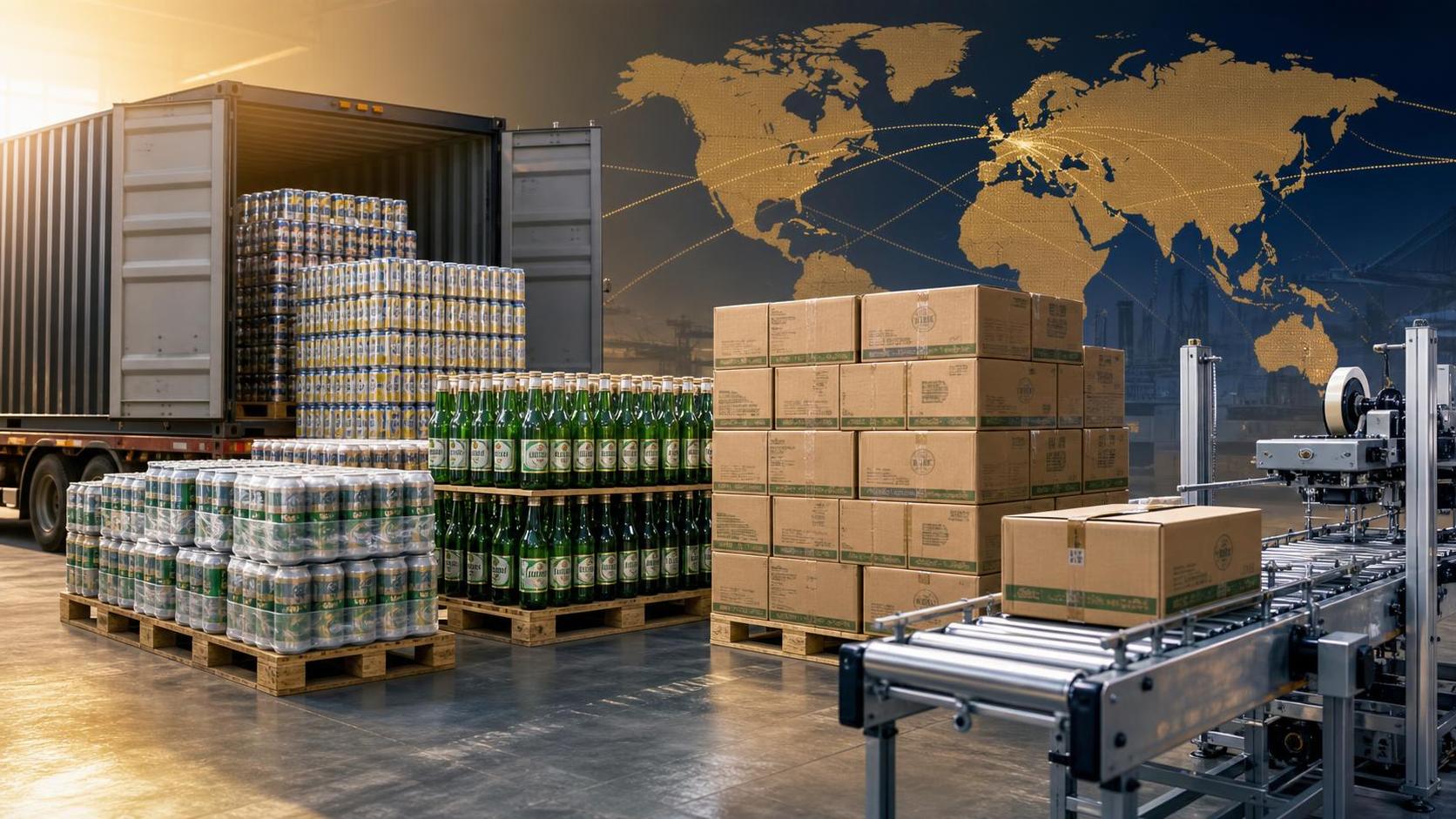
How MOQ, Lead Time, and Packaging Affect Costs at a China Beer Factory
When sourcing from a China beer factory, the unit price on the quotation is usually the easiest number to compare and the least useful one to approve in isolation. For finance teams, the real question is what the order will cost after minimum order quantity, production timing, packaging format, freight utilization, inventory exposure, and channel requirements are all added back in. That is where many purchasing plans look acceptable on paper and then lose margin in execution.
In beer procurement, MOQ, lead time, and packaging are tied together more tightly than many first-time buyers expect. A lower MOQ may protect cash flow but raise unit cost. A shorter lead time may help avoid stock-outs but limit packaging options or require compromise on customization. Premium packaging may support pricing at retail, yet increase breakage risk, packing labor, or dead stock if sell-through is slower than forecast. If you are reviewing an OEM or ODM proposal from a China beer factory, this is the checklist worth using before signing off.
Start with total landed cost, not ex-works price
This sounds obvious, but it is still where internal approvals often go wrong. Beer is not a lightweight, forgiving product. Packaging weight, pallet efficiency, carton design, and storage conditions all affect what you actually pay per sellable unit.
Before comparing quotes, make sure the supplier has separated at least these cost layers clearly:
- liquid product cost
- primary packaging cost, such as can, bottle, cap, or printed sleeve
- secondary packaging, including cartons, trays, dividers, shrink wrap
- design or plate-related charges if custom decoration is involved
- loading configuration per pallet or container
- whether the quote is EXW, FOB, CIF, or another trade term
If that breakdown is not available, the cost discussion is still too early. A good China beer factory that handles export and OEM work should be able to explain where MOQ pressure and packaging choices are changing the number.
Check whether MOQ is driven by brewing, packaging, or printing
“MOQ” is often treated like one fixed threshold. In practice, it may come from different parts of the project, and that matters because each one affects your flexibility differently.
Sometimes the minimum is tied to a brew batch. Sometimes it is tied to can or bottle sourcing. In other cases, the real limit sits with printed cartons, labels, or shrink sleeves. If you do not ask where the MOQ comes from, you may reject a workable project or approve an unnecessarily large one.
That one question often changes the whole procurement strategy. A buyer may be able to keep the beer formula, use a standard can, and only customize outer packaging for the first order. That is not always the right branding move, but it can be the right cash-flow move.
Do not treat low MOQ as automatically cheaper
For finance approvers, a smaller initial commitment feels safer. Sometimes it is. Sometimes it simply hides cost in another line.
Low MOQ orders can carry:
- higher unit packaging cost because of shorter print runs
- more frequent shipment cost if replenishment becomes fragmented
- more approval cycles and QC coordination per order
- weaker container utilization, especially for glass-packed beer
The useful comparison is not “Can we order less?” It is “At what order size does the total cost curve flatten enough to justify the working capital?” Ask the supplier for quote tiers and calculate the cost difference at the landed level, not just factory gate price.
Lead time affects cash flow before it affects operations
Procurement teams usually worry about lead time because of sales continuity. Finance should also worry about how long cash is tied up before revenue starts. Beer projects with custom packaging can pull forward deposits, artwork confirmation, packaging procurement, and production slot booking well before the goods are ready to ship.
That means a “normal” lead time is not just a calendar issue. It is a cash conversion issue. The longer the chain between payment, production, ocean transit, customs, warehousing, and sell-through, the more careful you need to be with SKU count and packaging complexity.
A practical check: if the route-to-market is still being tested, avoid locking the first order into too many pack variations. One liquid, one or two formats, and simpler packaging usually gives cleaner data on real demand.
Ask what part of lead time is fixed and what part is negotiable
Not every day in the production schedule behaves the same way. Some steps are hard constraints, such as brewing and conditioning requirements for the beer style. Others may depend on packaging material readiness, print supplier scheduling, export documentation, or queue time at the factory.
This is where experienced buyers save money. Instead of only asking for a faster shipment date, ask for the timeline by stage. If a China beer factory says custom printed cans extend the schedule, ask whether stock cans with pressure-sensitive labels or standard cartons can shorten it. If bottle sourcing is the issue, ask whether an in-stock bottle spec exists. You are trying to identify the expensive part of waiting.
Packaging is not branding only; it is a cost structure
This is one of the easiest things for non-operational stakeholders to underestimate. In beer exports, packaging changes more than appearance. It changes material cost, freight density, handling risk, warehouse behavior, retail acceptance, and sometimes shelf-life management practices depending on market and format requirements【待核实】 by destination and product spec.
A few examples matter in real approvals:
- Glass can elevate shelf perception in some channels, but it usually adds weight and breakage exposure.
- Cans may improve freight efficiency and reduce damage risk, but customized decoration can increase packaging MOQs.
- Gift-style or highly decorative secondary packaging may look strong in presentation meetings and weak in margin reviews.
If the product is aimed at supermarkets, bars, restaurants, and mixed retail channels, the right packaging choice may not be the most polished one. It may be the one that survives transport, stores efficiently, and allows repeat orders without re-engineering the supply plan.
Match packaging to the sales channel before approving artwork
This is where avoidable waste shows up. A packaging spec that suits e-commerce multipacks may not suit bar service. A retail carton designed for shelf appearance may be inefficient for wholesale handling. If the go-to-market plan includes multiple channels, confirm which pack is actually driving the order volume.
Finance teams should ask for a simple scenario view: which packaging format is for volume, which is for trial, and which is for margin. Without that, buyers can end up paying premium packaging cost across the full order even though only a small portion of sales really benefits from it.
Watch inventory risk on custom materials
Custom cartons, printed cans, sleeves, and labels do not just create upfront cost. They can create stranded cost if sales assumptions change, regulations require label revision, or the next order shifts size or flavor mix. This matters even more in craft beer and specialty beer programs where SKU churn tends to be higher than in a basic lager line.
Ask directly:
- Who owns leftover custom packaging after production?
- How is it stored, and for how long?
- Can unchanged materials be reused on future orders?
- What happens if label content must be updated for a target market?
These are not legal fine-print questions. They are inventory questions with real P&L impact.
For OEM/ODM projects, complexity adds cost faster than buyers expect
A supplier like Jinpai Beer, with a portfolio covering classic lager, German wheat, sugar-free low-calorie beer, fruit-flavored beer, and functional specialty beers, can support different market positions and channel needs. That is commercially useful. It also means buyers should be disciplined when customizing too many variables at once.
Recipe changes, alcohol content targets, sweetener systems, flavor variants, package sizes, and country-specific labeling can all affect timeline and cost structure. None of that is inherently a problem. The mistake is approving a broad customization brief before the first commercial signal is proven.
If the objective is cost control, start with the fewest moving parts that still fit the market.
A short approval checklist that actually helps
- Is MOQ explained by production reality, or is it just presented as a fixed rule?
- Do quote tiers show where unit economics improve meaningfully?
- Does the lead time map show what is material-driven versus process-driven?
- Is the chosen packaging format matched to the main sales channel, not the internal preference of one department?
- Have leftover custom materials and revision risks been accounted for?
- Is the first order designed to test demand efficiently, or overloaded with customization?
That is usually enough to separate a workable sourcing plan from an expensive one.
When evaluating a China beer factory, the best buying decisions usually come from resisting the temptation to optimize only one number. MOQ influences unit cost and cash commitment. Lead time affects both continuity and cash timing. Packaging shapes freight, handling, presentation, and residual inventory risk. Review them together, ask where the real constraints sit, and the quotation starts to look like an operating model instead of a price sheet. That is a much better basis for approval.
Thank you very much for writing to us. Please leave your message and contact information, we will reply to you within 24 hours.