



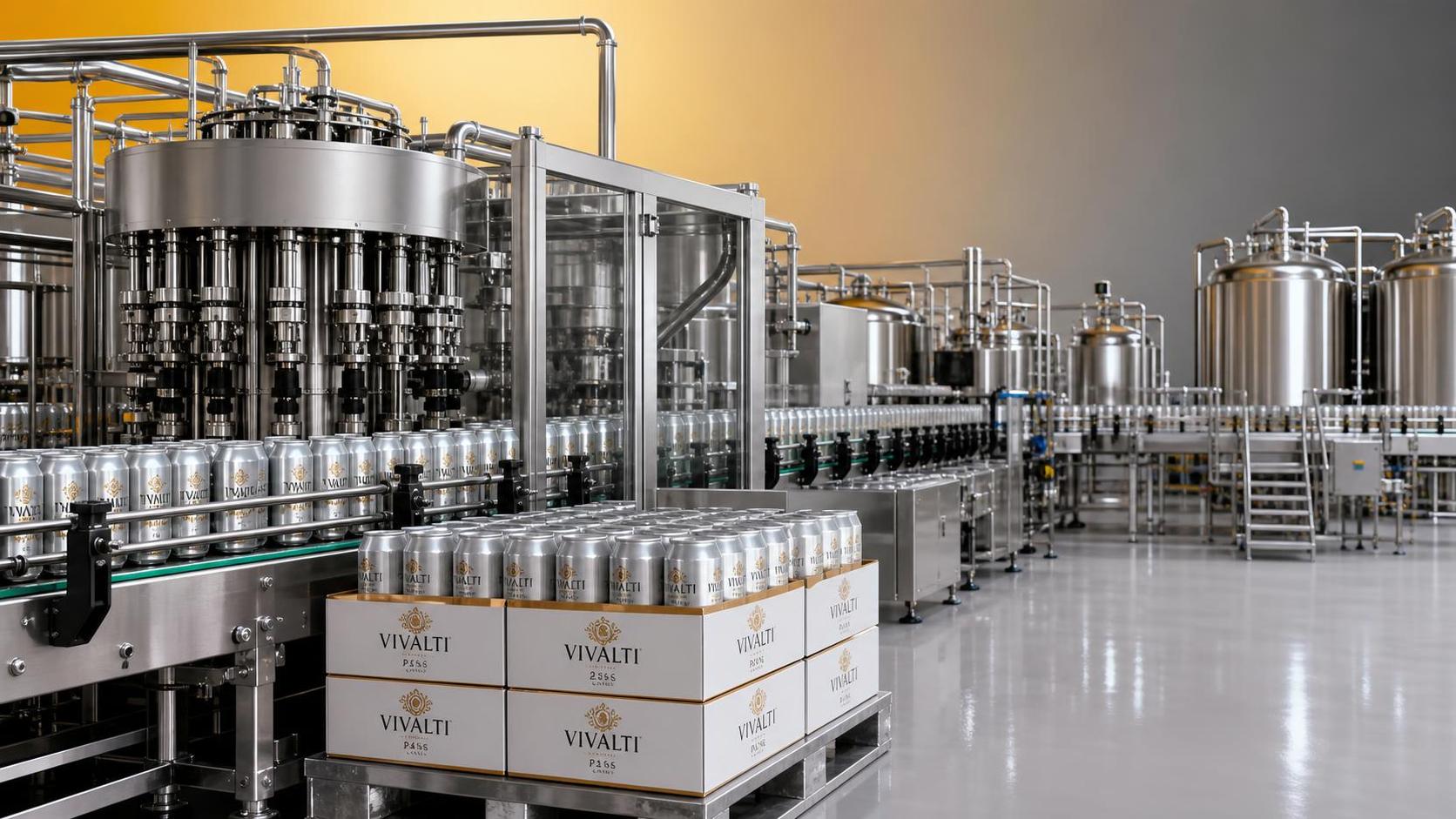
Beer OEM shortens the distance between a product idea and a sellable beer by shifting the heaviest production tasks to an existing brewing and packaging system. For a new beverage brand, that changes the launch equation immediately. Fermentation capacity, brewhouse design, filtration choices, filling lines, utilities, quality controls, warehouse handling, and production scheduling do not need to be built from zero before the first commercial batch. Capital stays available for formula development, market validation, channel setup, packaging design, and working inventory instead of being tied up in tanks, chillers, steam generation, wastewater treatment, and line installation.
The capex advantage is obvious, but speed comes from operational readiness. A brewery already running OEM projects usually has established workflows for recipe transfer, raw material sourcing, pilot confirmation, scale-up parameters, can or bottle procurement, carton specification, coding, and shipment release. That matters because beer is not a simple liquid to reproduce at commercial scale. Even when a small trial sample tastes right, the final result can shift once brewhouse efficiency, hop utilization, yeast handling, dissolved oxygen, and package stability enter the picture. Working through an existing production environment reduces the time spent solving basic infrastructure problems and keeps attention on product fit and commercial timing.
Where launch time is usually lost
Many delays happen before brewing starts. Formula intent may be clear, but the specification is often incomplete. A concept such as a crisp lager, a fruit-led wheat beer, or a low-calorie sugar-free line extension still needs measurable targets: original gravity, final gravity, ABV range, bitterness, color, carbonation level, sweetness perception, turbidity, shelf-life expectation, and packaging format. Without those details, development cycles stretch because every revision changes multiple variables at once.
Beer OEM can compress this stage when the project is handled as a manufacturing transfer rather than a branding exercise. The practical sequence is usually tighter: define the liquid profile, align on ingredients that are commercially available at batch scale, verify whether the beer needs pasteurization or cold-chain discipline, confirm package type, then match the launch quantity to actual tank and line constraints. That is much faster than designing a brewery around an idea that may still change after the first distributor feedback or first round of retail sampling.
Packaging is another common source of schedule drift. New brands often underestimate lead times for printed cans, crowns, labels, cartons, trays, and secondary shipping materials. A beer may be ready in tank while packaging components are still being revised for legal text, barcode placement, seam compatibility, or moisture resistance. An experienced OEM setup often catches these issues earlier because packaging review is connected directly to the filling line, depalletizing, date coding, carton erection, and pallet pattern requirements. That prevents a launch from slipping because a label adhesive fails in cold storage or a can body specification does not match the filler setup.
Lower capex is not just about equipment
Building a brewery requires much more than kettles and fermenters. There are hidden capital layers that continue after installation: spare parts inventory, CIP systems, heat exchangers, compressed air, glycol loops, floor drainage, lab instruments, microbiological controls, forklift access, and preventive maintenance routines. The site also needs people who can run brews consistently, clean tanks correctly, manage yeast health, troubleshoot packaging losses, and isolate contamination risks before they affect a full batch.
Using OEM production changes those fixed commitments into variable operating costs tied to actual output. That structure is useful in the early stage because demand is uncertain. A launch volume that looks reasonable on paper may be too low to support dedicated plant overhead, or too high for a cautious first market entry. Outsourced brewing allows batch planning to follow sell-through more closely. If one SKU moves faster than another, tank allocation and packaging runs can be adjusted without the burden of underused installed capacity sitting on the balance sheet.
There is also a procurement benefit. Malt, hops, fruit preparations, specialty adjuncts, cans, and cartons are easier to buy at workable conditions when they move through an established supply network. A small standalone project may struggle with minimum order quantities, storage conditions, or inconsistent deliveries. In beer, raw material timing matters. Some hops lose brightness if storage is poor, fruit inclusions may behave differently in fermentation than expected, and low-calorie formulations can become unstable if enzyme use and attenuation targets are not controlled carefully.
Recipe flexibility without rebuilding the process
One reason Beer OEM fits new beverage launches is that brand concepts often evolve after first contact with the market. A fruit-flavored beer may need less residual sweetness, a German wheat profile may need more clove than banana, or a functional specialty concept may require changes to flavor layering because one additive performs differently in finished beer than in bench trials. Adjusting these variables through an OEM process is generally faster than modifying an owned production setup that was configured around a narrow process window.
That flexibility only works if the development brief is disciplined. A useful brief does not stop at tasting notes. It should define the intended drinking occasion, target package size, expected storage conditions, whether the beer is meant for draft adaptation later, and which sensory elements cannot move during scale-up. If haze is part of the style, filtration decisions need to reflect that. If bright shelf appearance matters, yeast and protein stability need to be addressed early. If low bitterness is central to the concept, late hop expression may need reinforcement so the beer does not drink flat.
For flavored or specialty beers, ingredient compatibility needs extra attention. Fruit bases can change fermentability, acidity, sediment behavior, and color stability. Sweeteners or flavor systems may behave differently under pasteurization or extended cold storage. Functional additions can affect foam, mouthfeel, or label declaration requirements depending on the market. Launch speed improves when these interactions are reviewed during pilot planning instead of after commercial packaging has already been ordered.
Scaling from pilot to commercial batch
A pilot sample can create false confidence. At small scale, oxygen pickup is easier to control manually, dry hopping may extract differently, and yeast stress is often lower. Once the beer moves to larger vessels, transfer velocity, tank geometry, crop timing, and conditioning period can shift the outcome. Good OEM execution treats scale-up as a technical handoff, not a simple multiplication of ingredients.
The most reliable approach is to lock a process sheet before the first production run. That document should cover mash temperatures or extract usage, boil time, hop addition timing, fermentation temperature profile, yeast pitching rate, dry-hop contact plan if relevant, maturation time, carbonation target, filtration or centrifugation step, and final package specifications. It should also identify what can be adjusted during production and what should remain fixed. Without that discipline, each batch becomes a reinterpretation of the concept, which slows release and increases the risk of field complaints.
Packaging trials deserve the same seriousness. Can seam integrity, bottle fill consistency, dissolved oxygen after filling, crown or end compatibility, label scuff resistance, and carton performance under condensation all affect launch reliability. A beer that tastes correct on release day can still fail commercially if it picks up oxidation notes too quickly, loses carbonation, or reaches retail with damaged outer packs.
Channel readiness starts in the factory
Fast launch does not mean shipping whatever leaves the filler first. Different channels impose different stresses on the product. Restaurant and bar placement may require tighter keg logistics, draft stability, and return handling. Supermarket distribution may involve longer ambient exposure during transit and backroom storage. E-commerce adds parcel handling risk, making secondary packaging and leak prevention more important than many brands expect. If the package is light but the tray board is weak, damage appears before the beer has a fair chance in market.
OEM planning helps when channel assumptions are translated into production details. A beer intended for broad retail may need a more conservative shelf-life design than one sold through faster specialty rotation. Bottle and can choice should consider freight efficiency as well as visual branding. A 330 mL sleek can may suit the concept, but if supply is less predictable than standard formats, the launch calendar can become vulnerable. Speed to market depends on choosing specifications that the supply chain can support repeatedly, not just once.
Common misjudgments that slow down an OEM beer launch
- Approving packaging design before confirming the filling format, barcode area, legal text space, and secondary pack dimensions.
- Treating a tasting sample as the final formula even though commercial raw materials, yeast behavior, or carbonation level have not been validated at scale.
- Ignoring logistics temperature during transport, especially for hop-forward or fruit-driven beers that are more sensitive to flavor drift.
- Ordering too many SKUs in the first production cycle, which fragments tank time, packaging materials, and inventory attention.
- Assuming every brewery can reproduce every style equally well; process fit matters, particularly for wheat beers, low-calorie beers, and specialty recipes with nonstandard additions.
These are not abstract planning errors. They affect release dates directly because each one can trigger a redesign, rebrew, hold, or packaging change after money has already been committed.
Working rhythm that keeps capex low and decisions clear
A disciplined OEM launch usually moves in a compact rhythm. First comes concept definition with technical targets, not just branding language. Then ingredient and process feasibility are reviewed against available production conditions. A pilot or bench-aligned sample follows if needed, after which the commercial specification is frozen tightly enough for packaging procurement to proceed. Only then should production slots, component arrivals, filling dates, and shipment windows be locked together.
This rhythm matters because beer has linked lead times. The liquid needs brewing and maturation time. Packaging components have separate print and delivery schedules. Outer cartons, trays, or film bundles may come from different vendors than labels or cans. Freight booking can introduce another constraint, especially when launch timing depends on a seasonal window or a distributor promotion. Lower capex works best when inventory is staged carefully; otherwise, the project simply shifts waste from equipment ownership to obsolete packaging stock or aging finished beer.
Cold-chain assumptions should also be made explicit early. Some products can tolerate broader distribution conditions than others. A light lager built for clean stability will usually behave differently from an aromatic specialty beer where volatile hop or fruit notes are central to the drinking experience. When storage and transit conditions are left vague, shelf-life expectations become disconnected from real handling conditions.
Why OEM can support experimentation without reckless expansion
New beverage brands often need to test more than one route before a portfolio settles. That may mean comparing a classic lager against a fruit variant, or introducing a low-calorie line beside a fuller wheat beer to see which one gains traction first. Doing that with owned production can create pressure to overcommit to equipment, packaging stock, and batch sizes simply to justify the installed base. OEM production gives room to sequence launches more carefully, limit exposure on slower concepts, and reserve capital for the products that actually earn a second run.
The practical value is not theoretical flexibility. It is the ability to learn through real packaged product while keeping technical standards intact. In beverage, the market rarely judges a concept separately from execution. If the first batch lands with oxidation, unstable flavor, or damaged cartons, the idea itself may be rejected even though the original concept was sound. A capable OEM arrangement reduces that risk by putting process discipline in place before scale becomes expensive.
That is why faster launch and lower capex are linked in beer. Reducing owned infrastructure is only useful when the production path remains technically controlled, packaging-ready, and repeatable enough to support a second batch without starting over.
Thank you very much for writing to us. Please leave your message and contact information, we will reply to you within 24 hours.