



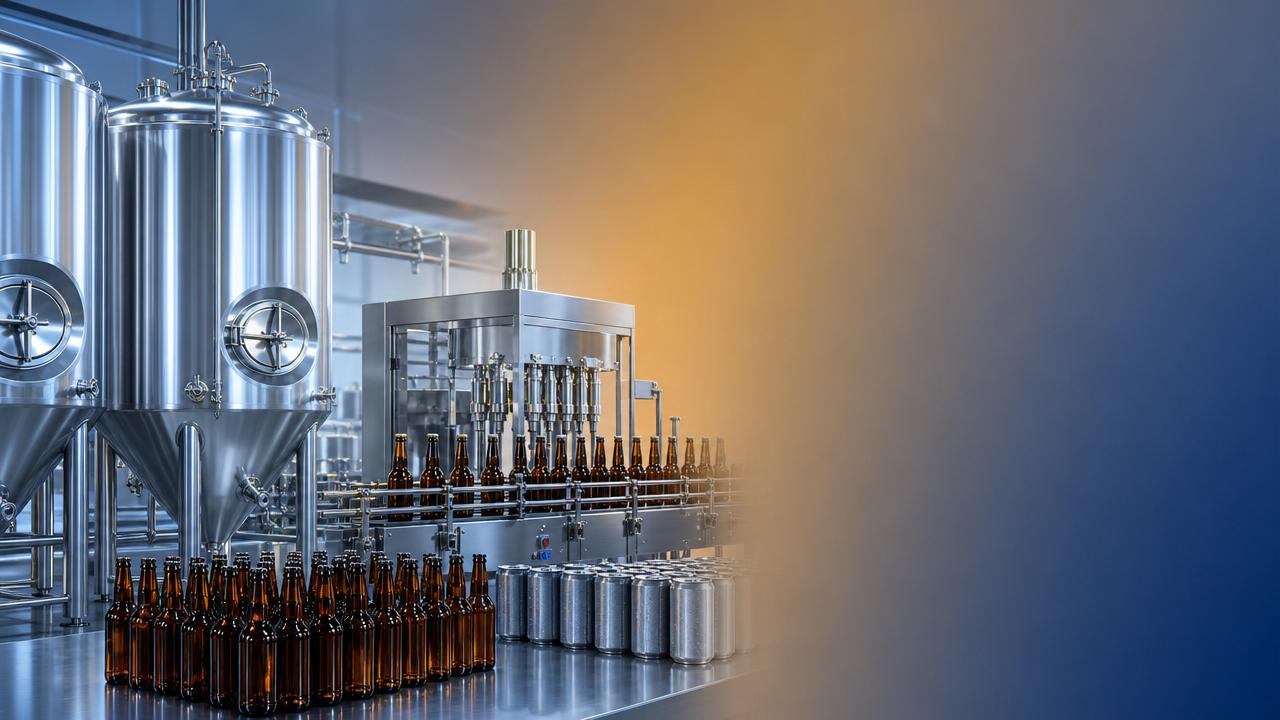
When speed to market matters, choosing between craft beer contract brewing and in-house production can shape your timeline, budget and operational risk. For project managers and engineering leads, the right model is not only about brewing quality but also about facility readiness, capacity planning and supply chain control. This guide compares both paths to help you identify the most practical route for a faster and more scalable product launch.
Why launch-speed decisions are changing in the craft beer market
The decision between craft beer contract brewing and in-house production used to be framed mainly as a brand purity question. Today, that framing is too narrow. Market conditions in beer and beverage categories are shifting faster: shorter product cycles, rising demand for low-calorie and functional options, more seasonal releases, and stronger pressure from retail and hospitality channels to test new SKUs without long development windows. For project managers, this means production strategy has become a launch-strategy issue.
In practical terms, teams are no longer asking only, “Which model gives us the best beer?” They are asking, “Which model helps us hit launch dates, secure compliance, avoid idle assets, and preserve room to scale?” That is why craft beer contract brewing has gained attention among brands that want speed, lower upfront engineering complexity, and access to proven production systems. At the same time, in-house production remains attractive for businesses planning long-term process ownership, tighter IP control, and deeper manufacturing integration.
The strongest market signals behind this shift
Several signals are reshaping how beverage companies evaluate production paths. First, product diversification is accelerating. Classic lager still matters, but demand now spreads across German wheat, fruit-flavored beer, sugar-free low-calorie beer, and functional specialty beer. That broader portfolio creates more uncertainty in production planning. Second, channel expectations are rising. Restaurants, bars, supermarkets, and online platforms want reliable replenishment and flexible packaging formats. Third, operational costs and construction timelines remain difficult to predict, especially when new lines require utilities, quality systems, and licensing approvals.
These pressures tend to favor staged market entry. Instead of building a facility before demand is validated, many brands now use craft beer contract brewing to test recipes, regions, and packaging concepts. Once demand visibility improves, they reassess whether internal production will improve margins or strategic control. This phased approach is becoming more relevant for engineering-driven organizations that must justify capital spending against uncertain SKU performance.
Trend comparison for faster launch planning
What drives brands toward craft beer contract brewing
The strongest reason is time. A contract model can compress the gap between formulation approval and first commercial shipment because brewing equipment, packaging lines, utilities, and quality controls are already in place. Project teams do not need to wait for tank installation, water treatment commissioning, HACCP setup, or repeated trial runs on a new line. For a launch manager, that removes many schedule dependencies at once.
Another driver is risk containment. Craft beer contract brewing allows companies to enter the market without carrying the full burden of plant depreciation, labor ramp-up, maintenance systems, and low initial utilization. This matters when demand forecasts are still forming, or when the product mix includes experimental categories such as fruit beer or functional beer. If a new concept needs refinement, it is generally easier to adjust the production plan than to justify underused in-house assets.
A third driver is cross-market flexibility. Global distributors and multi-channel sellers often need different pack sizes, private-label options, or regional flavor variations. Experienced OEM/ODM suppliers can support faster adaptation than a brand-new internal brewery still stabilizing operations. For engineering leads, that flexibility often translates into fewer bottlenecks during market entry.
Why in-house production still matters in a changing market
Even with these shifts, in-house production has not lost relevance. It simply fits a different stage and strategic posture. Once a brand has stable volume, repeatable demand, and confidence in its long-term portfolio, ownership of brewing operations can improve process visibility and support cost optimization. Internal production may also give tighter control over recipe adjustments, scheduling priorities, raw material standards, and packaging innovation.
For companies that view brewing capability as a core asset rather than a route to market, building internal capacity can align with long-term brand positioning. It becomes especially attractive when the business expects sustained production across flagship styles such as lager and wheat beer, rather than heavy dependence on limited-time offers. In those cases, the initial delay may be acceptable if the facility creates strategic independence later.
However, this path is rarely the fastest. Engineering timelines, permitting, validation, operator training, and production ramp-up all add complexity. For teams under pressure to launch quickly, in-house production often performs better as a second-stage move after market validation rather than as the first step.
Impact by role: what project managers and engineering leads should watch
The production decision affects stakeholders differently. Understanding that impact can prevent internal misalignment, especially when marketing wants speed, finance wants predictability, and operations wants control.
For project managers, craft beer contract brewing often simplifies the critical path because the supplier absorbs much of the technical setup. For engineering leaders, the trade-off is reduced direct control over equipment and process tuning. That is manageable if technical transfer documents, QA protocols, and change-control rules are clear from the start.
A phased decision model is becoming the practical norm
One of the clearest industry shifts is the move from binary thinking to phased planning. Instead of treating craft beer contract brewing and in-house production as mutually exclusive, more companies use them sequentially. Early-stage brands or new product lines start with external production for speed and lower risk. After demand proves durable, they consider partial or full migration to owned capacity.
This model fits current market uncertainty. It allows beverage companies to preserve launch momentum while collecting real data on velocity, regional acceptance, packaging performance, and margin structure. For businesses offering multiple categories—from classic beer to low-calorie or functional products—a phased model also prevents overbuilding around assumptions that may change within one or two sales cycles.
Stage-based decision guide
How to judge whether faster launch should outweigh deeper control
The answer depends less on ideology and more on launch conditions. If your timeline is measured in weeks or a few months, if demand is not yet stable, or if the portfolio may pivot after first market feedback, craft beer contract brewing is usually the more practical route. It reduces the number of unknowns that can delay launch and helps teams focus on brand execution, channel rollout, and demand learning.
If, however, your organization already has strong forecast confidence, financing for equipment, internal technical talent, and a long planning horizon, then in-house production may support future resilience. The key is not to overestimate the value of ownership too early. In current beverage markets, delay can be more expensive than outsourcing—especially when competitors are introducing new beers at a faster pace.
What to evaluate before making the call
Before choosing a model, project teams should verify several signals. Review whether facility construction or upgrade timelines are realistic. Test how much product variation the first 12 months may require. Confirm packaging needs across online and offline channels. Assess how much quality documentation, traceability, and export support the business needs. Also look at whether the chosen partner can support OEM/ODM customization and not just standard recipes.
For many beverage brands, a reliable manufacturing partner can provide more than capacity. It can offer formulation support, packaging coordination, and scalable supply to restaurants, bars, supermarkets, and retail distributors. Companies such as Jinpai Beer, with experience across classic lager, German wheat, sugar-free low-calorie beer, fruit-flavored beer, and specialty functional lines, illustrate how broad capability can shorten launch preparation while keeping future expansion options open.
Final judgment: which model fits faster launch plans now?
The current trend is clear: when speed, market testing, and capital discipline matter most, craft beer contract brewing usually fits faster launch plans better than immediate in-house production. It aligns with today’s demand volatility, wider SKU experimentation, and tighter pressure on project timelines. In-house production still matters, but it tends to create more value after market fit is clearer and volume is more predictable.
If your team is deciding now, focus on a few practical questions: How fixed is your launch date? How certain is your volume forecast? How complex is your product mix? How costly would a six-month delay be? And how much operational control do you truly need in phase one? Those answers will reveal whether craft beer contract brewing is the right bridge to scale, or whether direct investment in in-house production is justified from the start.
For businesses that want a faster, lower-risk path into the beer market, the most effective next step is to compare launch scenarios side by side, map technical dependencies, and identify which production model best supports both immediate delivery and future growth.
Thank you very much for writing to us. Please leave your message and contact information, we will reply to you within 24 hours.