



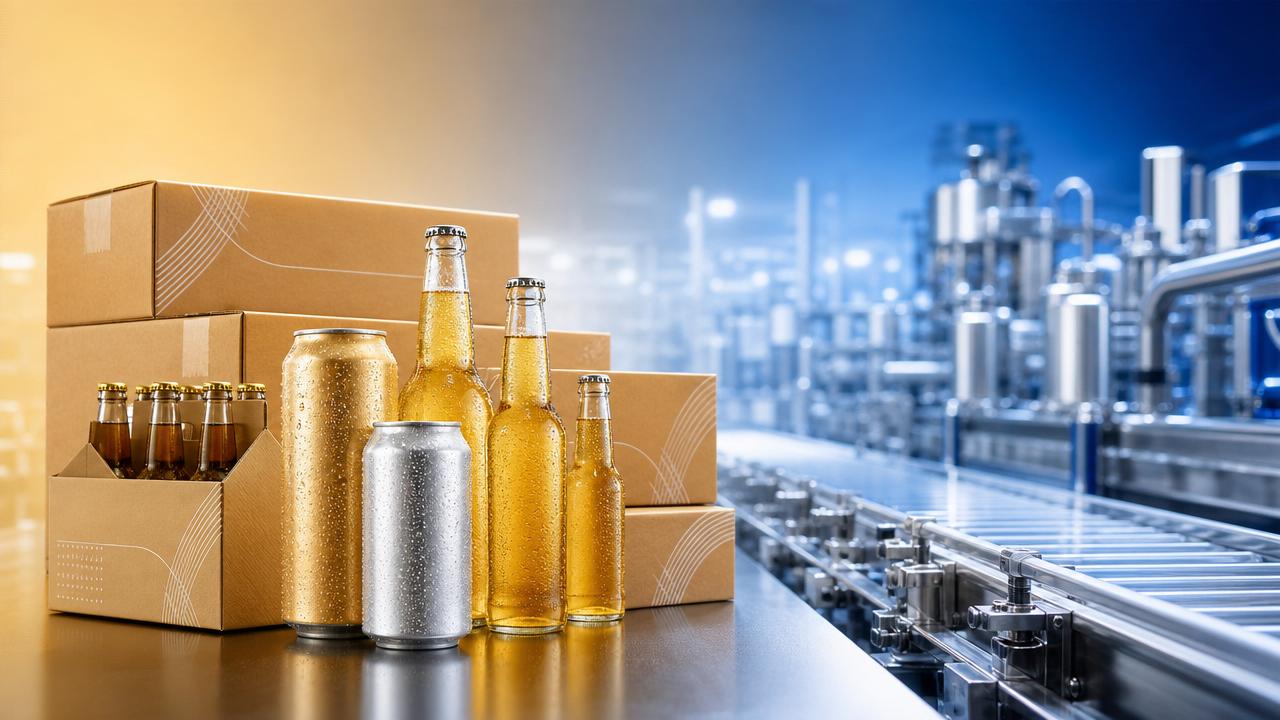
In 2026, China beer OEM is no longer just about low-cost production. For brand owners, the market is shifting toward faster customization, healthier product lines, stricter compliance and more flexible supply partnerships. Understanding these changes is essential for making smarter sourcing decisions, reducing risk and building beer brands that can stand out in increasingly competitive global retail and on-trade channels.
For decision-makers evaluating China beer OEM partners, the key question is no longer simply, “Who can produce at the lowest price?” The better question is, “Which supplier can help us launch faster, stay compliant, adapt to market shifts and protect margins over time?” In 2026, that distinction matters more than ever.
The core search intent behind this topic is practical and strategic. Brand owners want to understand what is changing in China’s beer OEM landscape, how those changes affect sourcing decisions, and what criteria should now be used to select a manufacturing partner. They are looking for market direction, risk signals and decision frameworks, not just general industry commentary.
That means the most useful discussion should focus on commercial impact: customization speed, product trend alignment, compliance readiness, MOQ flexibility, quality consistency, export capability and long-term supply resilience. Generic explanations about how OEM works are far less valuable than specific insight into what will affect product success and procurement risk in 2026.
Why China Beer OEM Is Entering a New Phase in 2026
China remains one of the most important sourcing bases for global beer brands, private labels and multi-channel beverage distributors. However, the value proposition is evolving. Cost is still relevant, but it is no longer the main reason serious buyers choose a China beer OEM partner.
Several changes are driving this transition. Consumer tastes are fragmenting, beer innovation cycles are shortening, health-oriented products are expanding, and import markets are enforcing tighter labeling and food safety standards. At the same time, buyers want more control over branding, formulations and channel-specific positioning.
As a result, the strongest OEM suppliers are moving beyond contract manufacturing and acting more like product development and supply chain partners. They are expected to support recipe adaptation, packaging differentiation, document preparation, stable lead times and multi-SKU production planning.
For brand owners, this means opportunity and responsibility. The opportunity is access to more capable production partners in China. The responsibility is that supplier selection now requires more operational and strategic scrutiny than before.
What Brand Owners Are Most Concerned About Right Now
Enterprise buyers tend to focus on five questions. First, can the supplier help create products that match actual market demand? Second, can they maintain stable quality at scale? Third, can they comply with destination market rules? Fourth, can they stay flexible on volumes and timelines? Fifth, can they support long-term brand growth rather than just one initial order?
These concerns are especially relevant in beer because product performance depends on more than liquid quality alone. Packaging format, flavor stability, shelf life, alcohol content accuracy, ingredient declarations and outer-carton readiness all affect whether a product succeeds in retail, foodservice or e-commerce.
For example, a low-cost factory may offer an attractive quote but fail to support small-batch trial runs, fast artwork revisions or export documentation. For a brand owner, that can delay launch, create compliance exposure or increase inventory risk. In many cases, the cheapest unit cost becomes the most expensive sourcing decision.
That is why decision-makers are increasingly evaluating total business value instead of ex-factory price alone. In the China beer OEM market, partner capability is becoming a competitive asset, not just a procurement line item.
Customization Speed Is Becoming a Competitive Advantage
One of the biggest changes in China beer OEM is the growing importance of fast and practical customization. In 2026, brand owners do not just want private label cans with standard beer inside. They want products tailored to channel needs, consumer segments and regional taste preferences.
This includes custom alcohol levels, bitterness profiles, sweetness balance, fruit flavor intensity, calorie reduction, sugar-free positioning and functional concepts. It also includes packaging decisions such as can sizes, bottle types, carton structures and label designs aligned with premium, youthful or health-focused branding.
Speed matters because many brands are testing multiple concepts before scaling. A supplier that can quickly develop samples, revise formulas and coordinate packaging adjustments gives buyers an advantage in market validation. This is especially useful for importers, supermarket private labels, restaurant groups and beverage startups trying to shorten launch cycles.
When comparing suppliers, decision-makers should ask how long sample development takes, how many formulation rounds are included, whether flavor adjustments can be made for different markets and how packaging changes affect lead time. In 2026, responsiveness is a major indicator of OEM quality.
Health-Forward Beer Categories Are Expanding Fast
Another major shift is the rise of healthier and more differentiated beer categories. Traditional lager still matters, but growth opportunities are increasingly linked to low-calorie, sugar-free, fruit-flavored and functional specialty products. This trend is reshaping what buyers expect from a China beer OEM partner.
Consumers in many markets are moderating alcohol intake, paying closer attention to ingredients and looking for novelty without abandoning beer entirely. That creates demand for products such as sugar-free low-calorie beer, lighter wheat styles, fruit-infused variants and concept-driven beers aimed at female consumers, younger drinkers or wellness-conscious buyers.
For brand owners, the implication is clear: an OEM supplier should not only have brewing capacity, but also product development range. A factory that can support classic lager, German wheat, fruit beer and functional specialty beers within one sourcing relationship gives buyers more room to build a wider portfolio.
This matters commercially because portfolio flexibility reduces dependence on one SKU and improves channel fit. A supermarket may want approachable fruit flavors, while bars may prefer craft-style wheat beer and online channels may respond better to limited-edition concepts. A versatile OEM model makes that expansion easier.
Compliance and Documentation Are No Longer Secondary Tasks
In 2026, compliance is one of the biggest dividing lines between reliable and risky OEM partners. Import regulations are becoming more demanding across multiple regions, and beer products face scrutiny on labeling, ingredients, shelf life claims, alcohol declarations and food safety documentation.
For business buyers, this means compliance can no longer be handled at the end of the process. It must be built into product planning from the start. If a formulation includes specific sweeteners, fruit ingredients or functional components, the supplier should be able to provide accurate technical documentation and support label consistency.
A strong China beer OEM partner should be prepared to discuss certificates, production standards, batch traceability, shelf life validation and export paperwork. If the supplier cannot answer these questions clearly, the risk is not theoretical. It can lead to customs delays, relabeling costs, returned goods or damaged distributor relationships.
Decision-makers should also assess whether the OEM understands destination-specific requirements. A supplier that only thinks in terms of domestic production may not be ready for the practical realities of global wholesale and private label distribution.
MOQ and Supply Flexibility Matter More Than Before
Forecasting is more difficult in fragmented beer markets, especially for new brands and multi-SKU portfolios. That is why minimum order quantity, batch flexibility and replenishment planning are becoming critical evaluation factors in China beer OEM sourcing.
In the past, many buyers accepted large MOQs in exchange for lower prices. In 2026, that model often creates unnecessary inventory pressure. Brand owners are increasingly looking for suppliers that can support pilot launches, phased rollouts and more balanced production planning.
Flexible supply does not only mean lower MOQs. It also means the ability to coordinate mixed product runs, adjust packaging allocations and manage repeat orders without excessive delay. This is important for businesses serving restaurants, supermarkets, bars and retail distributors, where demand patterns may vary by season and channel.
From a financial perspective, flexible OEM supply can improve cash flow and reduce dead stock risk. For management teams, that often matters more than a small difference in per-unit manufacturing cost. A smarter ordering structure can protect margin better than aggressive pricing alone.
Quality Consistency Is Still the Foundation
While the market is changing, one thing remains constant: quality consistency is non-negotiable. A strong brand cannot be built on unstable taste, packaging defects or inconsistent carbonation and shelf performance. No amount of marketing can compensate for poor repeat-purchase experience.
That is why brand owners should evaluate process control, not just sample quality. A good sample proves the supplier can make the product once. A good system proves they can make it reliably every time. These are not the same thing.
Important checkpoints include raw material sourcing standards, brewing process control, filtration stability, filling line consistency, packaging inspection and batch record systems. It is also useful to ask how the factory handles deviations, customer complaints and product improvement requests.
In a mature China beer OEM relationship, quality assurance becomes part of brand protection. This is particularly important for importers and distributors selling under their own label, because any quality issue becomes their market problem, not just the factory’s internal issue.
What a Better OEM Decision Framework Looks Like in 2026
For decision-makers, the most effective approach is to assess suppliers across four dimensions: market fit, operational capability, compliance readiness and growth support. This creates a more realistic view than comparing prices in isolation.
Market fit means the supplier can support the beer categories you actually need, whether that is classic lager, German wheat, sugar-free low-calorie beer, fruit-flavored beer or functional specialty concepts. Operational capability means they can deliver samples, production and packaging with predictable timelines and stable quality.
Compliance readiness means they understand export requirements and can prepare the documents and technical details needed for smooth market entry. Growth support means they can scale with you, adapt product lines over time and serve multiple channels such as restaurants, supermarkets, bars and retail networks.
Using this framework helps reduce sourcing mistakes. It also aligns procurement decisions with broader commercial goals, which is especially important for executives responsible for profitability, speed-to-market and brand reputation.
How the Right China Beer OEM Partner Creates Business Value
The right supplier relationship can do more than fill production capacity. It can improve launch efficiency, lower operational risk and expand product possibilities. This is where OEM becomes a strategic resource instead of a transactional purchase.
For example, a capable partner can help a brand test a fruit beer line for retail, a wheat beer for foodservice and a sugar-free low-calorie option for health-conscious consumers without forcing the buyer to manage separate factories. That simplifies communication and can make portfolio planning more efficient.
It also supports better brand building. When formulations, packaging and supply planning are aligned with market demand, the brand has a better chance of achieving repeat sales rather than one-time trial purchases. In highly competitive channels, that difference is decisive.
Suppliers with OEM/ODM experience, broad product coverage and global channel awareness are often better positioned to support this model. They understand that buyers are not just purchasing beer. They are building a commercial proposition for different markets and customer groups.
Final Takeaway for Brand Owners
In 2026, China beer OEM is changing from a cost-led sourcing option into a more strategic partnership model. The biggest shifts are clear: faster customization, stronger demand for health-oriented products, stricter compliance requirements, greater need for MOQ flexibility and higher expectations around reliability.
For business decision-makers, the practical implication is simple. Choose a supplier based on long-term business fit, not short-term unit cost. The strongest OEM partner is the one that helps you launch the right products, manage risk, serve your channels effectively and adapt as the market evolves.
If your brand is evaluating a China beer OEM strategy, this is the right time to look beyond basic manufacturing capacity. A partner with robust R&D, diversified beer offerings, OEM/ODM expertise and international supply capability can provide a more durable foundation for growth in both retail and on-trade markets.
In a more competitive global beer environment, smarter sourcing decisions will shape which brands scale successfully. And in 2026, that starts with choosing an OEM partner that understands not only how to brew beer, but how to support a business.
Thank you very much for writing to us. Please leave your message and contact information, we will reply to you within 24 hours.