



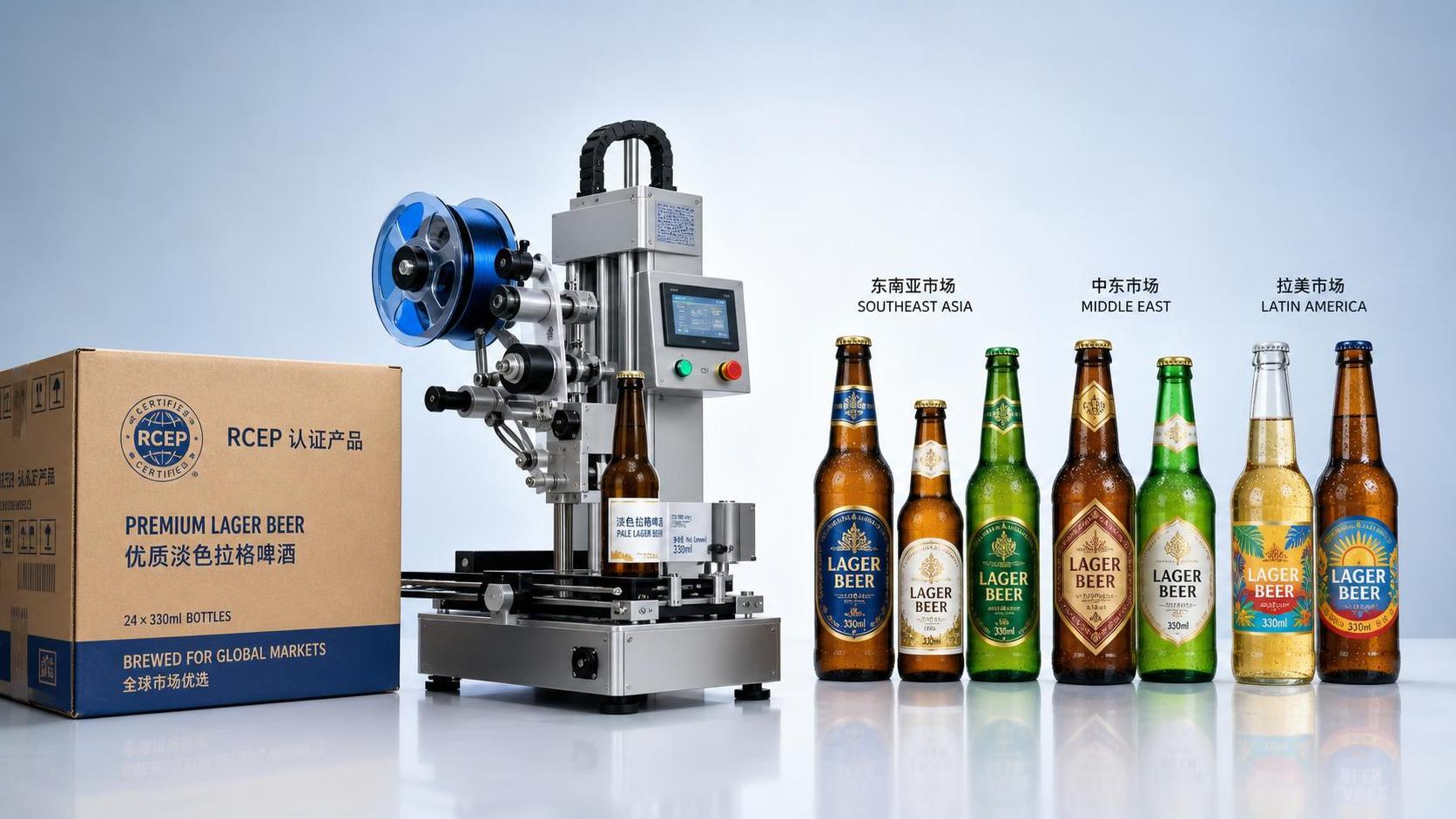
Three Real Levers — Not Just Headlines — Driving China Beer Exports Today
If you’re a distributor or agent evaluating Chinese beer suppliers for the first time in the past 18 months, you’ve likely noticed something shifting: it’s no longer just about low cost or OEM flexibility. A new layer of operational viability is emerging — one grounded in trade mechanics, digital infrastructure, and cultural execution, not just production capacity. This isn’t theoretical. It’s what’s separating partners who scale from those who stall at pilot shipments.
Let’s be clear: “China beer factory” remains a broad and often misleading label. Some export operations still rely on ad-hoc customs filings, generic English labels, and batch-level quality checks — practices that work for small test orders but collapse under supermarket compliance audits or bar channel velocity. Others — a growing minority — have embedded three interlocking capabilities into their export architecture. These aren’t marketing claims. They’re observable, verifiable, and increasingly non-negotiable for serious market entry.
Duty-Free Access: It’s Not Automatic — It’s Documented, Verified, and Channel-Specific
Yes, ASEAN, RCEP, and several bilateral agreements offer preferential tariffs for beer exports from China. But here’s what distributors rarely ask — and what costs them time and margin:
- Is the Certificate of Origin (Form E, Form AK, etc.) issued by an authorized body — and matched precisely to HS code 2203.00? Many factories issue internal “certificates” that customs reject on arrival. Valid ones require chamber of commerce verification, correct product description (e.g., “unflavoured lager” vs. “fruit beer”), and alignment with declared alcohol content.
- Does the duty exemption apply to your target channel? Supermarkets in Vietnam may accept RCEP-certified imports at 0% tariff — but Ho Chi Minh City’s craft bar associations have recently tightened labeling rules for “imported craft,” requiring local health ministry registration *before* duty-free clearance. That adds 6–8 weeks — and isn’t covered by any trade agreement.
- Are excise duties accounted for separately? Tariff reductions don’t touch domestic excise levies imposed at destination. In Indonesia, for example, imported beer faces a 150% luxury goods tax *on top of* import duty — even with RCEP. Your supplier must know this, flag it early, and help model landed cost — not just FOB price.
The signal of maturity? A factory that provides not just a certificate, but a tariff pathway memo: a one-page summary listing applicable agreements, required documents per destination, lead-time implications, and known bottlenecks (e.g., “Malaysia requires pre-shipment inspection by SIRIM for all alcoholic beverages — allow 10 working days”). Jinpai Beer, for instance, maintains updated pathways for 14 markets — including Thailand, Chile, and the UAE — with quarterly revisions tied to customs authority bulletins.
Cross-Border E-commerce: Not Just “Listed on AliExpress” — But Integrated, Compliant, and Fulfilment-Ready
E-commerce platforms like Tmall Global, JD Worldwide, and Lazada are no longer just testing grounds. For distributors, they’re becoming critical demand-validation tools — and sometimes, primary launch channels. But integration is rarely plug-and-play.
What separates functional platform readiness from symbolic presence:
- Labeling & regulatory alignment: Platforms require bilingual (or trilingual) labels approved by local food safety authorities *before* listing. A “Chinese-made” label approved in Shenzhen means nothing in Singapore’s AVA system. True readiness means the factory holds pre-cleared label templates — not just artwork files — for key markets.
- Fulfillment handoff clarity: Does the factory ship directly to platform warehouses (e.g., Cainiao hubs), or does it rely on your local 3PL? If the latter, who manages customs brokerage, VAT remittance, and returns logistics? Ambiguity here creates stockouts during flash sales — and erodes brand trust faster than any flavor profile can build it.
- Data access & responsiveness: Can you view real-time sell-through data by SKU, region, and channel? Or are you waiting for monthly PDF reports? In fast-moving categories like fruit-infused or low-calorie beer, 72-hour lag on inventory visibility means missed reorder windows and overstock in slow SKUs.
This is where OEM/ODM capability becomes operational leverage. A factory that co-develops platform-specific SKUs — say, a 330ml sugar-free variant with simplified ingredient claims for EU-bound Tmall listings — isn’t just making beer. It’s de-risking your go-to-market timeline.
Localized Marketing Support: Beyond Translation — Into Cultural Resonance & Channel Fit
“We support localization” is among the most overused phrases in supplier decks. What matters isn’t whether a factory *can* translate a label — it’s whether it understands *why* a German wheat beer sells on tap in Berlin bars but as a chilled 4-pack in Seoul convenience stores.
Effective localized support shows up in three tangible ways:
- Channel-specific format guidance: In Australia, independent bottle shops demand detailed brewing logs and water profile notes. In Mexico, supermarket chains require Spanish-language shelf-talkers with calorie comparisons to local light beers. A mature partner shares these requirements upfront — not after you’ve printed 10,000 labels.
- Regulatory-first creative development: Functional specialty beers (e.g., with added L-theanine or vitamin B12) trigger health claim regulations in over 20 countries. A compliant factory doesn’t just avoid “energy-boosting” language — it helps draft substantiated, jurisdiction-appropriate claims (“supports mental focus” vs. “boosts energy”) and coordinates third-party dossier reviews.
- Asset licensing — not just file delivery: Receiving high-res PNGs of a logo isn’t support. Licensing usage rights for social media, POS materials, and influencer gifting — with clear territorial scope and duration — is. It removes legal friction when you need to move fast.
This level of support isn’t free — but it’s rarely priced as a line item. It’s baked into minimum order volumes, lead-time buffers, or co-marketing fund structures. The question isn’t “Do they offer it?” but “How do they allocate bandwidth for it — and what happens when your priority conflicts with another partner’s?”
So — Where Does This Leave You?
You’re not choosing a beer factory. You’re selecting a node in your supply chain that must absorb policy volatility, platform complexity, and cultural nuance — without passing risk downstream to your customers.
That means vetting less on brewery size or annual output, and more on evidence of embedded systems: Do they maintain a live tariff database? Do they hold platform-specific certifications? Do they share anonymized regional sell-through trends — not just their own sales figures?
And crucially: Do they treat your market as a unique operating environment — not a checkbox on a global expansion slide?
The growth in Chinese beer exports isn’t accidental. It’s being built — quietly, systematically — by factories aligning trade, tech, and taste. For distributors, the real opportunity isn’t in finding the lowest FOB price. It’s in identifying the partner whose infrastructure matches your next 12 months of market reality — not last year’s brochure.
Thank you very much for writing to us. Please leave your message and contact information, we will reply to you within 24 hours.