



Yes—But Only with Verified Allergen Control, Dedicated Infrastructure, and Third-Party Gluten Testing
For technical evaluators assessing production feasibility, the question isn’t just whether craft beer contract brewing facilities exist—but whether they possess the rigorous protocols, dedicated equipment, and certified validation processes required for gluten-free recipe compliance. At Jinpai Beer, our ISO-certified contract brewing infrastructure supports full allergen control, cross-contamination prevention, and third-party gluten testing (≤20 ppm), making us a trusted partner for brands scaling functional, sugar-free, or gluten-free craft beer lines under OEM/ODM frameworks.
Why “Gluten-Free” Is a Technical Validation Challenge—Not Just a Label Claim
Technical evaluators know that “gluten-free” in beer is fundamentally different from other food categories. Barley, wheat, and rye—the core malt sources in most craft styles—contain hordein, secalin, and gliadin: prolamins resistant to standard brewing proteolysis. Even enzymatic hydrolysis (e.g., using Clarex™ or Brewers Clarex®) reduces but does not eliminate immunoreactive peptides unless rigorously validated.
Regulatory thresholds vary: FDA and Codex Alimentarius require ≤20 ppm gluten; Health Canada mandates ≤20 ppm *and* verification via R5 ELISA competitive method (not sandwich format). EU Regulation (EC) No 41/2009 adds traceability and process documentation requirements. A facility claiming gluten-free capability must meet *all* applicable standards—not just one.
What Technical Evaluators Must Audit in a Craft Beer Contract Brewing Facility
Capability ≠ compliance. Below are the four non-negotiable technical checkpoints we require—and verify—for every gluten-free OEM/ODM project at Jinpai Beer:
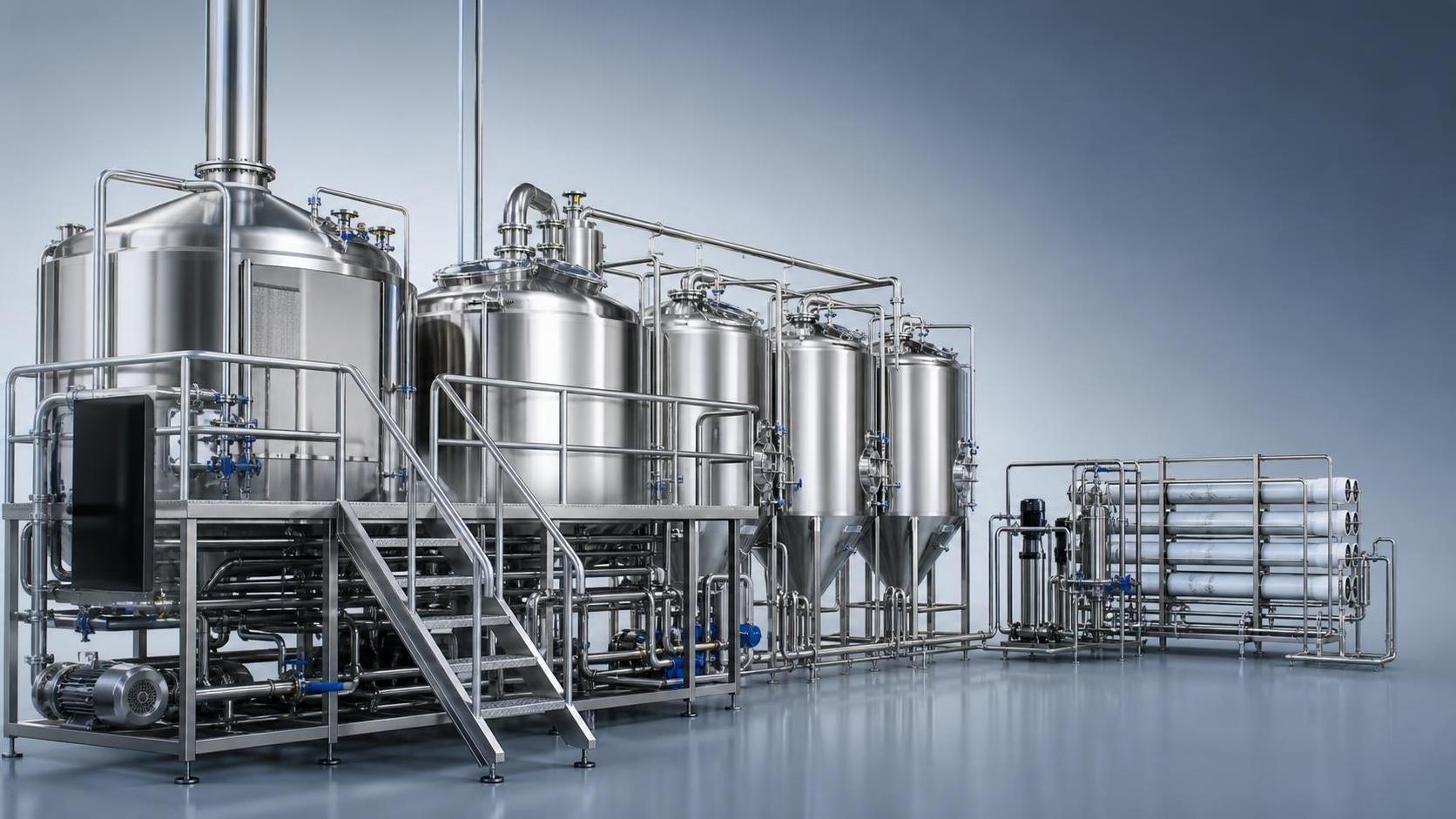
1. Physical Segregation & Dedicated Equipment Trains: No shared mash tuns, lauter tuns, or fermenters. We maintain a fully isolated gluten-free line—including stainless steel piping, CIP circuits, and yeast propagation vessels—validated with ATP swabbing and protein residue testing pre-batch.
2. Raw Material Sourcing & Certificate of Analysis (CoA) Enforcement: All base malts must be certified gluten-free (e.g., Glutino® barley, sorghum, millet, buckwheat, or certified GF oats). Each lot undergoes incoming R5 ELISA testing before unloading. Suppliers sign allergen control addendums enforceable under ISO 22000 Clause 7.4.
3. In-Process Gluten Monitoring Protocol: We test wort post-mash, post-boil, and post-fermentation using R5 ELISA (competitive format, LOD 1.5 ppm). Any reading ≥5 ppm triggers automatic hold, root-cause analysis, and retesting. Full batch records include timestamps, analyst IDs, instrument calibration logs, and raw data files.
4. Finished Product Certification & Retention Sampling: Every batch undergoes third-party lab testing (AOAC 2012.01 compliant) prior to release. We retain 3× 330 mL samples per batch for 12 months—available for retest upon distributor or regulatory request.
How Jinpai Beer’s Infrastructure Meets Functional Beer-Specific Demands
Many gluten-free craft beers also target sugar-free, low-calorie, or functional claims (e.g., added B vitamins, electrolytes, or adaptogens). These compound technical risk: additional ingredients increase allergen exposure points; low-sugar formulations often use adjuncts like tapioca starch or rice syrup—requiring precise gelatinization control to avoid haze or fermentation stalls.
Our facility integrates dual-purpose capabilities: a 20-hectoliter pilot system for rapid recipe validation (including sensory panel correlation with gluten-free claim), and a 100-hectoliter production line with real-time turbidity and dissolved oxygen monitoring. All glycol chillers, CO₂ dosing systems, and filtration units (crossflow + sterile membrane) operate on closed-loop allergen-controlled protocols.
We’ve successfully launched 17 gluten-free SKUs across five markets—including a German-style gluten-free Hefeweizen (using enzymatically treated wheat malt + sorghum blend, verified <5 ppm), and a low-calorie raspberry sour brewed with lactose-free whey protein isolate (tested negative for both gluten and dairy allergens).
Contract Brewing vs. Co-Packing: Why This Distinction Matters for Gluten-Free Projects
Technical evaluators often conflate “contract brewing” with co-packing or toll processing. They’re not equivalent. Co-packers typically handle only packaging—receiving pre-fermented beer or finished product. True craft beer contract brewing involves end-to-end process ownership: recipe formulation support, fermentation parameter optimization, microbiological stability assurance, and shelf-life validation.
This matters because gluten-free validation must occur *throughout* the process—not just at final fill. For example, residual yeast autolysis can release gluten peptides if fermentation temperature or duration deviates. Our ODM engineers embed real-time pH, gravity, and ethanol tracking into every batch sheet—and correlate deviations with final gluten test results to refine tolerance limits.
We provide full technical documentation packages: Process Flow Diagrams (PFDs), Hazard Analysis Critical Control Points (HACCP) plans specific to gluten, allergen control SOPs, and validation reports aligned with IFS Food v7 Annex 11 (Allergen Management).
What You Should Request Before Engaging Any Craft Beer Contract Brewing Partner
Don’t rely on marketing statements. Ask for these six auditable deliverables—before signing an NDA:
• A current ISO 22000:2018 certificate with scope explicitly listing “gluten-free beer production”
• Copy of the last third-party audit report (e.g., SGS, Bureau Veritas) highlighting allergen control findings
• R5 ELISA method validation summary (precision, accuracy, LOD/LOQ, matrix interference testing)
• Equipment segregation map showing physical barriers, air pressure differentials, and cleaning sequence logic
• Sample CoA from a recent gluten-free batch—including raw material, in-process, and finished product test results
• Traceability protocol: How lot numbers link raw materials → wort → fermenter → keg/bottle → warehouse → shipment
If any item is unavailable, redact that vendor from your shortlist. At Jinpai Beer, all six are standardized, updated quarterly, and available for pre-engagement review.
Conclusion: Gluten-Free Isn’t a Production Option—It’s a Certified Process Commitment
For technical evaluators, the answer to “Can craft beer contract brewing facilities handle gluten-free recipe validation?” is unequivocally yes—but only when the facility treats gluten control as a foundational process requirement, not a compliance checkbox. Jinpai Beer’s approach integrates ISO 22000 governance, R5 ELISA–driven verification, physical infrastructure isolation, and functional beer–specific engineering—enabling scalable, defensible, and market-ready gluten-free craft beer under OEM/ODM partnerships.
When evaluating partners, prioritize verifiable evidence over claims. Demand documentation—not promises. And remember: true gluten-free capability isn’t defined by what’s *in* the beer—it’s proven by what’s *excluded*, *controlled*, and *confirmed* at every stage. That’s the standard Jinpai Beer delivers—consistently, transparently, and globally.
Thank you very much for writing to us. Please leave your message and contact information, we will reply to you within 24 hours.