



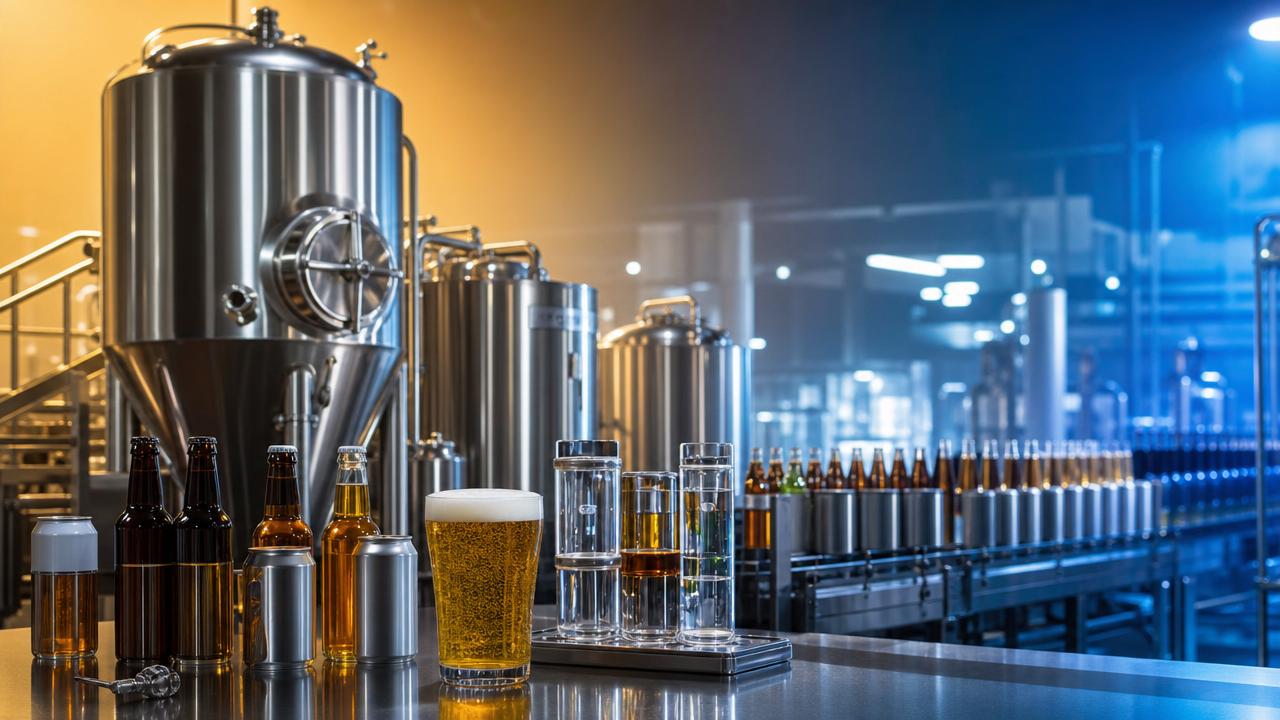
For technical evaluators, the key question is not whether a brewery can produce a good sample, but whether it can repeat the same flavor profile across large batches, export timelines, and varied market requirements. As a China beer OEM, Jinpai Beer combines R&D capability, controlled fermentation, ingredient standardization, and quality testing to support stable production of lagers, wheat beers, low-calorie options, fruit beers, and specialty formulas. This article examines how scalable beer OEM manufacturing can maintain consistency from pilot trials to commercial supply.
Why flavor stability matters in scalable beer OEM production
In beer OEM evaluation, flavor stability is a technical, commercial, and logistics issue. A promising pilot batch is only useful if it survives scale-up, packaging, warehousing, and export transit.
For distributors, restaurant chains, supermarkets, and bar channels, even small sensory differences can affect repeat purchase. A China beer OEM must therefore control both recipe design and manufacturing variation.
From pilot sample to repeatable commercial batch
Technical evaluators usually compare 3 production stages: lab formulation, pilot brewing, and commercial production. Each stage introduces new variables in extraction, fermentation, filtration, and packaging.
A 20-liter trial can show aroma direction, but a 5,000-liter or 20,000-liter batch tests process discipline. Temperature drift, yeast pitching rate, oxygen pickup, and raw material variation become more visible.
Jinpai Beer approaches OEM development by defining a target flavor profile before mass production. This includes bitterness range, color, alcohol level, carbonation, sweetness, acidity, and aroma intensity.
Key stability risks evaluators should check
- Batch-to-batch sensory drift caused by malt lot changes, hop age, yeast vitality, or uncontrolled fermentation temperature.
- Oxidation during filling, which may create papery notes within 30–90 days depending on oxygen exposure and storage conditions.
- Recipe instability in fruit beer or functional specialty beer, especially where flavoring systems, sweeteners, or botanical extracts are used.
- Export stress caused by 2–8 weeks of transport, container temperature fluctuation, and extended retail shelf display.
The table below summarizes common evaluation points when selecting a China beer OEM for stable flavor at scale. These factors are practical for technical audits and supplier comparison.
The strongest suppliers do not treat flavor as a single tasting result. They convert it into measurable checkpoints, retained standards, and controlled release criteria.
How a China beer OEM controls recipe, fermentation, and quality testing
A capable China beer OEM needs more than brewing equipment. It needs a process system that links formulation, production records, laboratory testing, and sensory confirmation.
Jinpai Beer supports classic lager, German wheat, sugar-free low-calorie beer, fruit-flavored beer, and functional specialty beer through structured R&D and production alignment.
Ingredient standardization before production
Flavor consistency begins before mashing. Malt extract level, hop alpha acid, yeast viability, water profile, sweetener purity, and fruit flavor dosage must be defined.
For lagers, technical teams often track bitterness within a narrow IBU target and color within an agreed EBC range. For wheat beers, yeast character and haze stability are critical.
For sugar-free or low-calorie beer, attenuation, residual carbohydrate, mouthfeel, and sweetness balance require extra attention. Removing sugar without damaging drinkability is a formulation challenge.
Fermentation control as the core stability lever
Fermentation is where many flavor defects appear. A 1–2°C temperature deviation can change ester expression, sulfur reduction, yeast stress, and final attenuation.
For lager-style OEM projects, controlled cool fermentation and maturation time help deliver a clean profile. For German wheat beer, yeast management supports banana, clove, and body balance.
Jinpai Beer uses process monitoring to connect tank data with finished beer results. This helps evaluators trace flavor outcomes back to specific production conditions.
Typical process controls for OEM beer
- Confirm recipe specification, including alcohol target, bitterness, color, sweetness, carbonation, and packaging format.
- Validate ingredient lots before brewing, especially hops, yeast, fruit flavoring, sweeteners, and specialty extracts.
- Monitor mashing, boiling, cooling, fermentation, maturation, filtration, and filling with recorded process parameters.
- Test finished beer for physicochemical indicators, microbial status, sensory profile, and packaging integrity.
- Retain samples from each batch for reference during shelf-life tracking and customer feedback review.
Different beer categories require different stability strategies. The following comparison helps technical evaluators match product type with the most relevant control points.
The key conclusion is that one process cannot fit every style. A reliable China beer OEM adjusts controls by product category while keeping approval logic consistent.
Technical evaluation criteria for choosing a beer OEM partner
Supplier selection should not rely only on tasting sessions or price comparison. Evaluators need evidence that flavor, safety, packaging, and delivery can remain stable.
A practical audit can be completed through 4 dimensions: process capability, laboratory control, customization responsiveness, and export execution. Each dimension affects commercial reliability.
Process capability and scale-up evidence
Ask how the supplier transfers a recipe from pilot trial to mass production. The answer should include batch records, parameter ranges, and acceptance criteria.
For example, an OEM project may require 2–3 pilot adjustments before commercial confirmation. Complex fruit or functional beers may need longer validation than standard lager.
Jinpai Beer provides OEM and ODM cooperation for customers who need original formulas, private labels, wholesale supply, or channel-specific packaging configurations.
Laboratory testing and sensory release
Beer evaluation should combine instruments and trained tasting. Laboratory indicators show whether the batch meets specification; sensory review confirms market-facing flavor quality.
Common checks include alcohol level, apparent extract, pH, bitterness, color, carbonation, dissolved oxygen, microbiological status, and packaging seal performance.
For export beer, retained sample review is especially useful. If a claim appears after 60 days, the supplier can compare shipped product with stored reference samples.
Questions technical evaluators can ask
- What parameters are locked before the first commercial batch, and which items can still be adjusted?
- How many batches are retained, and how long are samples stored for comparison?
- How is dissolved oxygen controlled during canning or bottling, especially for export orders?
- What is the typical lead time for sample development, packaging confirmation, and mass production scheduling?
- How does the brewery handle formula changes required by different markets or retail channels?
For many buyers, the most useful supplier is not the one with the broadest claims, but the one that gives verifiable answers before purchase orders are placed.
Commercial rollout: packaging, export timelines, and channel requirements
Flavor stability is also influenced by packaging decisions. Cans, bottles, kegs, and retail cartons create different oxygen, light, pressure, and handling conditions.
A China beer OEM serving global customers must connect production planning with transport realities. Export lead times commonly involve packaging approval, production scheduling, inspection, and shipment booking.
Packaging choices for different sales channels
Restaurants and bars often value kegs or high-turnover cans. Supermarkets need shelf-ready packs, clear labeling, barcode accuracy, and visual consistency across repeated deliveries.
Online channels add another requirement: packaging must handle courier movement. Secondary cartons, pallet pattern, and can protection affect both appearance and leakage risk.
Jinpai Beer supports customized solutions for online and offline distribution, helping partners align beer style, package format, and retail presentation with target channels.
Lead time planning for OEM and ODM orders
A typical OEM timeline may include 7–15 days for sample discussion, 2–4 weeks for packaging confirmation, and a scheduled window for mass production.
Customized fruit beers or functional specialty beers may require additional compatibility testing. This is especially important when the formula includes acids, extracts, vitamins, or unusual sweeteners.
Practical rollout sequence
- Confirm target market, product style, packaging format, volume forecast, and regulatory label requirements.
- Develop or adjust formula, then approve sensory sample and basic technical specification.
- Finalize label artwork, carton information, barcode, language version, and channel-specific packaging needs.
- Run commercial production under agreed process parameters and conduct release testing.
- Arrange shipment, retain batch samples, and review market feedback after the first selling cycle.
This 5-step approach reduces launch uncertainty. It also helps technical evaluators compare suppliers on execution details, not only on beverage taste.
Common misconceptions about flavor consistency in OEM beer
One misconception is that a stable recipe automatically produces stable beer. In practice, a recipe is only the starting point for repeatable manufacturing.
Another misconception is that stronger flavoring can hide process variation. Over-flavoring may create short-term impact, but it can also increase imbalance during shelf life.
Misreading sample approval
Sample approval should define a technical reference, not just a tasting preference. The approved sample should be linked to measurable targets and retained for comparison.
For example, a fruit beer sample may taste ideal at week 1 but lose aroma by week 8. Shelf-life observation gives better evidence than immediate approval alone.
Ignoring market-specific requirements
Different markets may have different expectations for sweetness, alcohol strength, calorie claims, ingredient declarations, and package size. These requirements should be reviewed early.
A China beer OEM with ODM capability can help adjust formulas for channel positioning while protecting the agreed taste profile and production feasibility.
Risk reduction checklist
- Use a written specification covering alcohol, color, bitterness, carbonation, sweetness, packaging, and sensory expectations.
- Request batch records and quality release information for the first commercial order.
- Confirm shelf-life expectations under realistic storage and transport conditions.
- Align artwork, claims, and ingredient declarations before large-volume production.
These checks are simple, but they prevent many avoidable disputes. They also create a clearer technical language between brand owner and brewery.
Building a stable long-term OEM partnership with Jinpai Beer
A stable beer program depends on collaboration between product development, procurement, quality assurance, and sales channels. The best results come from early technical alignment.
As a China beer OEM, Jinpai Beer offers R&D, production, distribution support, OEM/ODM services, wholesale supply, and customized beer solutions for global partners.
Its product range covers classic lager, German wheat beer, sugar-free low-calorie beer, fruit-flavored beer, and functional specialty beers for restaurants, supermarkets, bars, and retail networks.
What technical teams gain from early collaboration
Early discussion helps define feasible specifications, avoid unstable ingredients, and select packaging suitable for the channel. It can also shorten revisions by 1–2 cycles.
For distributors and agents, this reduces launch risk. For brand owners, it supports repeatable quality across seasonal promotions, private labels, and long-term supply programs.
When Jinpai Beer is a suitable partner
- You need scalable OEM or ODM beer production with clear recipe and quality control communication.
- You plan to launch lagers, wheat beers, low-calorie beers, fruit beers, or specialty formulas.
- You serve multiple retail channels and require packaging, flavor, and supply consistency.
- You want a China beer OEM that can discuss technical details before commercial rollout.
Flavor stability at scale is achievable when formulation, fermentation, testing, packaging, and export planning work as one system. The right OEM partner makes that system visible.
If your team is evaluating a China beer OEM for private label, wholesale supply, or customized beer development, Jinpai Beer can support technical discussion and project planning.
Contact Jinpai Beer to request a tailored OEM/ODM solution, discuss product specifications, or learn more about scalable beer manufacturing for your target market.
Thank you very much for writing to us. Please leave your message and contact information, we will reply to you within 24 hours.