



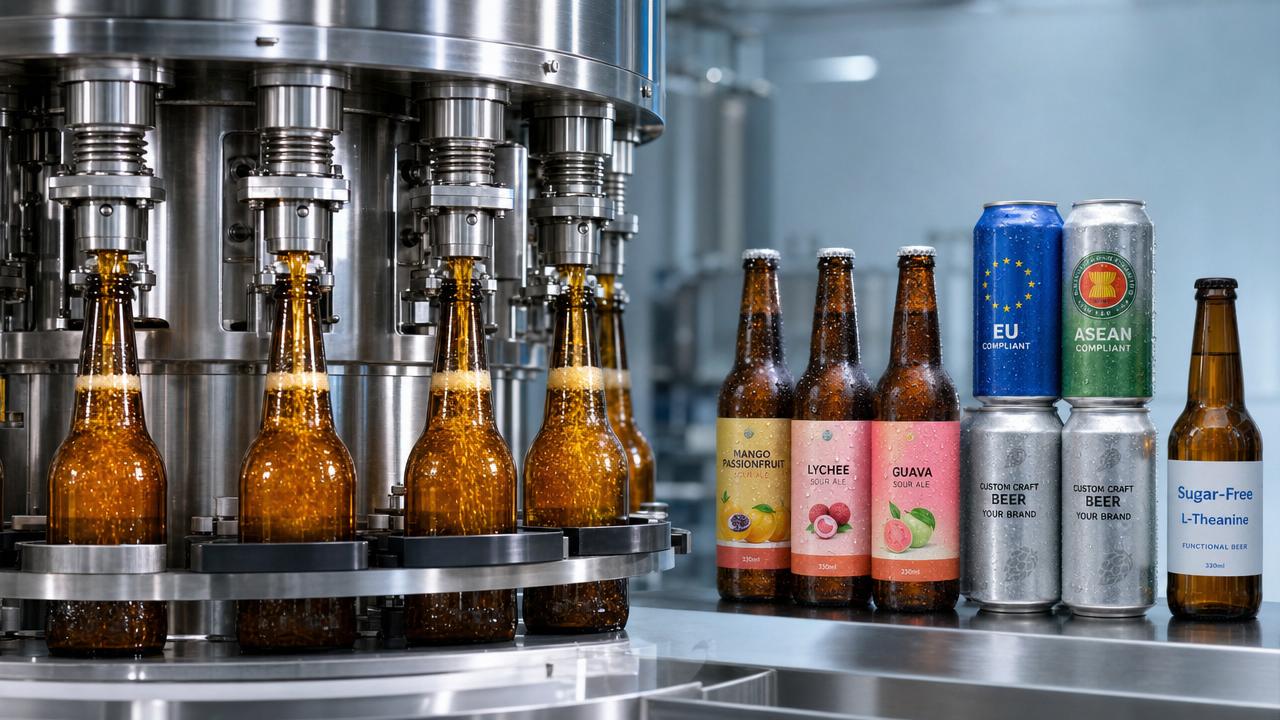
As craft beer competition intensifies in 2026, more breweries are strategically pivoting from in-house production to Beer OEM to cut capital expenditure, accelerate time-to-market, and scale specialty offerings—without compromising quality or brand identity. Jinpai Beer, a certified craft beer OEM/ODM partner, empowers global brands with end-to-end solutions: from R&D and recipe customization (sugar-free, fruit-infused, functional brews) to compliant global distribution. For enterprise decision-makers seeking agility, cost efficiency, and brewing excellence, Beer OEM isn’t just an option—it’s the growth catalyst.
Why Scenario Awareness Matters More Than Ever in 2026
The shift toward Beer OEM isn’t uniform—it’s driven by distinct operational realities across business models. A microbrewery launching its first export line faces fundamentally different constraints than a regional restaurant group rolling out branded draft beer across 80 locations—or a health-focused FMCG startup developing sugar-free functional lagers for e-commerce. In 2026, regulatory tightening (especially in EU and ASEAN), rising energy and labor costs, and accelerated consumer demand for niche variants (e.g., low-calorie hazy IPAs, adaptogenic stouts) have turned “production model” into a strategic lever—not just a backend function. Ignoring scenario-specific trade-offs risks over-investment, delayed launches, or inconsistent quality at scale.
Four High-Impact Scenarios Driving the Beer OEM Shift
Enterprise decision-makers aren’t adopting Beer OEM as a blanket strategy—they’re solving precise challenges. Below are the four most consequential scenarios where the ROI of partnering with a specialized OEM like Jinpai Beer is demonstrably higher than expanding in-house capacity:
Scenario 1: Launching Seasonal or Limited-Edition Lines
Breweries with strong branding but limited fermentation tank flexibility struggle to allocate capacity for short-run batches (e.g., summer peach sour, winter spiced porter). In-house brewing ties up tanks for weeks—delaying core SKUs. Beer OEM enables rapid iteration: Jinpai’s modular pilot-brewing system supports 50–500 HL runs with full recipe co-development, compliance documentation, and co-packing—all within 6–8 weeks from concept to shelf-ready product.
Scenario 2: Scaling Branded Draft Programs Across Multi-Unit Retailers
Bars, hotel chains, and supermarket private-label programs require consistent keg supply across geographies—but building dedicated draft lines per client is prohibitively expensive. Jinpai’s ISO 22000-certified facilities support multi-client kegging with segregated cold-chain logistics, enabling one brand to serve 12 markets under unified QC protocols while maintaining distinct flavor profiles and ABV specs.
Scenario 3: Entering Health & Wellness Segments Without Reformulation Risk
Developing sugar-free, low-carb, or functional beers (e.g., with L-theanine or vitamin B12) demands deep technical expertise in yeast strain selection, enzymatic adjunct processing, and stability testing. In-house teams often lack validated methods—leading to off-flavors or shelf-life failures. Jinpai’s R&D lab specializes in these categories, offering pre-validated base recipes and sensory panels trained on clean-label expectations—cutting development cycles by 40%.
Scenario 4: Global Market Entry with Local Compliance Agility
Exporting requires navigating divergent labeling rules (EU allergen fonts vs. US TTB nutrition claims), alcohol-by-volume tolerances (±0.3% in Canada vs. ±0.5% in Australia), and packaging material certifications. Beer OEM partners with global distribution infrastructure absorb this complexity. Jinpai manages label artwork localization, customs documentation, and regional shelf-life validation—so brands launch compliantly in Germany, Japan, or Brazil without hiring local regulatory consultants.
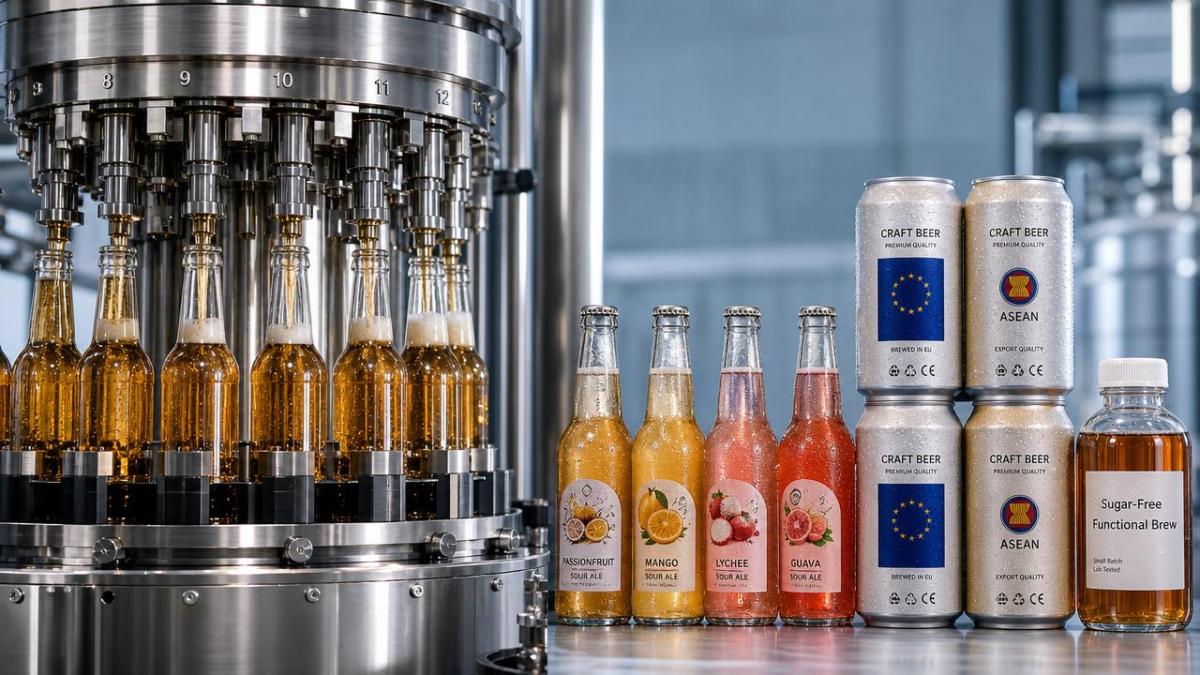
How Needs Diverge Across Scenarios: A Decision Matrix
The table below maps critical evaluation criteria against each high-impact scenario. Use it to benchmark your current capabilities—and identify where Beer OEM delivers disproportionate leverage.
Three Common Scenario Misjudgments to Avoid
Even experienced decision-makers misalign Beer OEM adoption with actual needs:
- Assuming “OEM = loss of control”: Jinpai offers real-time batch tracking, third-party lab access, and co-branded QC sign-off—giving brands more transparency than many in-house logs provide.
- Overlooking formulation lock-in risk: Some OEMs retain IP on custom recipes. Jinpai’s contracts explicitly assign all recipe rights to the brand—ensuring future flexibility.
- Underestimating channel-specific requirements: A beer optimized for supermarket shelf life (e.g., pasteurized, 12-month stability) performs poorly on draft in high-turnover bars. Jinpai tailors process parameters per channel—not just per SKU.
Your Next Step: Scenario-Validated Action Plan
Before engaging any Beer OEM partner, confirm alignment with your dominant scenario:
- Identify your primary bottleneck: Is it time (launch deadlines), capital (capex approval stalled), capability (no low-calorie R&D lead), or compliance (new market entry blocked)?
- Quantify the cost of delay: What revenue or market share is at stake if your next seasonal release misses Q3? If your hotel chain rollout slips to Q1 2027?
- Request scenario-specific validation: Ask potential OEMs for case studies matching your use case—including timelines, QC reports, and channel performance data (e.g., “Show us your last three fruit-flavored beer launches for U.S. e-commerce brands”).
Jinpai Beer supports all four high-impact scenarios with dedicated project managers, shared digital dashboards, and flexible MOQs—from 200 cases for test markets to full container-load commitments. As 2026 accelerates the pace of craft beer innovation, the question isn’t whether to outsource brewing—it’s whether your current model lets you compete where it matters most.
Contact Jinpai Beer today to schedule a scenario-fit consultation—and receive a tailored feasibility assessment for your next Beer OEM initiative.
Thank you very much for writing to us. Please leave your message and contact information, we will reply to you within 24 hours.