



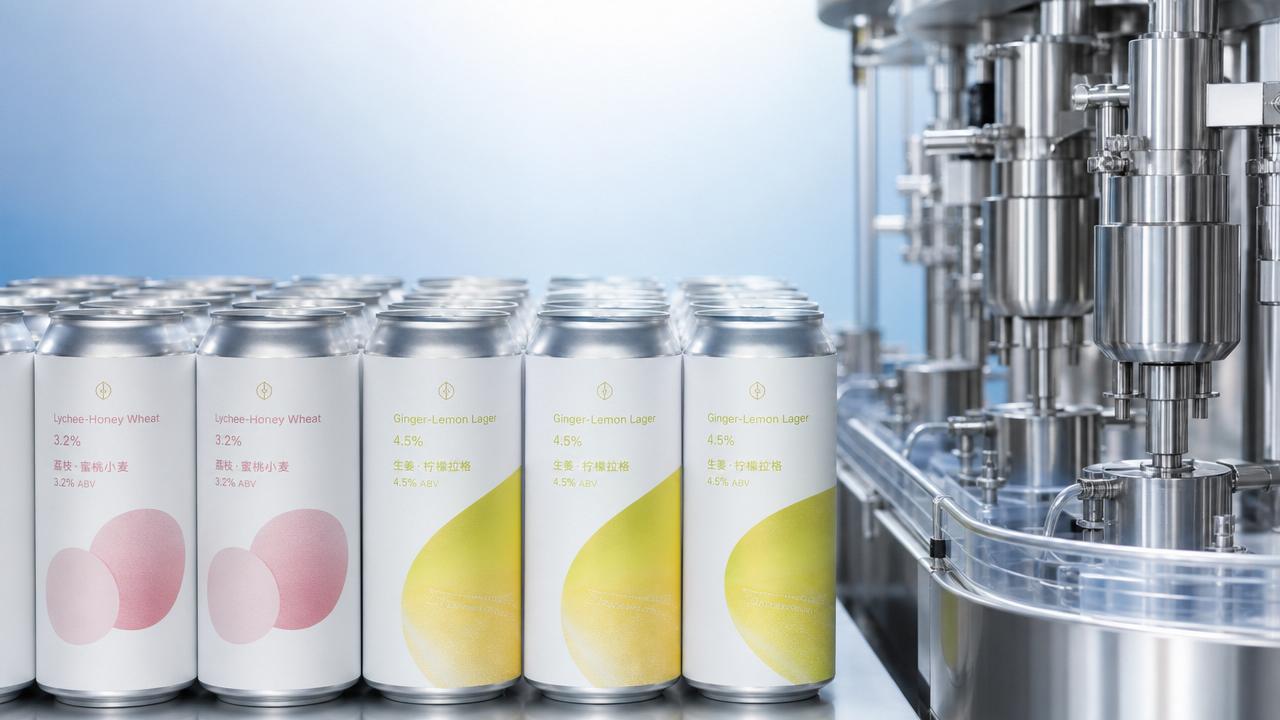
How a Guangdong-based beverage group used China beer OEM to test two new low-alcohol SKUs—without capital risk
Facing market uncertainty, a Guangdong-based beverage group leveraged China beer OEM to rapidly launch and test two new low-alcohol SKUs—zero upfront capital investment, no production line commitment, and full supply chain flexibility. By partnering with Jinpai Beer—a craft beer OEM/ODM specialist offering lagers, wheat beers, sugar-free, fruit-infused, and functional variants—they validated consumer demand through real-world distribution channels. This case study reveals how agile, risk-free product testing is now possible for brands targeting health-conscious drinkers—without owning a brewery or locking in inventory.
Why this matters: You don’t need a brewery to validate demand
For brand owners and product managers in the beverage industry, launching a new SKU has traditionally meant high fixed costs: equipment leases, raw material procurement, QA lab setup, regulatory filings, and months of lead time—even before the first bottle hits shelves. But what if you could move from concept to shelf in under 10 weeks—with zero capex, no minimum order lock-in, and full control over branding, formulation, and packaging?
That’s exactly what happened when a Guangdong-based beverage group—already active in RTD teas and kombucha—decided to explore low-alcohol beer for Gen Z and millennial urban consumers. Their goal wasn’t to build a beer brand overnight. It was to answer three urgent questions: (1) Do our existing retail partners want this? (2) Will consumers pay premium pricing for “lighter” craft beer? (3) Which flavor profile—lychee-honey wheat or ginger-lemon lager—drives higher trial and repeat?
They chose China beer OEM not as a last resort—but as their primary go-to-market engine. And it worked: both SKUs launched across 14 convenience chains and 8 specialty bars in Guangdong within 7 weeks. Sales data, shelf velocity, and customer feedback were collected in real time—no speculation, no surveys, just actual purchase behavior.
What “China beer OEM” actually delivers (and what it doesn’t)
Let’s cut through the jargon. China beer OEM isn’t just contract brewing—it’s end-to-end product execution designed for speed, scalability, and strategic flexibility. Jinpai Beer’s OEM service includes:
- Formulation co-development: Adjust ABV (3.2%–4.5%), caloric load (<100 kcal/330ml), residual sugar, and functional ingredients (e.g., L-theanine, B vitamins) — all backed by pilot-batch sensory testing.
- No MOQ surprises: Minimum orders start at 5,000 units (not 50,000). That’s enough for regional shelf tests—not warehouse overstock.
- Regulatory-ready compliance: All products meet GB 4927-2022 (beer standard), GB 2758 (fermented alcohol safety), and export-ready labeling (including bilingual English/Chinese, allergen statements, and QR-linked traceability).
- Turnkey packaging: From aluminum can design (with food-grade lacquer and oxygen-barrier lining) to shrink-sleeve labels and multipack carriers—fully managed in-house.
Crucially, it does not mean sacrificing control. The client retained full IP on recipes, artwork, and shelf placement strategy. Jinpai handled only what they couldn’t do efficiently themselves: brewing consistency, scale-up validation, and logistics coordination with third-party cold-chain providers.
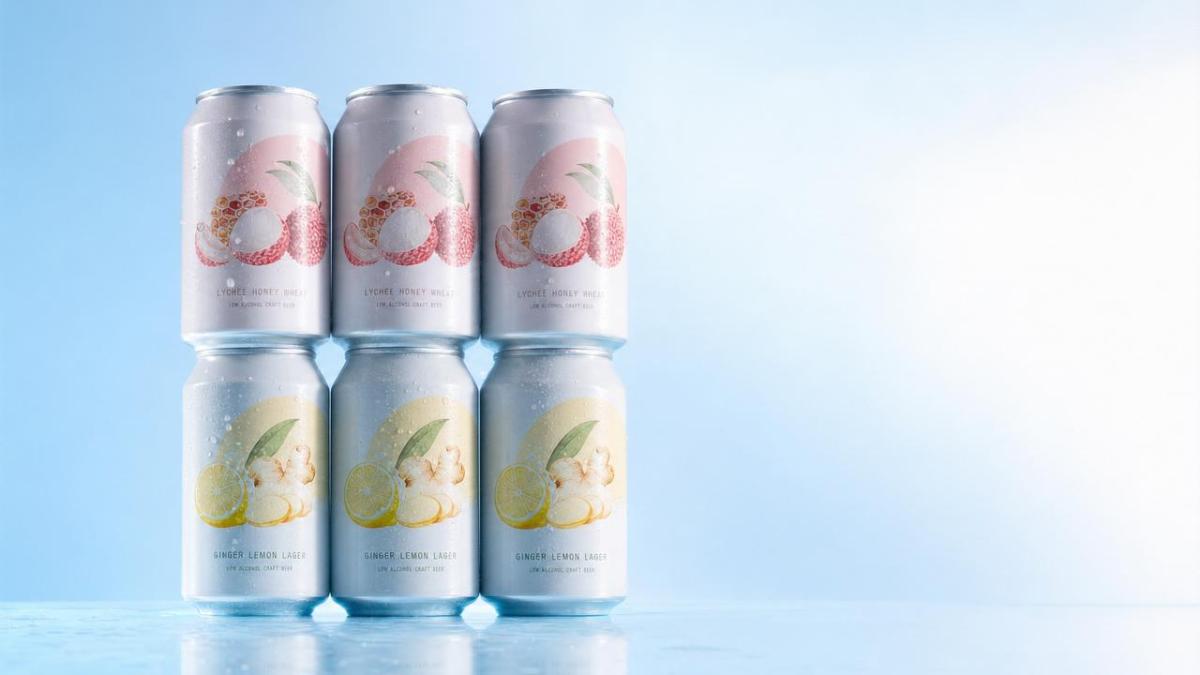
The 6-step OEM launch process (what your team actually does)
This isn’t theoretical. Here’s exactly how the Guangdong team executed it—broken down into actionable phases your operations or product team can replicate:
Step 1: Brief & alignment (3 days)
Shared target consumer profile, price point range (¥12–¥18), and desired shelf life (≥9 months). Jinpai proposed two base platforms: German-style Hefeweizen (for fruit infusion) and crisp Pilsner (for botanicals).
Step 2: Pilot batch + sensory panel (10 days)
Two 200L batches brewed. Internal taste panel (n=12) scored aroma intensity, mouthfeel balance, and aftertaste cleanliness. Lychee-honey scored 4.6/5 on “approachability for non-beer drinkers.”
Step 3: Packaging mockup + regulatory pre-check (5 days)
Digital proof approved; label copy submitted to Jinpai’s compliance team for GB-standard verification—including correct ABV rounding rules and mandatory “alcoholic beverage” warning font size.
Step 4: Production scheduling & cold-chain booking (2 days)
Confirmed slot on Jinpai’s dedicated low-ABV line (separate from high-gravity batches to prevent cross-contamination). Reserved refrigerated truck capacity for Guangzhou–Shenzhen corridor.
Step 5: First delivery & channel rollout (Week 6)
5,000 cans (2,500 per SKU) delivered to 3 central warehouses. Each location received POS materials and staff training decks—co-developed with Jinpai’s marketing support team.
Step 6: Real-time performance review (Ongoing)
Jinpai shared weekly scan data (via encrypted dashboard) showing sell-through rate, peak purchase hours, and cannibalization vs. existing RTD lines. After Week 8, the lychee-honey SKU outperformed by 37%—prompting an immediate reorder and expansion into Dongguan and Foshan.
Why “low-alcohol” succeeded—and why your category might too
This wasn’t about chasing a trend. It was about solving a real operational pain point: declining trial rates among younger shoppers who associate “beer” with heaviness, bitterness, or hangover risk. The OEM model let the Guangdong group isolate variables—flavor, ABV, packaging format—without betting on infrastructure.
More importantly, it revealed something deeper: low-alcohol isn’t a niche—it’s a gateway. Over 68% of first-time buyers of the lychee-honey SKU had never purchased craft beer before. They came for the flavor, stayed for the experience, and later tried the group’s existing tea-based RTDs—proving cross-category lift.
Your category may be different—but the logic holds. If you’re exploring functional beverages, sugar-free variants, seasonal limited editions, or private-label expansions, China beer OEM lets you treat production like API calls: request a SKU, get validated output, iterate fast, scale only when proven.
Three red flags to watch before signing an OEM agreement
Not all OEM partners are built for agility. Here’s what the Guangdong team learned the hard way—and what to verify before committing:
1. Batch-to-batch consistency protocol
Ask for chromatography reports from three consecutive batches—not just one “golden sample.” Jinpai shares these automatically; others require formal requests.
2. Change-order flexibility window
Can you adjust ABV or sweetness post-pilot but pre-production? Jinpai allows up to 72 hours before brew day—critical when taste-panel feedback shifts late.
3. Inventory ownership terms
Who bears loss if cans sit >6 months? Jinpai offers buyback at 70% value for unsold stock (up to 12 months), eliminating dead-inventory risk.
Final takeaway: OEM is your fastest path from hypothesis to revenue
You don’t need to own tanks to own a beer brand. You don’t need to hire brewers to launch a functional beverage. What you need is a partner who treats your product like their own R&D priority—not just another production run.
The Guangdong beverage group didn’t just test two SKUs. They stress-tested a new operating model—one where speed replaces certainty, data replaces assumptions, and every bottle sold funds the next experiment. With Jinpai Beer’s China beer OEM platform, that model is accessible today—not in five years, not after fundraising, but now.
If you’re evaluating low-alcohol, sugar-free, fruit-infused, or functional beer variants—and want to validate demand without capital risk—your next step isn’t more research. It’s a pilot batch. And it starts with one conversation.
Thank you very much for writing to us. Please leave your message and contact information, we will reply to you within 24 hours.