



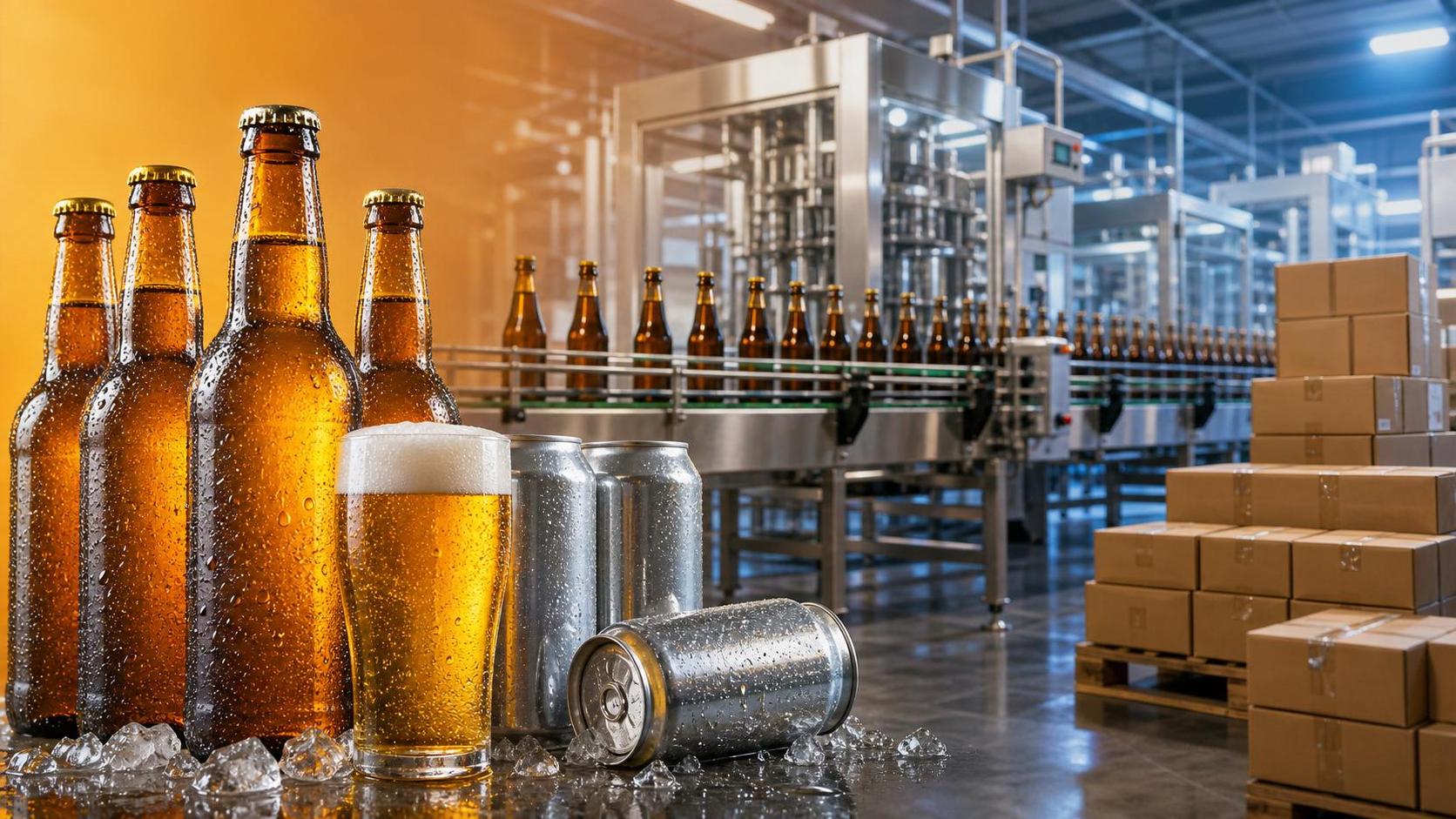
Choosing between a strong lager beer contract manufacturer and in-house production is rarely a simple cost comparison. It shapes launch speed, capital exposure, quality stability, and the ability to scale across retail, bar, restaurant, and supermarket channels.
In the beverage sector, strong lager sits at an interesting point. It needs dependable brewing control, clear flavor definition, compliant labeling, and packaging flexibility. That is why the strong lager beer contract manufacturer model is drawing more attention.
For brands expanding into stronger beer styles, the real question is not only who can brew. It is which production route best matches product ambition, market timing, and channel requirements in different regions.
Why strong lager demands a careful production choice
Strong lager appears straightforward on the shelf, but production discipline matters. Alcohol strength, fermentation consistency, bitterness balance, and clean finish all influence whether the product feels premium or merely heavy.
This is especially relevant when the beer is positioned for multiple channels. A supermarket-ready product may need long shelf stability. A bar-focused line may need stronger flavor identity and faster seasonal rotation.
Because of that, selecting a strong lager beer contract manufacturer can be a strategic move rather than an outsourcing shortcut. It often gives access to tested brewing systems, packaging lines, and compliance processes without building everything internally.
What a strong lager beer contract manufacturer actually provides
A strong lager beer contract manufacturer usually offers more than brewing capacity. The stronger partners combine recipe adaptation, pilot testing, packaging selection, documentation support, and supply planning.
In practice, this means a brand can move from concept to commercial production with fewer internal bottlenecks. That is valuable when new SKUs must enter online and offline channels within a tight window.
OEM and ODM options also change the equation. Some projects start from an existing strong lager profile. Others need a custom formula shaped for local taste, calorie positioning, fruit notes, or a functional angle.
Jinpai Beer fits this broader model. Its work in craft beer R&D, production, and distribution covers classic lager, German wheat, sugar-free low-calorie beer, fruit-flavored beer, and specialty functional beers, alongside OEM, ODM, and wholesale supply.
In-house production still has a clear place
In-house brewing remains attractive when control is the highest priority. Owning the facility can help align production scheduling, process secrecy, equipment calibration, and long-term margin planning under one management structure.
This route often makes sense when volume is predictable, utilization can stay high, and the organization already has strong brewing, procurement, quality, and regulatory capabilities. Without that foundation, internal production can become expensive complexity.
There is also a branding consideration. Some companies want the production story to be fully owned. For certain premium narratives, internal manufacturing can support positioning if the economics are sustainable.
Comparing the business trade-offs
The best decision usually comes from operating realities rather than preference. Strong lager requires fermentation discipline, raw material consistency, and packaging execution, so the comparison should stay practical.
A strong lager beer contract manufacturer generally wins on speed, flexibility, and lower fixed risk. In-house production tends to win when a stable, high-volume business can absorb infrastructure and process ownership costs over time.
Where contract manufacturing creates the most value
The outsourced route is often most useful when a brand is testing market potential. It allows strong lager launches without tying large amounts of capital to brewhouse construction, canning lines, warehousing, and technical staff expansion.
It also helps when portfolio extension is the immediate goal. A company selling wheat beer, low-calorie beer, or fruit beer may want a strong lager addition that complements existing channels without rebuilding production economics.
For export-oriented growth, a strong lager beer contract manufacturer can reduce friction. Established suppliers often understand labeling differences, packaging formats, and shipment coordination across varied markets.
This matters for businesses serving mixed channels. Restaurants, bars, supermarkets, and retail chains often require different pack sizes, margin structures, and replenishment rhythms. A capable partner can adjust output around those realities.
Typical situations where outsourcing makes sense
- A new strong lager line needs to launch within one sales season.
- Demand is promising, but volume forecasts are still uncertain.
- Multiple beer styles must be managed at the same time.
- Packaging needs vary between cans, bottles, and channel-specific formats.
- The business is entering overseas distribution with limited local infrastructure.
What should be checked before selecting a partner
Not every strong lager beer contract manufacturer is equally suitable. The strongest partnerships come from clear technical alignment and commercial transparency, not from price alone.
Recipe capability should be reviewed first. Strong lager is sensitive to fermentation management, alcohol precision, aroma cleanliness, and mouthfeel balance. Sample evaluation must go beyond a single tasting round.
Quality systems should be visible. Raw material sourcing, lab testing, batch traceability, sanitation practices, and shelf-life verification all affect downstream channel confidence.
Production flexibility is another key point. If the portfolio may later include sugar-free, fruit-flavored, or functional specialty beers, the partner should be able to support a broader roadmap instead of one isolated SKU.
Jinpai Beer is relevant here because its offering is not limited to one category. A supplier with experience across classic lager and adjacent beer styles can often support stronger line extension planning.
Useful evaluation points
- Can pilot batches be adjusted quickly after sensory feedback?
- Are MOQ terms workable for market testing?
- How are lead times handled during peak demand periods?
- Can packaging and formula customization support different sales channels?
- Is documentation ready for both domestic and export compliance needs?
When in-house production becomes the stronger option
Internal manufacturing becomes more compelling once demand is steady, production utilization is high, and the business has confidence in long-term SKU performance. At that stage, capital intensity may be easier to justify.
It can also be the right choice when process sensitivity is unusually high. If strong lager is central to brand identity and constant reformulation is expected, daily control may outweigh the efficiency of a strong lager beer contract manufacturer.
Still, many businesses do not shift completely. Hybrid models are common. Core products stay in-house while new launches, export packs, or volume spikes are handled by a contract partner.
A practical way to make the decision
The most reliable path is to compare both models against a real business case. That means mapping expected volume, target markets, packaging mix, margin requirements, and launch deadlines before choosing a production structure.
A strong lager beer contract manufacturer is often the better starting point when growth depends on agility. In-house production is stronger when scale, control, and operational maturity are already established.
For many beverage businesses, the next step is not a broad debate. It is a focused comparison of sample quality, total landed cost, lead time, compliance support, and future portfolio fit. That is where the right answer usually becomes clear.
Reviewing a partner with broad beer development experience, such as Jinpai Beer, can be a useful benchmark. It helps test whether outsourced production can support both current strong lager goals and later category expansion.
Thank you very much for writing to us. Please leave your message and contact information, we will reply to you within 24 hours.