



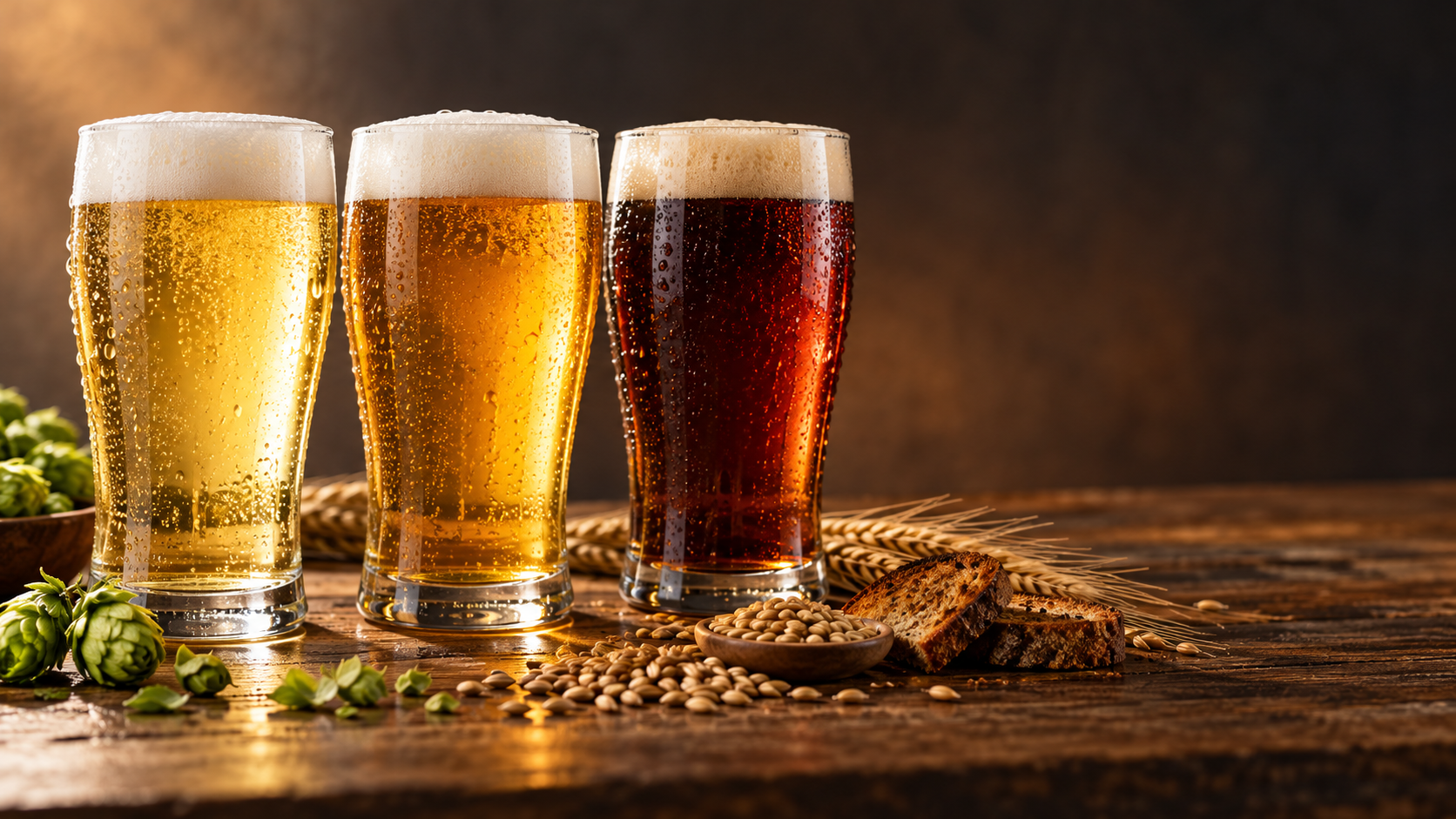
At a bar or in the beer aisle, choosing between pilsner, helles, and dark lager can be harder than the colors suggest. Choose pilsner for a noticeable hop bite and a crisp finish, helles for a softer, bread-like malt profile, or dark lager for toast, nuts, and sometimes gentle cocoa notes. The wrong shortcut—assuming pale means bland or dark means heavy—can leave you with a beer that looks right but tastes wrong.
Lager beer covers all three options, but each puts a different part of the flavor in focus. Your most useful starting point is not color or strength: it is whether you enjoy bitterness, rounded grain flavors, or toasted depth. From there, the style name, label description, and food on your table can narrow the choice.
Compare the flavors before choosing the color
All three styles are generally brewed with lager yeast and cool fermentation, followed by conditioning. That process often produces a relatively clean fermentation profile, allowing malt and hops to stand out. “Clean,” however, does not mean flavorless, and “crisp” does not mean every lager tastes equally dry or bitter.
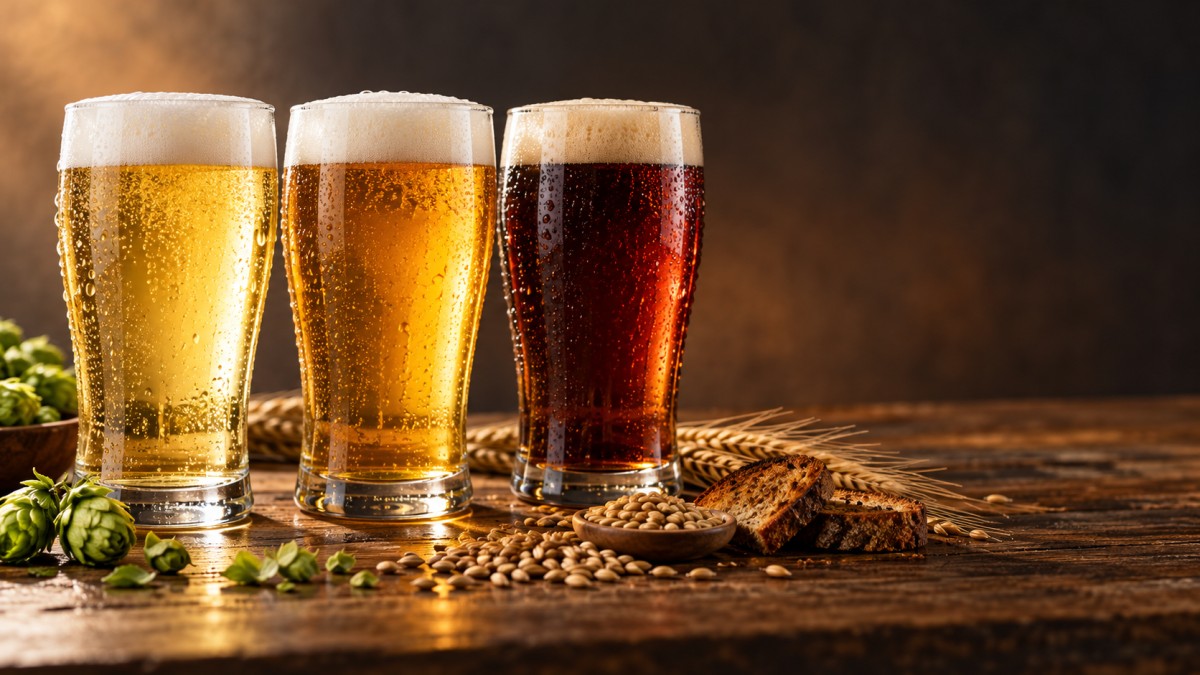
These are style tendencies, not guarantees for every brewery. A strongly hopped modern pilsner may taste very different from a restrained traditional example. Likewise, “dark lager” is a family description rather than one precise recipe. When a label offers a more specific style name, use that information before relying on the color.
Pilsner: for drinkers who enjoy a bitter, refreshing edge
Pilsner is the strongest starting point when you want hops to be clearly present but do not necessarily want the intense fruit aromas or bitterness associated with some IPAs. Traditional examples often show floral, herbal, grassy, or spicy hop aromas over a pale malt base. The finish usually feels brisk, encouraging another sip rather than leaving a rounded malt impression.
The important distinction is between bitterness and aroma. A beer can smell strongly of hops without tasting exceptionally bitter, while another may have a restrained aroma and a firm bitter finish. If bitterness is what you enjoy, look for descriptions such as “firm bitterness” or “dry finish,” rather than assuming “aromatic” means the same thing.
German and Czech examples can point in different directions
German-style pilsners often lean toward a leaner malt profile and a pronounced dry, bitter finish. Czech-style pale lagers commonly associated with pilsner can offer fuller bread-like malt and a rounder balance while retaining substantial hop character. Neither description is absolute, but it helps when two bottles both say “pilsner” and the tasting notes differ.
For a plate of fried fish, fries, or salty snacks, pilsner provides a useful contrast: carbonation refreshes the mouth, and bitterness keeps the overall pairing from feeling too rounded. With chili-heavy dishes, however, a bitter beer may make the heat feel more intense. Choose it because you like that interaction, not because every crisp beer automatically works with spicy food.
Pilsner may disappoint you if your usual complaint is “beer tastes too bitter.” A pale appearance does not make it the gentlest option here. Start with helles instead, unless a particular pilsner is explicitly described as mild and softly balanced.
Helles: softer malt flavor without a sugary finish
Helles is a pale German lager style that gives malt more room than hops. Expect fresh bread, soft grain, and sometimes a light honey-like aroma. That last description refers to a flavor impression; it does not establish that honey was added or that the beer contains a particular amount of sugar.
A well-balanced helles still has enough hop bitterness to keep the malt from becoming cloying. The difference is emphasis. Where pilsner draws attention to its snap and hop finish, helles tends to feel more rounded through the middle of the sip. It can be refreshing without tasting especially sharp.
This makes helles a practical choice when you want a beer alongside roast chicken, a simple sandwich, soft pretzels, or mild cheese. Its grain flavors connect with bread and browned food, while its restrained hop character is less likely to dominate delicate flavors. It is also a sensible first choice when sharing a meal with someone who prefers low bitterness.
Do not confuse subtlety with a lack of character. If you drink helles very cold, directly after a strongly flavored cocktail, or alongside heavily seasoned food, its quieter malt details can be difficult to notice. Try it on its own first, or with a relatively mild bite of food, before deciding it tastes too plain.
Dark lager: choose the substyle, not just the shade
Dark lager suits drinkers who want toasted flavor but are unsure about the weight or roast intensity of a stout. Darker malts can provide bread-crust, nutty, or cocoa-like notes without necessarily producing a thick body. A nearly black lager can finish surprisingly dry; a brown one may feel softer and more malt-forward.
Dunkel favors bread crust; schwarzbier may offer a drier roast accent
Munich dunkel typically emphasizes rich bread crust, toast, and sometimes nutty flavors. Its darker malt character is generally more bready than burnt. It is a useful direction if you enjoy the browned edge of a loaf or toasted nuts but dislike the sharper roast found in some dark beers.
Schwarzbier, a German black lager, often combines a relatively light or moderate body with restrained roasted notes and a clean finish. Depending on the example, those notes may suggest cocoa or mild coffee rather than sweetness. The dark appearance can therefore promise more weight than the beer actually delivers.
The broader dark-lager category also includes stronger styles, so do not assume every dark lager is equally easy-drinking. A dark bock, for example, can be more substantial than a typical dunkel or schwarzbier. Check the specific style and alcohol by volume rather than treating “dark” as a strength category.
At dinner, dunkel can echo the browned flavors of roasted mushrooms, grilled sausages, or a burger. Schwarzbier is worth considering when you want a little roasted contrast but a cleaner finish. If you dislike coffee-like flavors altogether, a bread-focused dunkel is usually a better starting point than a beer described as roasty.
Turn your usual preferences into an order
A menu rarely gives you a full sensory description. Instead of asking which style is “best,” use the flavor you want to avoid as well as the one you want to find.
- “I want refreshing, but I dislike lingering bitterness.” Start with helles. Refreshment can come from carbonation and a clean finish, not just a bitter hop bite.
- “I like hops, but not a thick or sweet beer.” Look toward pilsner, especially examples described as dry, herbal, or firmly bitter.
- “I enjoy toast and nuts, but not burnt coffee.” Look for dunkel and descriptions emphasizing bread crust rather than roast.
- “I like dark flavor, but rich beers feel too filling.” Consider schwarzbier, then check the description for body and strength.
- “I want something sweet.” Do not assume helles or dark lager will deliver dessert-like sweetness. Ask whether the beer tastes sweet or merely has a malt-forward aroma.
When staff know the beers on tap, a specific question works better than “Is it good?” Ask, “Which has the least lingering bitterness?” or “Is this dark lager more bready or coffee-like?” Those answers address your preference more directly than a recommendation based only on popularity.
Read the label without letting one number decide
Alcohol by volume tells you strength, not bitterness, sweetness, or body. If you want a lower-strength option, compare the actual ABV of the available beers. Neither pale color nor the word “lager” establishes that a beer is lower in alcohol or calories.
Some labels also show International Bitterness Units, or IBU. This can help compare beers, but it is not a complete measure of perceived bitterness. Malt balance, finish, and other flavor components affect how bitter a beer seems. Use IBU as supporting information, especially between similar styles, rather than as a universal taste score.
Freshness and storage can also change the choice you experience. Light exposure can create a skunky aroma, while age and warm storage can dull hop character or introduce stale flavors. Where dates and storage conditions are visible, consider them alongside the style. An off-tasting bottle is not a reliable introduction to an entire category.
A small tasting can settle the choice
When all three styles are available in small pours, compare them under similar conditions. A tasting is most useful when it identifies a preference, not when it becomes a test of how many aromas you can name.
- Start with helles, then pilsner, then dark lager. This gives the quieter pale malt profile a chance before firmer bitterness or toasted flavors. Use water between samples, especially if a flavor lingers.
- Smell before sipping. Notice whether bread, herbs, flowers, toast, or roast is most obvious. You do not need a more elaborate vocabulary.
- Pay attention after swallowing. Decide whether the finish is pleasantly bitter, softly malty, dry, or more roasted than you wanted.
- Return after the beer warms slightly. Very cold serving can hide aroma and malt detail. Avoid judging every sample only at its coldest.
A clean glass helps release aroma and makes the beer easier to assess than drinking straight from the package. Strong food, residual flavors in the glass, and very different serving temperatures can obscure the comparison, so keep those variables reasonably consistent.
If the helles seems pleasant but too restrained, move toward pilsner for more hop definition or dunkel for more malt depth. If pilsner leaves an unwelcome bitter finish, try helles before abandoning pale lager. And if dark lager tastes good but feels too substantial, look for a lighter-bodied schwarzbier rather than assuming toasted flavor always comes with heaviness.
Thank you very much for writing to us. Please leave your message and contact information, we will reply to you within 24 hours.