



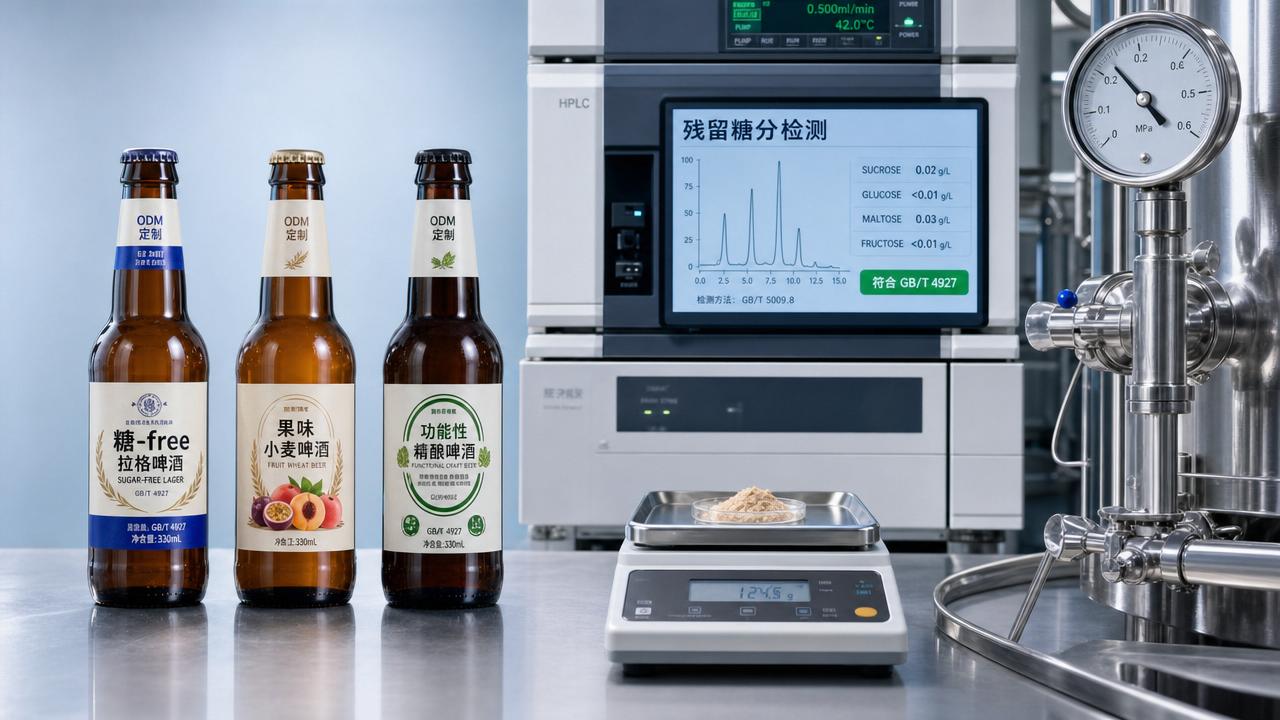
ODM beer services face a pivotal shift as China’s new GB standards for alcoholic beverages—set to take effect in July 2026—introduce stricter requirements on ingredient labeling, alcohol-by-volume tolerance, additive usage, and functional claim substantiation. For technical evaluators assessing formulation feasibility, these updates directly constrain recipe flexibility, especially for sugar-free, low-calorie, fruit-infused, and functional specialty beers. Jinpai Beer’s R&D and ODM beer services team is already aligning formulations, documentation, and testing protocols with the upcoming regulatory framework—ensuring seamless compliance without compromising innovation or sensory quality.
A Regulatory Inflection Point for Global ODM Beer Services
The upcoming revision of GB 4927–2026 (replacing the 2008 edition) marks more than a routine update—it signals a strategic recalibration of China’s regulatory posture toward imported and contract-manufactured alcoholic beverages. Unlike prior iterations, the 2026 standard introduces enforceable thresholds—not guidelines—for residual sugar limits in “low-calorie” claims, mandates full quantitative disclosure of all fermentation adjuncts (including enzymatic hydrolysates), and requires third-party validation for any health-related functional statements (e.g., “digestive support,” “antioxidant-rich”). These are not marginal adjustments but structural constraints that reshape how ODM beer services design, validate, and document recipes for the Chinese market—and increasingly, for global clients targeting harmonized compliance.
Three Key Drivers Accelerating This Shift
This tightening did not emerge in isolation. Three converging forces underpin the new GB framework:
- Consumer literacy surge: Chinese consumers now routinely cross-check ingredient lists against nutrition apps and third-party verification platforms—driving demand for transparency beyond minimum legal disclosure.
- Supply chain traceability mandates: The State Administration for Market Regulation (SAMR) now links GB compliance to food safety credit scoring—affecting import clearance speed, inspection frequency, and even shelf placement eligibility in major retail chains.
- Functional beverage convergence: As craft beer increasingly overlaps with wellness-oriented categories (e.g., probiotic-infused, adaptogen-enhanced), regulators are applying pharmaceutical-grade substantiation logic to label claims—raising the bar for evidence-based formulation justification.
Impact Mapping: Who Bears the Technical Burden?
For technical evaluators, the implications differ significantly across product archetypes and service models. The table below outlines exposure levels by formulation category and ODM beer services activity:
Beyond Compliance: How Jinpai Beer Is Turning Constraints into Capabilities
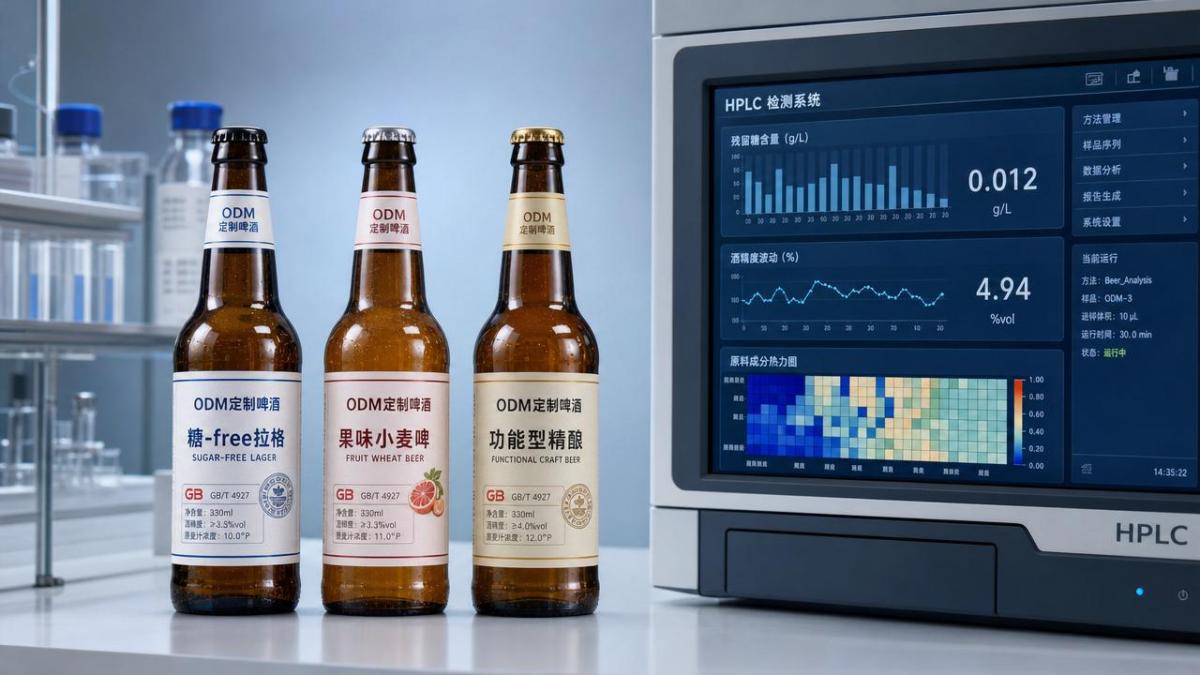
Jinpai Beer’s technical response goes beyond reactive adaptation. Since Q3 2024, our ODM beer services division has launched three parallel initiatives: (1) a proprietary GB-Ready Formulation Matrix, pre-validating 42 base recipes against 2026 parameters; (2) an integrated documentation suite that auto-generates SAMR-compliant ingredient dossiers, including enzyme origin tracing and alcohol tolerance simulations; and (3) a collaborative validation pathway with Shanghai Institute of Food Science—enabling rapid third-party substantiation for functional claims without client-side R&D overhead. Crucially, this infrastructure supports both full ODM beer services engagements and modular technical consulting—allowing partners to selectively adopt compliance modules aligned with their internal capacity.
What Technical Evaluators Should Assess Now
With enforcement beginning July 2026—and transitional allowances ending December 2026—technical evaluators should prioritize five diagnostic checkpoints before finalizing any new ODM beer services project:
- Does the current yeast strain profile deliver consistent ABV ±0.3% across 3 consecutive pilot batches? (GB 2026 narrows tolerance from ±0.5%)
- Are all non-malt fermentables (rice, corn, enzymes) quantified in the bill-of-materials—not just listed as “adjuncts”?
- For fruit-derived ingredients: Is botanical origin, harvest year, and extraction solvent documented to ISO 22000 traceability standards?
- If making functional claims: Is there existing human-intervention data—or is co-validation with Jinpai’s partner labs feasible within 90 days?
- Is the packaging line capable of dual-language labeling with dynamic batch-specific nutritional fields (required for online sales platforms)?
Strategic Implications for Long-Term ODM Beer Services Partnerships
The 2026 GB shift redefines value in ODM beer services—not as volume-driven manufacturing, but as regulatory intelligence embedded in formulation. Clients who engage Jinpai Beer early gain access to predictive compliance modeling: our platform simulates how proposed ingredient substitutions affect residual sugar, ABV variance, and additive interaction scores—before any physical brew. This transforms technical evaluation from a gatekeeping function into a collaborative innovation lever. For distributors and brand owners, it means reduced time-to-market risk; for bars and supermarkets, it ensures shelf-ready compliance without last-minute relabeling penalties.
ODM beer services are no longer just about “making your beer.” They’re about making your beer *defensible*, *verifiable*, and *future-aligned*. As July 2026 approaches, the question for technical evaluators isn’t whether your formulation meets today’s specs—but whether your ODM beer services partner has already built tomorrow’s compliance architecture.
Thank you very much for writing to us. Please leave your message and contact information, we will reply to you within 24 hours.