



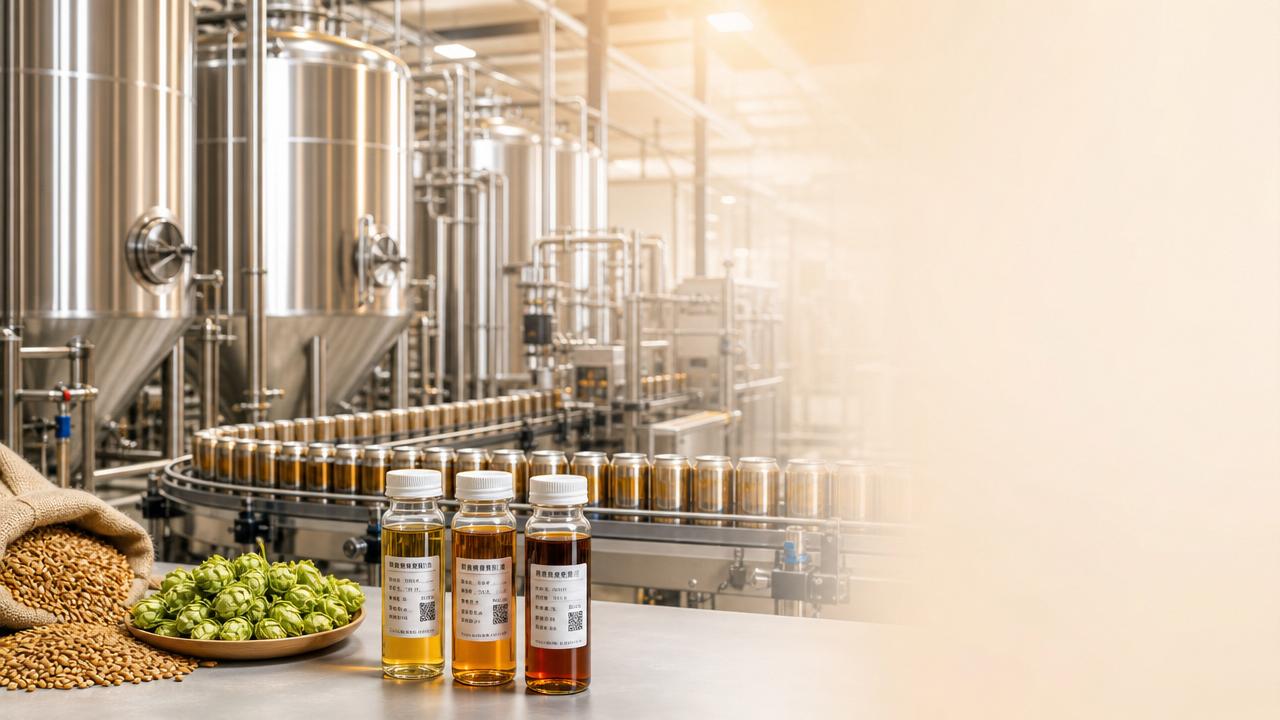
For reliable beer supply, choosing a Chinese beer contract manufacturer requires more than checking capacity and price.
It requires clear control of materials, brewing, sanitation, packaging, traceability, and compliance documents.
At Jinpai Beer, quality management is built into craft beer R&D, OEM/ODM customization, production, and global delivery.
This guide explains how a professional Chinese beer contract manufacturer protects consistency, safety, flavor, and long-term market trust.
How does a Chinese beer contract manufacturer define beer quality?
Beer quality is not only about taste.
It includes raw material stability, microbiological safety, alcohol accuracy, foam performance, aroma balance, package integrity, and shelf-life reliability.
A capable Chinese beer contract manufacturer sets measurable standards before brewing starts.
These standards help each batch match the approved sample, even when production volume increases.
For Jinpai Beer, quality begins during product development.
Classic lager, German wheat beer, sugar-free beer, fruit-flavored beer, and functional specialty beers need different specifications.
For example, wheat beer requires stable haze and ester expression.
Low-calorie beer needs tighter control of residual sugar and mouthfeel.
Fruit-flavored beer needs extra attention to aroma stability and microbial risk.
A professional Chinese beer contract manufacturer documents these requirements in product specifications.
The specification usually covers ingredients, target alcohol, bitterness, color, pH, carbonation, sensory profile, and packaging format.
Clear specifications reduce misunderstanding between brand concept, production reality, and final market expectation.
Why does early specification matter?
Without a defined standard, quality becomes subjective.
One batch may taste acceptable, while another may drift in aroma, sweetness, clarity, or carbonation.
A Chinese beer contract manufacturer should convert product ideas into measurable production controls.
This is especially important for OEM beer, private label beer, and customized craft beer projects.
How are raw materials inspected before brewing?
Raw materials decide the foundation of beer quality.
Malt, hops, yeast, water, adjuncts, fruit ingredients, and functional components must be checked before use.
A dependable Chinese beer contract manufacturer applies supplier qualification and incoming inspection together.
Supplier qualification confirms that materials come from approved, stable, and traceable sources.
Incoming inspection confirms that each delivery meets the agreed standard.
For malt, common checks include appearance, moisture, extract potential, odor, and storage condition.
For hops, freshness, alpha acid, packaging integrity, and cold-chain condition are important.
For yeast, vitality, purity, strain identity, and storage temperature affect fermentation performance.
Water is also critical.
Its mineral profile, microbial status, hardness, and treatment performance influence flavor and process stability.
Jinpai Beer uses controlled material receiving procedures for regular beers and customized formulations.
This helps protect flavor consistency across wholesale supply, restaurant channels, supermarkets, bars, and online sales.
What should be checked for customized beer?
- Ingredient legality in the destination market.
- Allergen risk and label declaration needs.
- Color, aroma, and flavor stability during storage.
- Compatibility with pasteurization, filtration, or cold filling.
- Impact on foam, clarity, sweetness, and shelf life.
A Chinese beer contract manufacturer should review these points before confirming a formula.
This prevents expensive reformulation after trial production or export preparation.
How is the brewing process controlled batch by batch?
Brewing quality depends on repeatable control.
Mashing, lautering, boiling, whirlpool, cooling, fermentation, maturation, filtration, and filling all need defined parameters.
An experienced Chinese beer contract manufacturer records critical data during each stage.
Mashing temperature affects fermentability, body, sweetness, and alcohol conversion.
Boiling time influences bitterness, sterilization, aroma loss, and wort concentration.
Cooling speed and oxygen control affect yeast health and contamination risk.
Fermentation is usually the most sensitive stage.
Temperature, pitching rate, pressure, dissolved oxygen, and fermentation curve shape must be monitored.
Small deviations may cause off-flavors such as diacetyl, sulfur, solvent notes, or unwanted acidity.
Jinpai Beer controls process parameters based on beer style and customer requirements.
A lager project may focus on clean fermentation and crisp finish.
A German wheat project may focus on yeast-driven aroma and stable mouthfeel.
A sugar-free low-calorie beer may require stricter attenuation and sensory balancing.
Which process records are useful?
These records support internal review, customer communication, and corrective action.
They also show whether a Chinese beer contract manufacturer can repeat successful batches reliably.
How are sanitation and microbiological safety managed?
Beer is vulnerable to microbial contamination after wort cooling.
Wild yeast, lactic acid bacteria, and other spoilage organisms can damage flavor and shelf life.
A responsible Chinese beer contract manufacturer uses sanitation systems, hygiene zoning, and routine verification.
Cleaning-in-place procedures must define detergent, concentration, temperature, contact time, and rinse standard.
Sanitizing procedures must confirm that tanks, pipelines, filters, valves, and filling equipment are safe for use.
Microbiological testing helps verify that cleaning is effective.
Samples may come from water, wort, beer, packaging materials, air, and equipment surfaces.
Jinpai Beer applies sanitation controls throughout production and packaging.
This is essential for export beer, private label beer, and customized beverages with fruit or functional ingredients.
What risks appear when sanitation is weak?
- Unexpected sourness or phenolic off-flavor.
- Over-carbonation during storage.
- Sediment, turbidity, or package swelling.
- Shortened shelf life in warm distribution.
- Higher complaint risk in retail channels.
A Chinese beer contract manufacturer should not rely only on final product testing.
Preventive sanitation is safer, faster, and more cost-effective than rejecting finished goods.
How are packaging, labeling, and shelf life verified?
Packaging quality directly affects market performance.
Cans, bottles, kegs, cartons, labels, and closures must protect beer during storage and transport.
A qualified Chinese beer contract manufacturer checks packaging before, during, and after filling.
Before filling, packaging materials are inspected for appearance, cleanliness, dimensions, printing accuracy, and supplier documents.
During filling, dissolved oxygen, fill level, seam quality, cap tightness, coding, and leakage are monitored.
After filling, finished products may undergo sensory review, incubation, carbonation testing, and package integrity checks.
Dissolved oxygen is especially important.
High oxygen can cause stale flavor, color darkening, aroma loss, and shorter shelf life.
Jinpai Beer supports different market channels, including restaurants, supermarkets, bars, distributors, and online retail.
Each channel may need different packaging strength, carton design, labeling language, and logistics protection.
How should labels be reviewed?
Label review should happen before mass printing.
Alcohol content, ingredients, allergens, net content, origin, storage advice, and importer information may be required.
A Chinese beer contract manufacturer can provide production data, but market-specific legal review remains important.
This is especially true for sugar-free claims, low-calorie claims, functional ingredients, and fruit flavor descriptions.
How does traceability reduce risk in beer OEM/ODM supply?
Traceability connects every finished beer to its production history.
It includes raw material batch numbers, brewing records, quality tests, packaging lots, and shipping information.
A strong Chinese beer contract manufacturer can trace forward and backward when an issue appears.
Backward tracing identifies which ingredients, tanks, and process conditions were involved.
Forward tracing identifies where affected products were shipped.
This protects both routine distribution and emergency response.
For OEM/ODM projects, traceability also supports version control.
When a formula, label, carton, or package size changes, records help avoid mixing old and new versions.
Jinpai Beer integrates traceability into customized beer production and wholesale beer supply.
This helps partners manage multi-channel sales with more confidence.
FAQ table: what to ask a Chinese beer contract manufacturer
These questions reveal whether quality control is systematic or only claimed in general terms.
How should a partner judge the right Chinese beer contract manufacturer?
The right choice should balance product capability, process control, documentation, communication, and export experience.
Capacity matters, but uncontrolled capacity creates quality risk.
A Chinese beer contract manufacturer should explain how each beer style is developed, tested, produced, and released.
Trial production is a useful step before large orders.
It confirms flavor direction, packaging feasibility, cost structure, lead time, and shelf-life assumptions.
Samples should be compared against a written specification, not only personal preference.
Communication is also part of quality control.
Clear updates on formula approval, packaging design, production schedule, inspection results, and shipping reduce avoidable mistakes.
Jinpai Beer provides OEM/ODM services, wholesale supply, and customized solutions for global beer projects.
Its product range supports classic lager, German wheat, sugar-free beer, fruit beer, and specialty functional beers.
This flexibility helps match different retail channels, restaurant menus, bar programs, and distributor portfolios.
Practical selection checklist
- Confirm product specifications before quotation approval.
- Review raw material and supplier control procedures.
- Ask for batch records and quality testing examples.
- Check packaging options for the intended sales channel.
- Discuss compliance documents for the target market.
- Use trial production for customized beer verification.
Conclusion: quality control creates dependable beer supply
A trusted Chinese beer contract manufacturer controls quality through prevention, measurement, records, and continuous review.
Strong beer quality starts with raw materials and continues through brewing, sanitation, packaging, traceability, and shipment.
For OEM/ODM craft beer, these controls protect brand consistency and reduce market risk.
Jinpai Beer combines R&D capability, diverse beer production, customized solutions, and global supply support.
To develop a stable beer project, prepare target style, packaging format, market requirements, and expected order plan.
Then discuss specifications, samples, timelines, documentation, and quality checkpoints with Jinpai Beer for long-term cooperation.
Thank you very much for writing to us. Please leave your message and contact information, we will reply to you within 24 hours.