



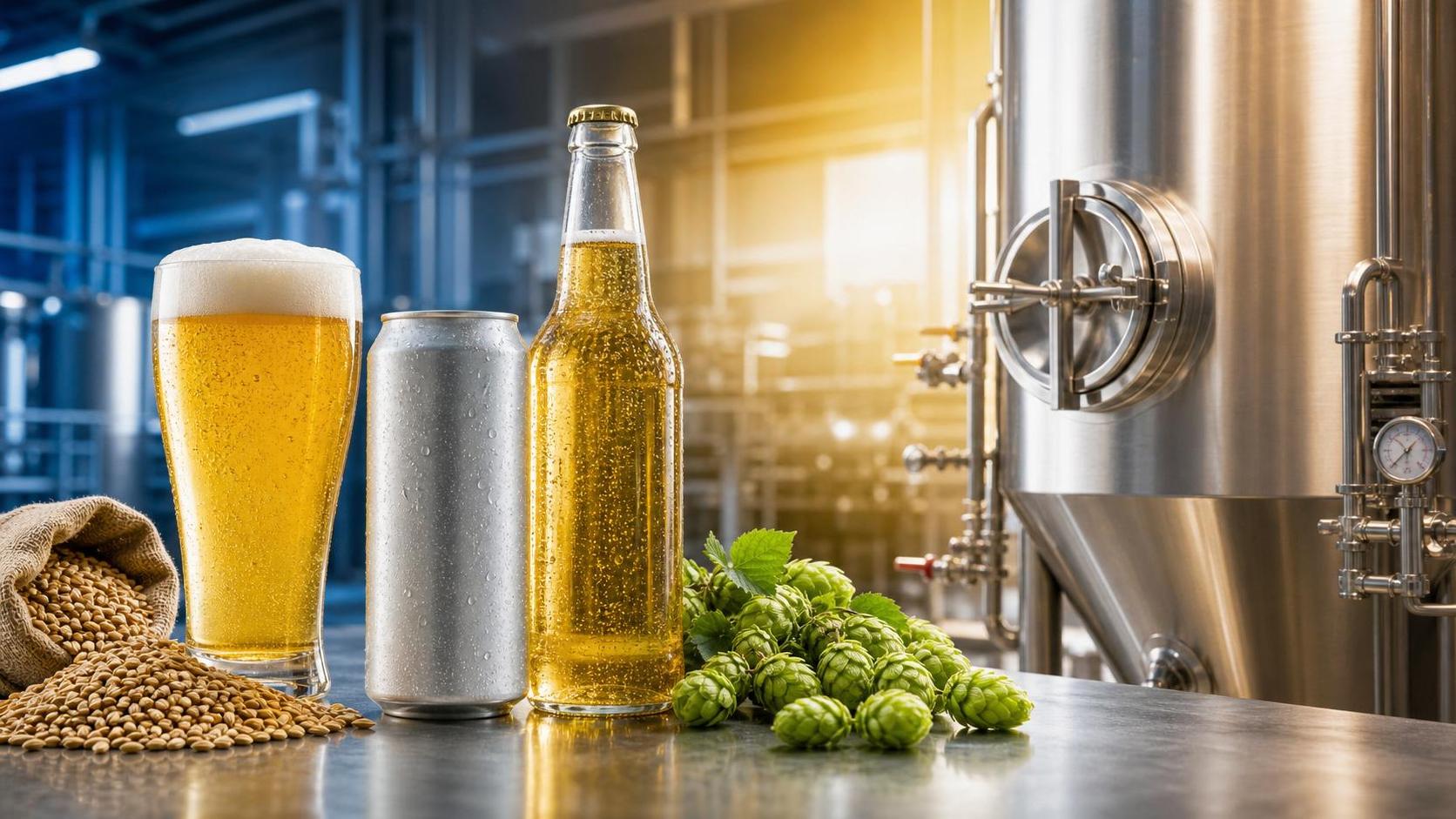
Why does the cost of high-concentration lager beer outsourcing vary so much?
Cost differences usually start long before packaging or freight is quoted. A High-concentration lager beer contract manufacturer prices risk, process stability, ingredient standards, and production complexity into every batch.
In practical terms, high-concentration lager is not just stronger wort. It requires tighter control over fermentation behavior, dilution consistency, flavor balance, and final alcohol accuracy.
That is why one quotation may look competitive at first, yet create higher hidden costs later through yield loss, delayed approval, or unstable repeat orders.
A more useful question is this: what exactly is included in the quote, and what remains outside it? That is where budgeting becomes more accurate.
Which production factors usually push the quote upward?
The biggest drivers often sit inside the brewing process itself. A High-concentration lager beer contract manufacturer must manage higher extract levels without sacrificing clarity, stability, or drinkability.
Raw materials are the first pressure point. Malt quality, adjunct ratio, hop type, yeast performance, and water treatment standards all affect cost.
When a formula targets cleaner flavor or stronger consistency, the manufacturer may need better malt lots, stricter filtration, or more precise fermentation scheduling.
- Higher original gravity often increases malt input and process energy consumption.
- Longer lagering time can reduce tank turnover and raise unit manufacturing cost.
- Alcohol and extract accuracy may require tighter lab testing frequency.
- Flavor stability for export channels can add pasteurization or cold-chain considerations.
This is also where technical capability matters. An experienced High-concentration lager beer contract manufacturer can often reduce waste and rework, which offsets a higher initial unit price.
For example, a brewery with broader craft beer development experience may already handle classic lager, wheat beer, low-calorie beer, fruit beer, and functional styles under one system.
That range usually signals stronger formulation control. It does not guarantee lower pricing, but it may reduce cost volatility across custom projects.
Is packaging really a major cost driver, or just a finishing detail?
Packaging is rarely a minor detail. In many projects, it becomes one of the most visible cost variables after brewing.
A High-concentration lager beer contract manufacturer may offer cans, bottles, kegs, tray packs, gift formats, or retail-ready displays. Each option changes both direct and indirect cost.
Short-run custom packaging usually carries higher per-unit expense because tooling, label setup, carton printing, and material procurement are less efficient at small scale.
More importantly, packaging choices affect breakage risk, warehouse space, container loading, and local compliance. A cheaper bottle format may create more downstream cost than a slightly higher can quote.
The table below helps separate headline pricing from actual financial impact.
When comparing suppliers, ask for packaging cost to be broken out separately. That makes it easier to test alternative formats without reopening the whole manufacturing quote.
How do order volume and customization change the economics?
This is where many budget assumptions become misleading. A High-concentration lager beer contract manufacturer may quote attractively at one volume tier, but the economics can shift sharply below that threshold.
Small runs absorb setup time poorly. Tank scheduling, lab validation, cleaning cycles, packaging line changeovers, and documentation still happen even when output is limited.
Customization adds another layer. A standard formula with existing packaging materials is very different from a project requiring recipe tuning, trial batches, sensory review, and multi-market label adaptation.
More common cost-sensitive situations include these:
- Launching with low initial volume but premium packaging expectations.
- Requesting exclusive formulas with frequent small specification changes.
- Expanding into several channels with different case counts or labeling rules.
- Using one-time promotions that disrupt regular procurement efficiency.
This does not mean customization should be avoided. It means volume planning, reorder rhythm, and SKU discipline should be aligned before selecting a High-concentration lager beer contract manufacturer.
Where long-term cooperation is possible, OEM and ODM projects usually become more efficient after the first approved runs. The cost curve improves once materials, specifications, and production rhythm stabilize.
What hidden costs often appear after the first quotation?
The first quote often captures manufacturing basics, but not every operational consequence. Hidden cost usually comes from uncertainty, not from one dramatic fee.
Compliance is one example. If export markets require specific alcohol labeling, ingredient declarations, shelf-life evidence, or testing reports, preparation time and documentation cost can rise quickly.
Freight and storage are another. High-concentration lager for global distribution may need stronger packaging, better pallet configuration, or tighter inventory timing to avoid aging risk.
There is also the cost of delay. If sampling, artwork approval, or specification sign-off takes longer than planned, launch timing slips and working capital gets tied up.
A useful review point is whether the High-concentration lager beer contract manufacturer clearly separates included services from optional ones.
How can you compare manufacturers without focusing only on the lowest unit price?
A lower unit quote is useful only if supply stays stable and product performance remains consistent. Otherwise, the savings are temporary.
A stronger comparison usually combines process capability, flexibility, and total landed cost. This is especially true when the product will move through supermarkets, bars, restaurants, and mixed retail channels.
For a High-concentration lager beer contract manufacturer, the practical comparison points often include:
- Whether the brewery can support both standard and customized beer programs.
- How clearly it explains yield, lead time, and specification control.
- Whether global channel experience reduces export and labeling friction.
- How well it handles multiple product types under one supply relationship.
This matters because a supplier with broader beer R&D and production depth may support future extensions more efficiently, such as wheat beer, low-calorie beer, fruit beer, or specialty functional lines.
That kind of continuity can lower future sourcing complexity, even if the starting quote is not the lowest one on the table.
What is the most practical next step before choosing a High-concentration lager beer contract manufacturer?
Start by separating must-have requirements from optional preferences. Recipe target, alcohol range, packaging format, compliance scope, and order rhythm should be fixed before price comparison begins.
Then request a quotation structure, not just a number. A reliable High-concentration lager beer contract manufacturer should be able to explain brewing cost, packaging cost, testing scope, lead time, and minimum order logic.
It also helps to review whether the supplier can support long-term channel development, not only a single production run. Stable OEM or ODM cooperation often creates better cost visibility over time.
In the end, the goal is not to chase the cheapest offer. It is to build a cost model that protects margin, controls cash exposure, and supports consistent supply.
If the next comparison is approaching, prepare one internal checklist covering formula, packaging, compliance, minimums, testing, and delivery assumptions. That single step usually improves decision quality immediately.
Thank you very much for writing to us. Please leave your message and contact information, we will reply to you within 24 hours.