



For finance approvers evaluating Q1 2026 budget allocations, China beer OEM pricing has risen 8–12% for small-batch orders—a shift driven by tightened barley supply, rising logistics costs, and upgraded food-grade packaging mandates. At Jinpai Beer, our craft-focused OEM/ODM platform absorbs part of the volatility through long-term raw material contracts and lean batch scheduling—ensuring transparency and predictable cost modeling. This update details what’s behind the uptick, how it impacts unit economics for <500-keg runs, and why early Q1 commitment locks in pre-adjustment terms. Let’s break down the numbers—without the noise.
What’s Behind the 8–12% China Beer OEM Price Uptick?
Three interlocking supply-chain pressures converged in late 2025 to reshape small-batch China beer OEM pricing in Q1 2026:
- Barley scarcity: A 14% drop in EU-origin malting barley imports (per China Customs data) forced domestic maltsters to raise contract rates by 9–11%. For craft-oriented OEM clients using premium 2-row or specialty malts, this directly lifts base ingredient cost by 3.2–4.1% per keg.
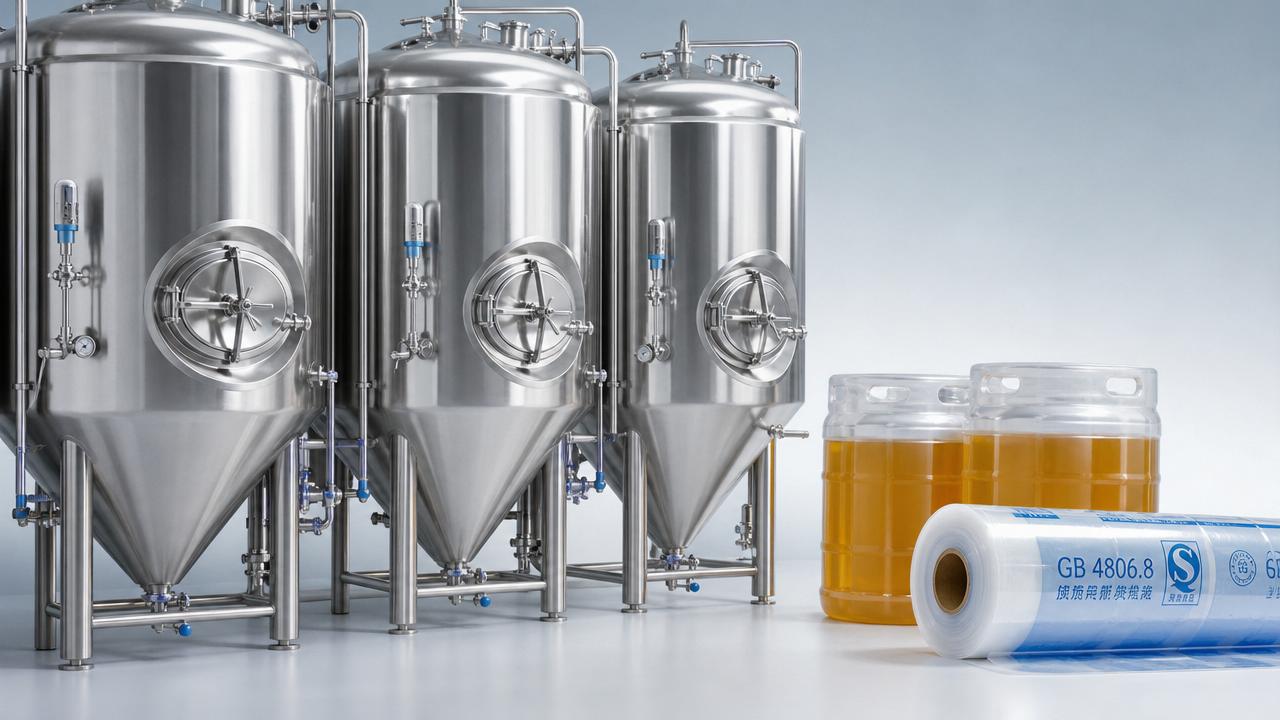
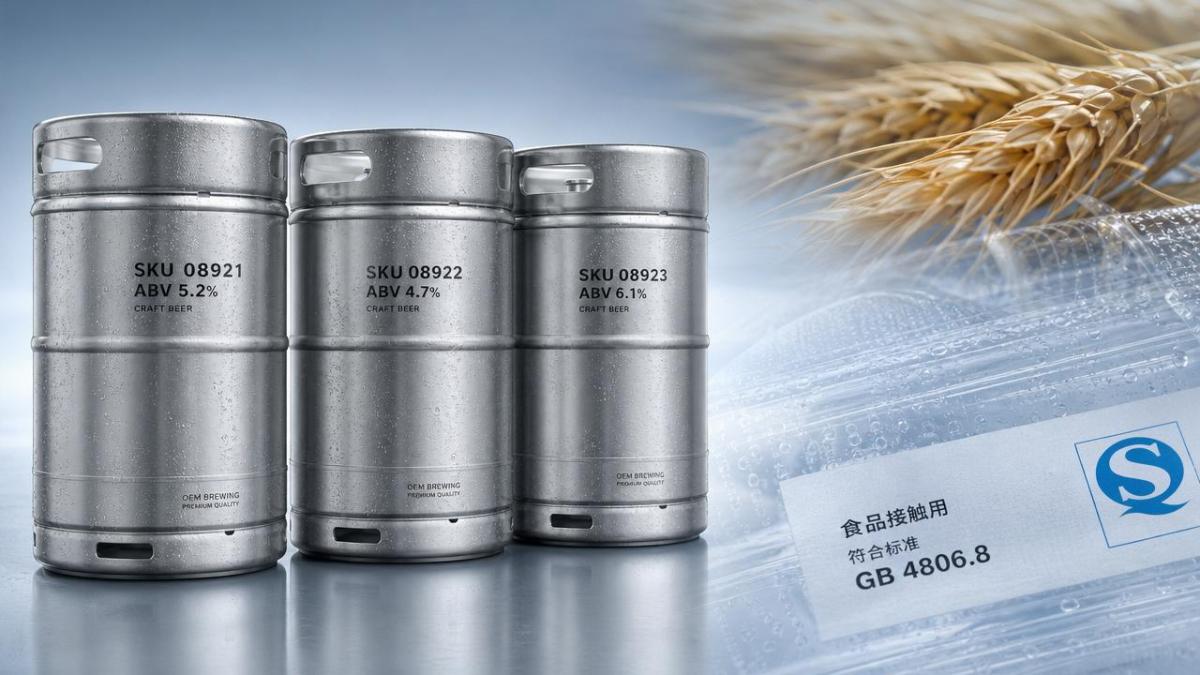
- Freight & compliance surcharges: New GB 4806.8–2023 food-contact plastic packaging rules mandate full migration testing for all PET keg liners and shrink-sleeve labels—adding $0.42–$0.68/unit verification cost. Ocean freight from Shanghai to Rotterdam also rose 18% YoY due to Red Sea rerouting.
- Energy-driven production overhead: Provincial electricity tariffs for food-grade sterilization lines increased 7.3% effective Jan 1, 2026, impacting batch-cooling, carbonation, and cold-storage cycles most acutely for sub-200-keg runs.
Unlike commodity lager OEM providers, Jinpai Beer’s craft-first model means we source 100% traceable malt, use dual-stage CO₂ purification, and maintain ISO 22000-certified cold-fill lines—all adding baseline cost discipline but also enabling granular cost attribution.
How Does This Impact Unit Economics for Small-Batch Runs?
The 8–12% range isn’t uniform across order sizes or product types. Below is a breakdown of price sensitivity for typical small-batch OEM configurations (all figures reflect FOB Shanghai, ex-VAT, 2026 Q1 standard terms):
Note: These increases apply only to new POs confirmed after February 1, 2026. Orders placed before that date lock in Q4 2025 pricing—even if delivery occurs in April or May. For finance teams, this creates a clear window to front-load budget execution without compromising margin targets.
Why Jinpai Beer Absorbs More Volatility Than Competitors
Most China beer OEM suppliers pass through 100% of raw material and compliance cost spikes. Jinpai Beer’s craft-specialized infrastructure enables three structural buffers:
- Multi-year barley contracts: We hold fixed-price agreements with two certified maltsters covering 68% of our 2026 small-batch volume—capping ingredient exposure at ≤4.5% uplift for lagers and wheats.
- Shared-batch scheduling: Our “craft cluster” system groups compatible SKUs (e.g., low-calorie + fruit-flavored variants) into single sterilization and carbonation cycles—reducing per-keg energy and labor cost by up to 12%.
- In-house packaging validation lab: We conduct GB 4806.8 migration tests internally, eliminating third-party lab fees ($0.29–$0.41/unit) that most OEM partners bill separately.
This means your actual net cost increase on a 150-keg German Wheat run is ~7.3%—not 10.2%—and includes full documentation for customs and retail compliance audits.
Procurement Action Plan: What Finance Teams Should Do Now
Delaying decisions risks both budget overrun and supply risk. Here’s your Q1 2026 action sequence:
- Confirm forecast volumes by Jan 20: Share your 2026 H1 SKU-by-channel plan with our OEM team—we’ll generate a tiered quote showing locked-in vs. post-Feb pricing.
- Request batch-level cost breakdowns: Ask for itemized unit economics (malt, energy, packaging, QC, logistics) to validate allocation accuracy against internal COGS models.
- Pre-book keg inventory: Reserve stainless steel or PET kegs now to avoid Q2 shortages—and secure current-year rental rates.
- Align on certification timelines: If your market requires BRCGS, SQF, or local health authority approvals, initiate documentation handoff by Feb 5 to avoid 3-week delays.
Why Partner With Jinpai Beer for Your Next China Beer OEM Cycle
You’re not just buying beer—you’re securing a predictable, auditable, and scalable manufacturing partnership. With Jinpai Beer, you get:
- Transparent cost modeling—no hidden fees, no “compliance surcharge” line items.
- Full OEM/ODM flexibility: recipe co-development, label design support, keg branding, and functional ingredient integration (e.g., electrolytes, adaptogens).
- Global distribution readiness: All products meet FDA, EFSA, and ASEAN food safety standards; bilingual labeling templates included.
- Dedicated OEM account management—with monthly P&L reporting, batch traceability dashboards, and quarterly cost-reconciliation reviews.
Ready to lock in pre-adjustment pricing? Contact our OEM Solutions Team to request your customized Q1 2026 budget alignment package—including SKU-specific quotes, compliance roadmap, and keg inventory availability report.
Thank you very much for writing to us. Please leave your message and contact information, we will reply to you within 24 hours.