



China Beer Factory Sourcing Guide: What Importers Should Check Before Ordering
Choosing a China beer factory is rarely about finding the lowest unit price. In beer importing, the factory sits at the center of product stability, labeling compliance, shelf performance, shipment planning and, eventually, repeat orders. A supplier that looks competitive on quotation can become expensive very quickly if the beer arrives with flavor inconsistency, unclear export documentation, weak packaging or lead times that drift with every order.
That is why experienced buyers do not treat “China beer factory” as a simple manufacturing label. They treat it as a sourcing category with wide variation inside it. Some factories are set up for high-volume standard lager under private label. Some are stronger in craft-style small batches, fruit beer or specialty formulas. Others can brew well but are not organized for export execution. Before placing an order, the real question is not whether a factory can make beer. It is whether that factory can make your beer, in your required format, with repeatable quality and the paperwork needed for your market.
Start with brewing fit, not catalog breadth
Many importers are shown long product lists: classic lager, wheat beer, low-calorie beer, fruit-flavored lines, seasonal products, functional concepts. A broad range is useful, but it does not prove production fit. The more useful check is whether the brewery’s equipment, formulation experience and process controls match the beer style you want to sell.
A factory producing mainly standard lager may still offer German wheat on paper, but that does not tell you how established the process is. Wheat beer and fruit-flavored beer are more sensitive to haze expectations, yeast expression, flavor stability and batch-to-batch variation than some mass-market lagers. Sugar-free or low-calorie claims also need careful technical handling because they influence fermentation, taste profile and, in some markets, labeling language. If your business depends on a niche SKU rather than a generic mainstream product, ask what percentage of production is actually dedicated to similar beers.
This is where OEM/ODM capability matters. OEM is often straightforward: you select an existing formula and package it under your brand. ODM usually asks more of the factory, because recipe adjustment, sensory alignment, packaging coordination and market adaptation are involved. Buyers often underestimate how different those two models are in execution. A supplier that handles OEM smoothly may still be slow or inconsistent when asked to develop a custom fruit profile, lower bitterness target or reduced-calorie line for a regional market.
Quality is not just taste. It is repeatability.
Sample approval is necessary, but a good first sample is not enough. Beer sourcing decisions should be based on the factory’s ability to reproduce that sample across multiple production runs. Importers sometimes focus too heavily on sensory evaluation and too lightly on process discipline. In practice, the risk is not only “bad beer.” The more common problem is variation: one batch pours clean and balanced, the next has a different aroma, color or carbonation level.
When evaluating a China beer factory, ask how the brewery manages raw material consistency, fermentation control, filtration or stabilization steps where applicable, and finished product checks before shipment. You do not need every operational detail, but you do need to know whether quality control is a real production function or just a sales talking point. Basic questions are often revealing: How are retained samples handled? What is checked before release? How is a complaint traced back to batch records? If the answers stay vague, that is usually more informative than a polished brochure.
Shelf-life suitability also deserves attention. Export beer may spend weeks in transit and additional time in customs clearance, warehouse storage and distribution. A beer that performs well domestically may face different risks once it enters longer logistics cycles, especially for products with delicate hop aroma, fruit components or premium positioning. This does not mean every importer needs highly technical lab data from the start, but it does mean packaging, storage assumptions and turnover expectations should be discussed early rather than after the first claim.
Compliance should be checked market by market
One of the most expensive sourcing mistakes is assuming that a beer legal for production and export from China is automatically ready for sale in the destination country. It is not. Import requirements differ by market, and beer touches several compliance areas at once: ingredient disclosure, allergen statements, alcohol declaration, packaging marks, language requirements, shelf-life labeling and import documentation.
This is especially relevant for fruit beer, functional specialty beer and reduced-sugar or low-calorie positioning. Claims that seem commercially attractive can create regulatory complications if the wording does not align with local rules. The right sourcing question is not “Can you print this claim?” but “Can you support this claim in a way that is acceptable in my market?” A factory with real export experience will usually flag this distinction quickly.
Certifications matter too, but they should be interpreted correctly. Buyers often ask for food safety and quality certifications, which is reasonable. Still, a certificate should be treated as one part of supplier validation, not proof that every product configuration is compliant everywhere. Documentation discipline, label review support and responsiveness during pre-shipment preparation are often just as important as the certificate itself.
Packaging capability changes the commercial result
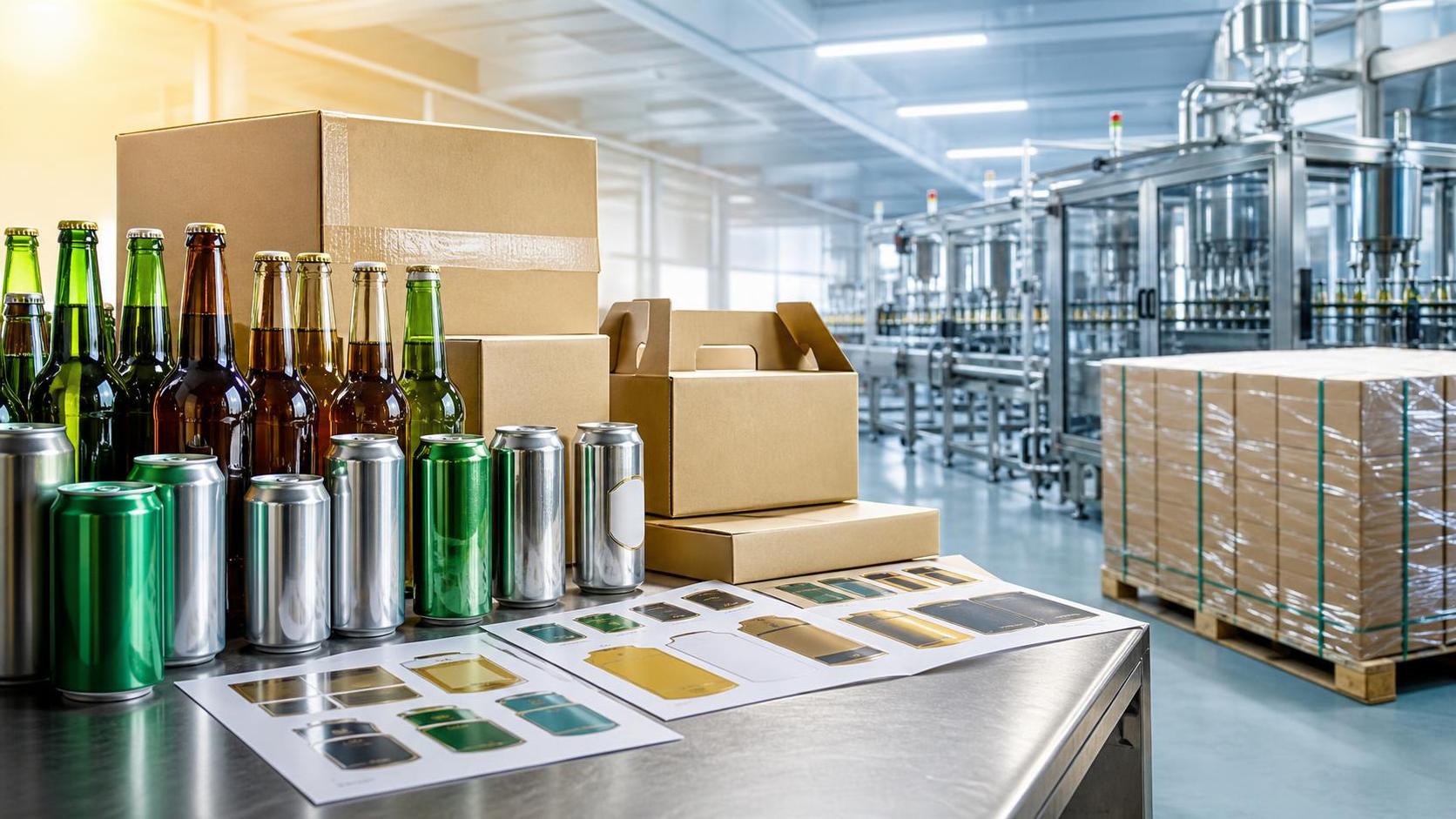
In beer export, packaging is not a cosmetic detail. It affects transport loss, retail presentation, container loading efficiency and channel fit. Importers supplying supermarkets, bars and restaurant groups are often working with very different packaging priorities. A can format that suits convenience retail may not suit an on-premise account looking for glass presentation. A visually strong label may still fail if secondary cartons are weak or if pallet stability is poor.
When assessing a factory, it helps to separate packaging options into three practical questions:
Factories that offer customized solutions are useful here, provided the customization is operationally mature. It is one thing to say “custom packaging available.” It is another to manage approval cycles, printing coordination and production scheduling without introducing avoidable delay.
Export experience shows up in small operational details
Importers often discover too late that a brewery is capable on the production side but weak on export handling. That gap usually appears in document preparation, shipment booking coordination, sample lead time, response speed when revisions are needed, or confusion around mixed-SKU loading plans. None of these issues sound dramatic at quotation stage, but they directly affect launch schedules and inventory reliability.
Ask how the supplier handles lead times for samples, production and repeat orders. Ask who reviews export labels before printing. Ask whether the factory is accustomed to online and offline distribution needs across different markets. These are practical questions, not administrative ones. A supplier serving global channels should understand that retail packs, distributor packs and on-premise supply can place different demands on case configuration, labeling and reorder rhythm.
This is also where communication quality matters. A reliable long-term partner does not simply say yes to every request. They explain constraints early: minimum order quantity by SKU, recipe adjustment limits, packaging lead times, and where custom work may extend the schedule. Clear limits are more valuable than flexible promises that collapse during production.
Common sourcing mistakes that look reasonable at first
One common mistake is treating beer like a generic beverage category. It is not. Beer is highly sensitive to style expectations, freshness perception and packaging context. Another is assuming that a factory experienced in domestic wholesale will automatically perform well in private-label export. Domestic success can be relevant, but export readiness involves more than brewing capacity.
A third mistake is over-focusing on price per unit and under-focusing on landed business risk. If a slightly cheaper supplier causes delays, relabeling, damaged cartons or inconsistent repeat batches, the commercial loss usually exceeds the initial saving. That is especially true for distributors building a brand presence in bars, restaurants or supermarket chains where one poor first shipment can limit future shelf access.
It is also worth being careful with “functional” or specialty positioning. These products can be commercially attractive, and some breweries are actively developing them, but the category needs tighter scrutiny around formula clarity, target market fit and compliance language. Not every trend-driven concept translates well across borders.
What a better sourcing decision usually looks like
A sound decision usually comes from aligning five things before the first commercial order: beer style capability, repeatable quality control, compliant labeling support, packaging fit for the target channel, and export execution discipline. If one of those is weak, the rest of the offer becomes harder to trust.
For buyers looking at a China beer factory for OEM/ODM, wholesale supply or customized solutions, the useful mindset is straightforward: evaluate the supplier as a production partner, not just a beverage vendor. The right factory should be able to explain what it can do well, where customization is realistic, and how it supports a product from formulation through export shipment. That level of clarity is usually a better indicator of long-term value than an attractive introductory quote.
If the conversation stays concrete, covering process, packaging, compliance and operational limits, you are probably getting close to a workable sourcing partner. If it stays broad, promotional and non-specific, keep looking before you commit the order.
Thank you very much for writing to us. Please leave your message and contact information, we will reply to you within 24 hours.