



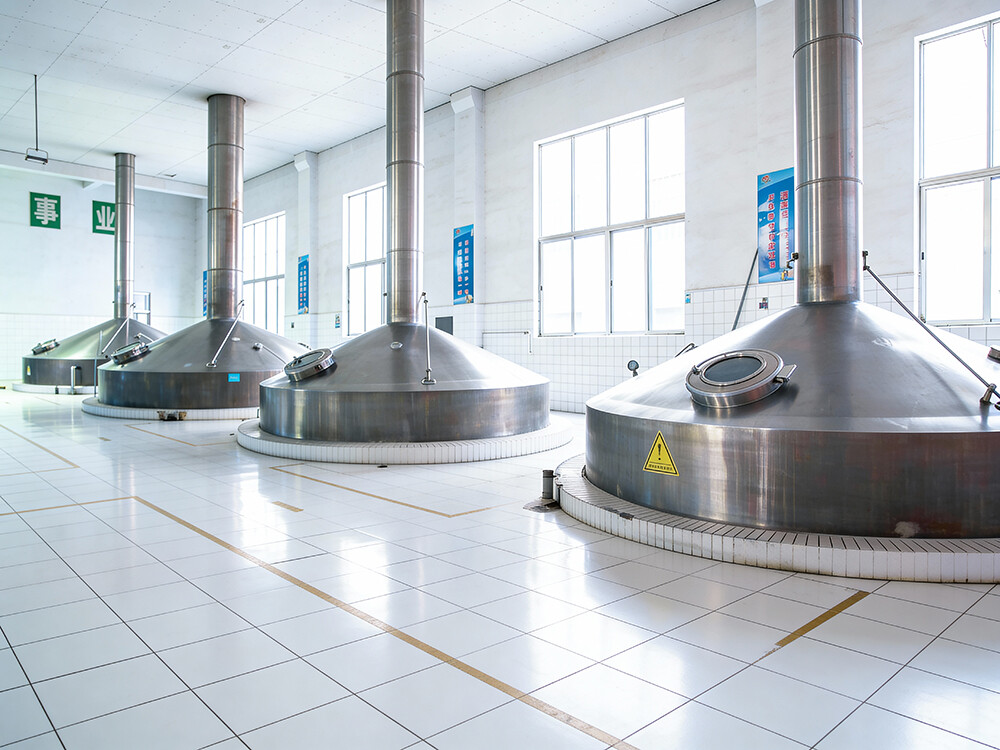

What Is Craft Beer Contract Brewing?
Craft beer contract brewing is a formalized production arrangement in which an independent beer brand (the 'client') commissions a licensed, third-party brewery (the 'contractor') to brew, ferment, condition, and often package its proprietary recipes under strict quality and branding specifications. Unlike co-packing or private-label manufacturing, craft beer contract brewing emphasizes recipe ownership, sensory consistency, and shared process accountability—not just volume output.
It operates within regulated frameworks that vary by jurisdiction: in the U.S., the TTB requires label approval and formula registration; in the EU, EC No. 1169/2011 mandates full ingredient traceability and allergen declaration; and in APAC markets, local food safety authorities often require facility licensing and batch-level documentation. These requirements shape how craft beer contract brewing is structured—not as a transactional service, but as a collaborative technical partnership.
At its core, craft beer contract brewing bridges creative vision and industrial execution. It enables brands to launch faster, test markets with lower CAPEX, and scale regionally without compromising on yeast strain fidelity, hop timing, or fermentation profile—key differentiators in today’s hyper-competitive craft segment.
This model is distinct from white-label brewing (where the contractor supplies base recipes) or toll brewing (which focuses solely on equipment rental). True craft beer contract brewing demands transparency, technical alignment, and documented process validation at every stage—from wort production through carbonation and canning.
Why Choose Contract Brewing Over In-House Production?
Building and operating a compliant brewhouse demands $1.2M–$4.5M in upfront investment, plus ongoing costs for staffing, utilities, maintenance, and regulatory reporting. For early-stage brands, this capital intensity delays time-to-market and increases financial exposure before revenue stabilization. Craft beer contract brewing eliminates those barriers—freeing founders to focus on brand development, distribution strategy, and consumer engagement instead of boiler certifications or wastewater permits.
Beyond economics, it mitigates technical risk. Fermentation inconsistency, oxygen ingress during packaging, or seasonal water chemistry shifts can derail flavor stability. Established contractors bring calibrated instrumentation, trained cellar teams, and proven SOPs—reducing batch failure rates by up to 68% compared to first-generation brewhouses, according to 2025 Brewers Association benchmark data.
Scalability is another decisive advantage. A brand launching in three U.S. states can engage regional contract partners—each aligned with local excise tax structures and distribution laws—avoiding the inefficiency of shipping finished goods across 2,000 miles. This geographic agility is impossible with a single owned facility and is central to modern craft beer contract brewing strategy.
Importantly, contract brewing does not dilute brand equity when executed rigorously. Leading contractors provide full transparency into raw material sourcing, lab logs, and QC reports—allowing clients to maintain full narrative control over their product story, from grain bill to glass.
Who Benefits Most From This Model?
Craft beer contract brewing serves four primary user groups. First are founder-led brands—often with culinary, design, or marketing backgrounds—who possess strong brand vision but lack brewing credentials or capital. Second are established beverage companies diversifying into craft segments (e.g., kombucha or RTD spirit brands launching lagers), leveraging existing sales networks without brewing infrastructure.
Third are hospitality operators—brewpubs, hotel groups, or restaurant chains—creating signature house beers without installing brewhouses in constrained urban spaces. Fourth are international brands seeking localized production to bypass import tariffs, reduce freight carbon impact, and comply with country-specific labeling laws—such as Japan’s strict alcohol-by-volume rounding rules or Canada’s bilingual packaging mandates.
Notably, success hinges less on company size and more on operational maturity. Brands with validated recipes, defined target consumers, and distribution commitments achieve higher retention rates with contractors. Conversely, those still iterating core formulations or lacking shelf-ready packaging designs face longer onboarding cycles and higher per-bbl costs due to repeated pilot batches.
Jin Pai Beer supports this diverse ecosystem by offering flexible minimum order volumes, rapid pilot-batch turnaround (as fast as 14 days), and bilingual technical documentation—lowering entry friction for Asian and North American clients navigating cross-border compliance.
Where And When Is Contract Brewing Deployed?
Geographic deployment follows regulatory logic and logistics economics. In the U.S., over 62% of contract-brewed craft beer originates from facilities in California, Colorado, and Ohio—states with mature craft ecosystems, favorable excise tax structures, and proximity to major ports and rail hubs. In Europe, Germany and Poland lead in capacity, driven by high-quality malt supply chains and ISO 22000-certified packaging lines capable of handling both keg and can formats.
Timing is equally strategic. Brands typically engage contract brewers during three inflection points: pre-launch (to validate scalability of pilot recipes), post-Series A funding (to support national distribution), and during seasonal demand spikes (e.g., summer IPA releases or holiday spiced ales). The average contract term spans 12–24 months, with quarterly performance reviews covering yield consistency, fill accuracy, and microbiological stability.
Global market access adds further nuance. To enter Australia, for example, a brand must meet FSANZ standards—including mandatory preservative declarations and country-of-origin labeling—requirements Jin Pai Beer’s QA team helps navigate through pre-submission audits and label compliance workshops. Similarly, for UK market entry post-Brexit, batch-level traceability must align with UKCA marking protocols—a capability embedded in Jin Pai Beer’s digital batch ledger system.
These real-world constraints define where and when craft beer contract brewing delivers maximum ROI—not as a stopgap, but as a deliberate, compliance-aware growth lever.
How Is Quality Controlled Across The Process?
Quality assurance in craft beer contract brewing rests on three interlocking pillars: specification rigor, real-time monitoring, and chain-of-custody documentation. Clients begin by submitting a detailed Technical Data Sheet (TDS) covering grain bill percentages, hop addition timing (including dry-hop duration and temperature), yeast strain ID and propagation method, fermentation profile (temp ramp, diacetyl rest), and filtration thresholds. Deviations beyond ±0.5°P gravity or ±0.3°C temperature require written client approval.
During production, contractors deploy inline sensors for dissolved oxygen (<5 ppb pre-packaging), turbidity (measured hourly), and CO₂ saturation (validated via ASBC Method B9). Every batch undergoes sensory evaluation by a certified BJCP panel prior to release—ensuring adherence to style benchmarks and detecting off-flavors such as acetaldehyde or light-struck character.
Post-packaging, stability testing includes forced-age trials (30 days at 30°C) and microbial challenge tests using selective media like MRS agar for Lactobacillus detection. All data feeds into a secure cloud portal accessible to the client—providing auditable evidence for retailer compliance checks or export health certificates.
Jin Pai Beer enhances this framework with dual-language QC dashboards, third-party lab partnerships across Shanghai, Singapore, and Chicago, and optional on-site audit support—ensuring that craft beer contract brewing meets both commercial expectations and regulatory scrutiny without compromising transparency.
How Much Does It Really Cost?
Total cost of craft beer contract brewing extends far beyond per-barrel pricing. Key TCO components include: base brewing fee ($85–$220/bbl, varying by volume, complexity, and tank time); raw material markup (typically 8–15% above spot market, covering procurement, storage, and loss); packaging labor and consumables ($0.18–$0.42/unit for 16oz cans, including lids, ink, and shrink wrap); regulatory filing support ($1,200–$3,500 per SKU for TTB or EU EFSA submissions); and logistics coordination ($0.07–$0.14/bbl for pallet staging and carrier handoff).
Hidden cost drivers often dominate long-term economics: recipe reformulation due to ingredient substitution (e.g., switching hop varieties because of crop shortages), extended tank residency from fermentation stalls, and rework for label misprints or fill-level variance. Brands achieving >85% forecast accuracy and maintaining ≥3-month production visibility reduce these variables by up to 40%.
ROI emerges most clearly in working capital efficiency. A brand producing 500 bbl/year in-house ties up ~$310,000 in fixed assets and $185,000 in annual operating costs. The same volume via craft beer contract brewing requires ~$95,000 in variable spend—freeing $400,000+ for sales incentives, influencer campaigns, or taproom build-outs. Break-even volume typically occurs between 1,200–1,800 bbl/year, depending on regional labor and utility rates.
Jin Pai Beer offers tiered pricing anchored to forecast commitment windows (3-, 6-, and 12-month rolling plans), transparent raw material index tracking, and no penalty fees for modest volume adjustments—aligning financial flexibility with brand growth velocity.
What Trends Will Shape Craft Beer Contract Brewing In 2026?
Three converging trends will redefine craft beer contract brewing by 2026. First is sustainability integration: 74% of new contracts now include carbon footprint reporting per bbl, water reuse targets (>35% reduction vs. industry avg), and recyclable packaging mandates—driving adoption of steam recovery systems and low-oxygen canning tech. Second is digital twin deployment: contractors are building virtual replicas of brewhouses fed by IoT sensor data, enabling predictive maintenance and remote batch optimization for distributed clients.
Third is regulatory fragmentation acceleration. As countries tighten alcohol marketing rules (e.g., South Korea’s 2025 ban on influencer-driven beer promotions) and introduce novel fermented beverage categories (like low-ABV ‘beer seltzers’), contract brewers must offer modular compliance scaffolding—not just production. This includes dynamic label generation engines, ABV recalibration protocols, and allergen cross-contact mitigation plans.
Finally, consolidation is rising—not of brands, but of contractor capabilities. Top-tier providers now bundle brewing with cold-chain logistics, DTC fulfillment, and even retail-ready merchandising kits. Jin Pai Beer exemplifies this evolution, having integrated API-driven inventory sync with Shopify and Magento platforms, allowing brands to auto-update stock levels and trigger reorder alerts directly from e-commerce dashboards—turning craft beer contract brewing into a unified commerce engine.
Staying ahead means selecting partners whose infrastructure evolves with regulation, sustainability mandates, and digital commerce—not just today’s brewhouse specs.
Thank you very much for writing to us. Please leave your message and contact information, we will reply to you within 24 hours.