



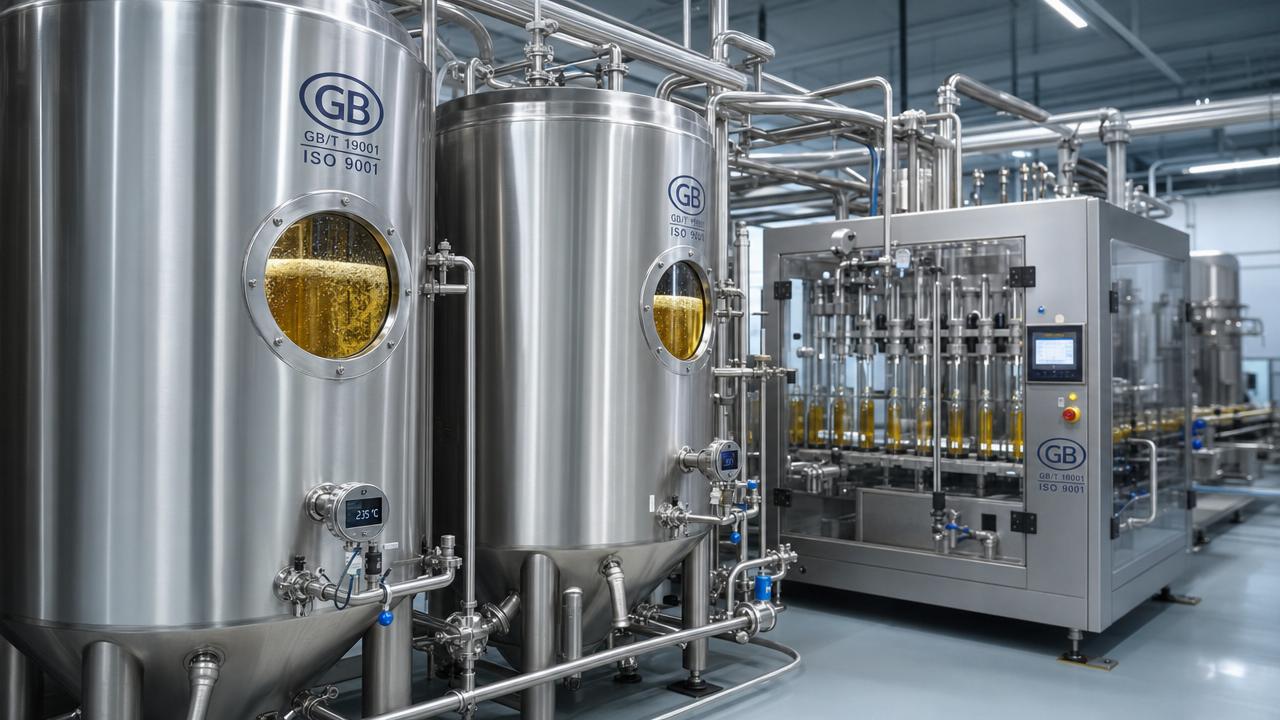
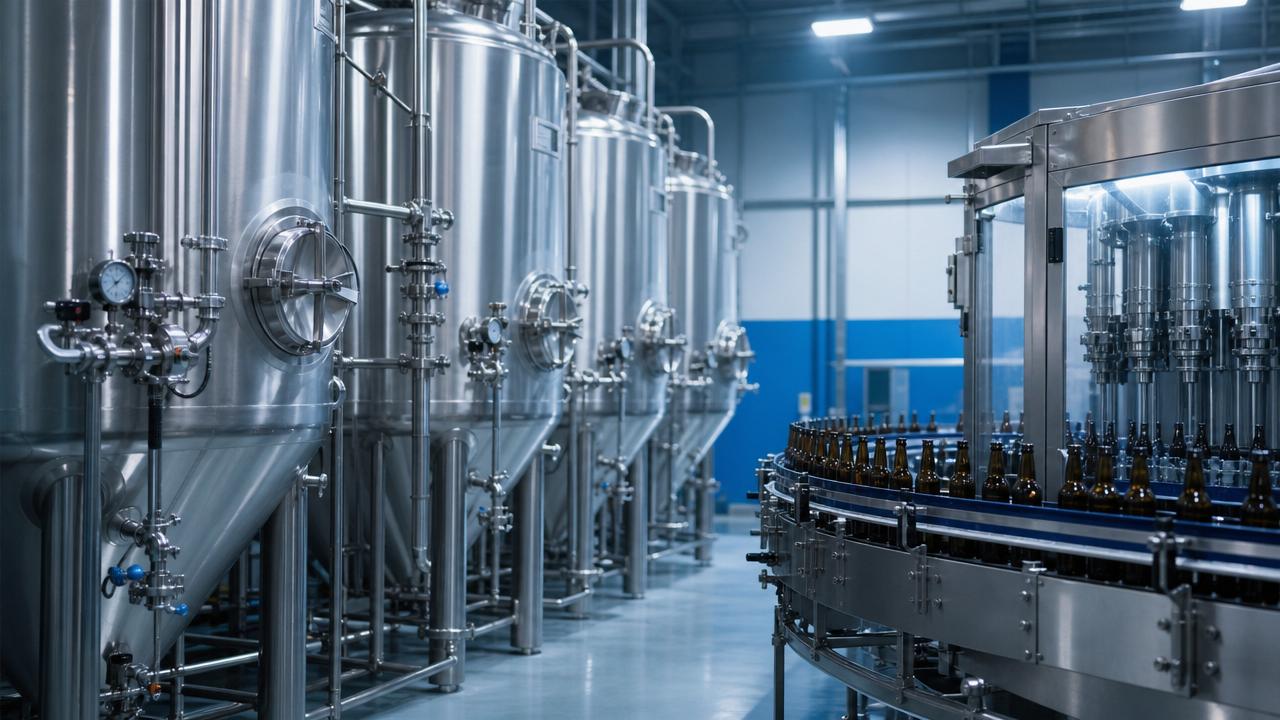
What A Chinese Beer Factory Means In Modern B2B Supply
A Chinese beer factory is an industrial brewing and packaging facility that converts water, malted grains, hops, yeast, and process control into finished beer for domestic sale or export. In B2B trade, the term usually covers not only brewing capacity, but also formulation consistency, filling options, labeling support, traceability, and shipment coordination.
For importers, a Chinese beer factory is evaluated as a manufacturing partner rather than only a beverage producer. Buyers look at batch stability, packaging compatibility, MOQ flexibility, documentation discipline, and the factory’s ability to align with destination market requirements on ingredients, shelf life, and outer carton information.
In practice, factories may serve different models: own-brand production, contract manufacturing, OEM, or private label. The most suitable partner depends on whether the buyer prioritizes recipe customization, fast launch timing, cost control, or long-term portfolio development across lager, wheat, stout, or flavored beer segments.
Because global beer demand is fragmented by taste, regulation, and packaging preference, understanding the operating logic of a Chinese beer factory helps buyers reduce sourcing risk. It also improves discussions around lead time, sample validation, packaging approval, and repeat-order consistency.
How Beer Is Produced: Core Brewing Principles And Process Flow
Beer production begins with raw material preparation. Malt provides fermentable sugars and flavor base, hops contribute bitterness and aroma, yeast drives fermentation, and water chemistry influences mouthfeel and stability. A Chinese beer factory typically manages these inputs through incoming inspection, storage control, and formula-based batching before production starts.
The standard brewing sequence includes milling, mashing, lautering, wort boiling, hop addition, whirlpool clarification, cooling, fermentation, maturation, filtration or stabilization, and packaging. Each stage affects final quality. Temperature curves, oxygen exposure, yeast health, and tank sanitation are especially important because small process deviations can alter flavor, foam retention, and shelf performance.
Fermentation is the technical heart of the process. Yeast converts sugar into alcohol and carbon dioxide while also generating esters and other flavor compounds. A Chinese beer factory serving export markets usually pays close attention to fermentation time, tank pressure, and microbial control to maintain repeatable sensory results from one batch to the next.
After brewing, packaging becomes a second quality gate. Cans, glass bottles, and kegs each require different filling parameters, seam or cap control, dissolved oxygen management, coding, and case packing. For B2B buyers, packaging integrity matters as much as recipe quality because transport stress and storage conditions can quickly expose weak process control.
Main Factory Types And Product Categories
Not every Chinese beer factory has the same operating model. Large-scale facilities often focus on high-volume standard beer with strong line efficiency, while smaller or more flexible plants may support customized formulations, seasonal recipes, or private-label projects. Buyers should match factory type with business strategy instead of assuming bigger always means better.
From a product perspective, common categories include pale lager, wheat beer, stout, ale, strong beer, fruit-flavored beer, and low- or non-alcohol options where regulations allow. Export-oriented factories may also offer multiple alcohol levels, bitterness ranges, and packaging sizes to suit retail, horeca, and promotional channels in different regions.
Packaging classification is equally important. Standard formats include slim cans, standard cans, long-neck glass bottles, stubby bottles, and keg systems. Carton strength, tray configuration, shrink wrapping, and pallet loading should be discussed early, because secondary packaging influences freight efficiency, breakage rate, and warehouse handling costs.
When comparing options, buyers should ask whether the Chinese beer factory can support both stable core SKUs and future line extensions. This is often more valuable than evaluating one sample alone, because long-term distributors need suppliers that can scale product range without disrupting existing quality expectations.
Quality Standards, Food Safety, And Export Readiness
A reliable Chinese beer factory should operate with documented controls covering raw materials, process sanitation, in-process testing, finished product release, and lot traceability. Even when specific certifications are not disclosed in advance, buyers should still verify whether the supplier follows recognized food manufacturing discipline, cleaning routines, and record-keeping practices suitable for beverage export.
Typical checkpoints include microbiological control, alcohol content verification, bitterness or color consistency where applicable, dissolved oxygen management, packaging seal integrity, and shelf-life monitoring. Label review is also critical. Destination markets may require local-language declarations, date coding format, ingredient statements, warning text, or importer information on retail packaging.
For buyers seeking a practical sourcing discussion, Jin Pai Beer can be positioned as a supply partner that understands the need for balanced quality control, commercial packaging support, and export communication. In a Chinese beer factory context, that means aligning production, label confirmation, and shipment preparation rather than treating brewing and export as separate tasks.
Export readiness also depends on physical logistics. Beer is sensitive to heat, impact, and prolonged storage. A factory that plans container loading, carton specification, pallet pattern, and lead-time coordination well can help reduce transit risk. This operational discipline often matters more to importers than broad marketing claims.
Who Should Source From A Chinese Beer Factory And In Which Scenarios
The main audience includes beer importers, supermarket buying teams, beverage distributors, private-label brand owners, horeca wholesalers, and regional trading companies. Each group values different capabilities. Importers may focus on compliance and stable replenishment, while private-label buyers usually prioritize packaging customization, recipe positioning, and launch speed.
A Chinese beer factory is particularly relevant when a buyer wants to build a house brand, expand an entry-level beer line, test new flavor concepts, or source multiple packaging formats from one manufacturing base. It can also suit buyers entering price-sensitive markets where freight efficiency and scalable output have a direct impact on competitiveness.
Common application scenarios include retail canned beer programs, promotional gift packaging, bar supply in tourist markets, and cross-border distribution into regions that accept imported alcohol products subject to local registration. In these cases, the supplier’s ability to coordinate artwork approval, carton marking, and production scheduling becomes part of the commercial offer.
Although no specific case data is provided here, buyers can use scenario-based evaluation: ask how the factory would handle a first order, how samples are confirmed, how substitute materials are managed, and what happens if shipping dates change. The answers often reveal the maturity of the Chinese beer factory more clearly than a price sheet alone.
How To Select The Right Factory: Commercial And Technical Criteria
Selecting a Chinese beer factory starts with product-market fit. Buyers should define target alcohol level, flavor profile, packaging size, shelf-life expectation, and annual volume before discussing quotations. Without a clear brief, comparisons between suppliers become misleading because pricing, lead time, and MOQ are all shaped by product complexity and packaging choice.
Technical assessment should cover brewhouse capability, fermentation capacity, filling line compatibility, laboratory support, and quality documentation. Ask whether trial production is possible, whether the recipe can be adjusted after sensory review, and how batch samples are retained. These details help determine whether the supplier can support repeat business rather than just one shipment.
Commercial criteria are equally important. Review MOQ by SKU, lead time in peak season, artwork approval workflow, payment terms, and responsibility split for export documents. A strong Chinese beer factory should be able to communicate clearly about what is included in the quote and what may change due to material costs or packaging revisions.
For buyers exploring cooperation with Jin Pai Beer, the practical recommendation is to start with a specification sheet and target market summary. This makes it easier to evaluate whether packaging options, beer style positioning, and production planning match your channel strategy before moving into sample review or bulk negotiations.
Total Cost Of Ownership, Pricing Drivers, And ROI Thinking
The cost of sourcing from a Chinese beer factory goes beyond ex-works unit price. Total cost of ownership includes formulation complexity, packaging materials, carton specification, sampling rounds, compliance adaptation, freight, insurance, import duties, warehousing, and potential write-offs from breakage or slow rotation. A low headline price can become expensive if execution is weak.
Major pricing drivers usually include malt and adjunct selection, hop intensity, alcohol level, can or bottle type, decoration method, order volume, and whether the project uses standard or customized cartons. Smaller runs often carry a higher per-unit burden because setup cost, label preparation, and line changeover are spread across fewer cases.
ROI should be considered at channel level. A premium-looking package may justify a higher selling price in retail or hospitality, while a simpler specification may perform better in mass distribution. Buyers should estimate landed cost, expected sell-through, promotional support, and reorder cycle before finalizing a factory choice.
The most effective sourcing approach is not to chase the cheapest Chinese beer factory, but to find the option that balances stable product quality, acceptable MOQ, packaging reliability, and communication efficiency. In beverage trade, fewer quality claims and smoother replenishment often produce stronger long-term margins.
Future Trends In Chinese Beer Factory Development
The future of the Chinese beer factory sector is being shaped by premiumization, packaging diversification, and more precise export adaptation. Buyers increasingly request differentiated flavor profiles, cleaner label presentation, smaller test volumes, and faster artwork response. This pushes factories to become more flexible in both production planning and customer communication.
Another visible trend is tighter quality visibility. International buyers want clearer batch records, better shelf-life confidence, and more disciplined packaging verification before shipment. As competition grows, factories that can combine brewing know-how with practical export coordination are likely to stand out in private-label and regional distribution projects.
Sustainability is also becoming part of sourcing discussions, even when it is not the first buying criterion. Lightweight packaging, efficient secondary packing, reduced material waste, and improved transport loading can influence both operating cost and brand perception. These areas may gradually become standard comparison points in supplier review.
For procurement teams, the takeaway is clear: choose a Chinese beer factory that can support today’s commercial requirements while remaining adaptable to new labeling rules, packaging trends, and product segmentation. That combination gives buyers more room to build resilient beer programs in changing international markets.
Thank you very much for writing to us. Please leave your message and contact information, we will reply to you within 24 hours.